Officials expect little AI progress from Trump's meeting with Xi, Wired reports
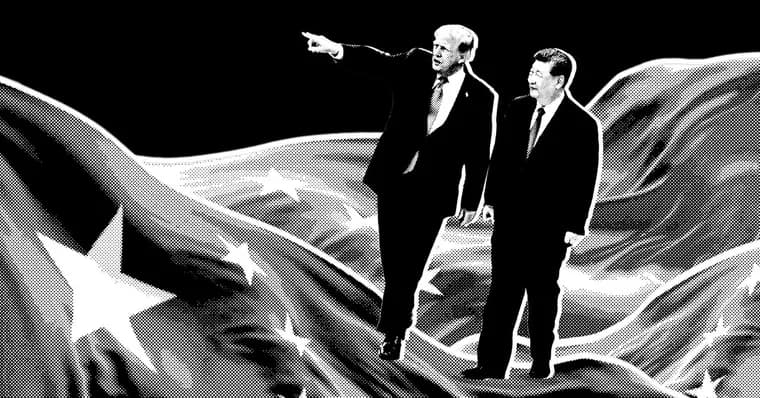
Ahead of President Donald Trump's Thursday meeting with Xi Jinping, administration officials privately told Inner Loop, Hugo Lowell's newsletter for WIRED, that they see little room for progress in easing AI safety and espionage concerns. The officials are not named.
As he left the White House, Trump left open whether he would press Xi on Chinese interference in AI or on the Nvidia scandal. Officials say this is part of an effort not to antagonize China during the summit. The scandal centres on former Nvidia CEO Jensen Huang's affair with Alice Huang, an executive at Megaspeed and a suspected Chinese intelligence asset, along with the alleged role of Megaspeed and criticism that a firm with ties to China gained access to advanced AI chips. Officials say the fallout has made any negotiation on AI development fraught for the world's two largest economies. China has forcefully rejected the allegation that Alice Huang was recruited by Chinese intelligence, calling it "groundless" and a "smear."
The hotline is the clearest example of the stall. In September the Trump administration moved to set up an AI incident hotline between Treasury Secretary Scott Bessent and Chinese vice premier He Lifeng, meant for situations like this one. WIRED says the channel remains at the concept stage and is not operational. Secretary of State Marco Rubio told reporters last week that the two governments had held AI safety talks at a "technical level" since the hotline announcement, but admitted it was "still a work in progress." Trump officials have previously discussed a framework that would set criteria for when each country must alert the other, plus enforcement measures so that it does not become a channel where only the US alerts China.
Officials give two reasons progress has not come. First, the two sides disagree on what the biggest AI risks are, and each has different incentives on making incidents public. In the US, administration officials and tech leaders have worried most about AI models becoming autonomous and misaligned, able to operate beyond human oversight. Chinese government officials are widely understood to worry more about advanced open-weight models being used by critics and dissidents inside the country to undermine the Chinese Communist Party, officials say. Second, the Chinese government has appeared interested in using frontier AI models to gather intelligence at home and abroad, and officials say it would be unlikely to report cases where its models went rogue.
Mutual espionage suspicions have deepened the distrust, officials tell Inner Loop. China has seen the US as trying to stymie its AI development, and that predates the Nvidia scandal.
The administration is also taking a harder line elsewhere. This week it announced it would move forward with a new rule clamping down on China's ability to remotely access US-made AI chips in foreign data centers. The piece describes the rule as a direct intervention by Trump in response to Megaspeed's alleged role in the scandal. WIRED has previously reported that the rule could also keep similar companies with corporate parents in China from doing business with Nvidia.
Key facts
- Administration officials, unnamed, privately tell WIRED's Inner Loop they see little room for progress on AI safety and espionage concerns at Trump's Thursday meeting with Xi Jinping.
- The AI incident hotline between Treasury Secretary Scott Bessent and Chinese vice premier He Lifeng, announced as a plan in September, is still at the concept stage and not operational.
- Rubio said AI safety talks have run at a "technical level" but the hotline is "still a work in progress."
- Officials cite different risk priorities: the US worries about autonomous, misaligned models; Chinese officials are understood to worry about open-weight models used by dissidents.
- This week the administration said it would proceed with a rule limiting China's remote access to US-made AI chips in foreign data centers, prompted by Megaspeed's alleged role in the Nvidia scandal.
Why it matters
The US and China are the two largest economies, and an AI incident hotline was meant to give them a way to alert each other about AI incidents. According to the officials quoted, that channel is still only an idea, and the Nvidia scandal involving Alice Huang and Megaspeed has made talks harder. The piece also shows the two governments start from different definitions of AI risk, which makes a shared framework hard to build.
Who it affects
The direct parties are the Trump administration and the Chinese government, including Bessent and He Lifeng, the planned hotline's two ends. Nvidia is affected through the scandal and through the new rule on remote access to US-made AI chips, which WIRED has previously reported could also stop similar companies with Chinese corporate parents from doing business with it. Megaspeed is named for its alleged role in the scandal.
How to use it
This is a political report, not a product or tool, so there is nothing to adopt. For readers following the story, the markers named in the piece are: whether Trump presses Xi on Chinese interference in AI or the Nvidia scandal, whether the hotline moves beyond the concept stage, and whether the alert-and-enforcement framework Trump officials have discussed takes shape.
How solid is it
The piece is an edition of a newsletter and rests on unnamed administration officials speaking privately, so none of the claims can be checked against a named source or a document. The few on-record items are Rubio's remarks to reporters and China's rejection of the Alice Huang allegations as "groundless" and a "smear." The characterisations of Chinese motives and incentives are attributed to officials, not established independently.
Risks and caveats
The summit had not yet happened when the piece was written, and the source does not say whether Trump raised AI or the Nvidia scandal with Xi. It also does not say when or whether the hotline will become operational, and it reports no Chinese reaction to the new chip rule. It gives no detail on the affair between Jensen Huang and Alice Huang beyond calling it an affair, and no figures for the chip rule. Treat the pessimistic outlook as officials' expectation, not an outcome.
“still a work in progress.”
— Marco Rubio, Secretary of State, on the AI incident hotline, as reported by WIRED