Anduril wins up to $2.9 billion Navy submarine contract days after Luckey joins Pentagon task force
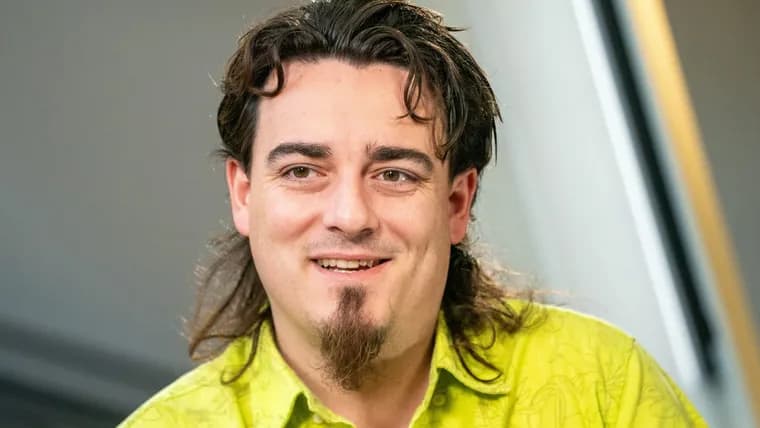
Anduril won a U.S. Navy contract worth up to $2.9 billion on Tuesday to boost submarine production, CNBC reports. The award came days after the Department of Defense tapped Anduril co-founder Palmer Luckey for Project Meridian, a new initiative to identify and develop capabilities for future U.S. conflicts.
Alongside the contract, Anduril is investing $3.7 billion to scale a new shipyard at Sparrows Point, outside Baltimore, Maryland. The yard is slated to start operations in 2030 and create about 3,100 jobs. Anduril said the 2 million-square-foot facility will build components for the Virginia-class submarine. Some parts, including torpedo tubes, will be made at a 160,000-square-foot facility in Orange County, California. Virginia-class vessels are built by General Dynamics Electric Boat and Huntington Ingalls Industries; General Dynamics won a $76.6 billion Navy award to build submarines this summer.
Anduril President and Chief Strategy Officer Chris Brose, speaking at a press briefing, said: "This is about putting more food on the table and being able to meet the requirements that our country has to produce more submarines." He described the aim as becoming "a critical, and hopefully, over time, much larger and growing part of the supply chain for our lead shipbuilders," with a hope that the work will grow to "very large sections of the ship." He also called the project a chance to "really reimagine how a shipyard is built," something he said the current industrial base does not have the luxury of doing. CNBC frames the Virginia-class focus as a push into conventional shipbuilding by a contractor widely known for autonomous drones and crafts. It adds that over the summer the Wall Street Journal reported Anduril was reportedly in talks to build drone boats on the site.
President Donald Trump thanked Luckey by name in comments on Tuesday afternoon marking the investment, calling him a "friend" and "very brilliant guy." Trump also made several references to autonomous submarines and drones.
CNBC says the timing raises questions over defense tech's growing sway in Washington as companies compete for government contracts. Former House Speaker Newt Gingrich and SpaceX CEO Elon Musk are also part of Project Meridian; both SpaceX and Anduril are actively working with the U.S. government. Marc Andreessen, whose venture firm Andreessen Horowitz pours billions into defense tech firms including Anduril, was named to the Pentagon's defense policy board this summer, alongside Thiel Capital's Blake Masters.
Department of Defense Chief Technology Officer Emil Michael told CNBC on Tuesday that he had no worry about a potential conflict of interest over Luckey's involvement: "There's really nothing to see here." He said the mix of academics, former military and industry leaders in Project Meridian is "exactly the right kind of mix that you want" to prepare for any future conflict.
CNBC added a correction: the headline was updated to say co-founder Palmer Luckey was named to the Pentagon's Project Meridian, because an earlier version misstated his title.
Key facts
- Anduril won a U.S. Navy contract worth up to $2.9 billion to boost submarine production, announced on Tuesday.
- Anduril is also investing $3.7 billion in a new Sparrows Point, Maryland shipyard, slated to open in 2030 and create about 3,100 jobs; it will build Virginia-class submarine components.
- The deal came days after co-founder Palmer Luckey was named to the Pentagon's Project Meridian task force, which also includes Newt Gingrich and Elon Musk.
- Pentagon CTO Emil Michael dismissed conflict-of-interest concerns: "There's really nothing to see here."
- Trump thanked Luckey by name, calling him a "friend" and "very brilliant guy," and referred several times to autonomous submarines and drones.
Why it matters
Anduril, known for autonomous drones and crafts, is moving into conventional shipbuilding by targeting the Virginia-class submarine program, the same program built by General Dynamics Electric Boat and Huntington Ingalls Industries. Brose says the aim is to become part of the supply chain for those lead shipbuilders and, over time, to take on very large sections of the ship. The story also lands in a wider pattern CNBC describes: defense tech companies and their leaders have gained influence in Washington in recent months as Trump seeks to bolster U.S. military capabilities, including shipbuilding. Andreessen and Masters on the defense policy board this summer, and Luckey, Gingrich and Musk on Project Meridian, are the examples it cites.
Who it affects
The U.S. Navy, which is buying more submarine production capacity. The lead shipbuilders, General Dynamics Electric Boat and Huntington Ingalls Industries, who would receive components from Anduril's supply chain role. The Baltimore area, where the Sparrows Point shipyard is slated to create about 3,100 jobs, and Orange County, California, where torpedo tubes and some other parts will be made. Also other defense tech firms competing for government contracts, since CNBC says the timing raises questions about the sway of such companies in Washington.
How to use it
There is nothing to adopt here; this is a contract and an investment announcement. For readers tracking defense tech, the concrete markers in the source are that the Sparrows Point yard is slated to start operations in 2030, that Anduril says it will build Virginia-class components there, and that Brose hopes the company's share of the ship will grow over time.
How solid is it
The facts come from a CNBC report built on Anduril's press briefing, with the contract ceiling, the $3.7 billion investment, the jobs figure and the 2030 start date all stated by the company or the article. Note that $2.9 billion is a ceiling ("up to"), and the article does not say how much of it is guaranteed or when the contract term starts or ends. Emil Michael's comments were made to CNBC. The drone-boat plan is only a Wall Street Journal report of talks, described as reported, and the article does not confirm it. CNBC corrected an earlier version of its headline that misstated Luckey's title.
Risks and caveats
The article links the contract and Luckey's appointment only by timing. It does not say how Anduril's contract was awarded or that Luckey influenced it. No critic, ethics watchdog or lawmaker is quoted, and the article does not say who is raising the questions about defense tech's sway; the only reaction on the conflict question is Michael's dismissal. It also does not say whether Luckey or Anduril responded. It does not give Project Meridian's budget or size, or say how many Virginia-class submarines or what share of the work Anduril will produce. The shipyard is not due to open until 2030.
“There's really nothing to see here”
— Emil Michael, Department of Defense Chief Technology Officer, to CNBC