Anthropic CEO Dario Amodei calls AI surrender claim 'absurd'
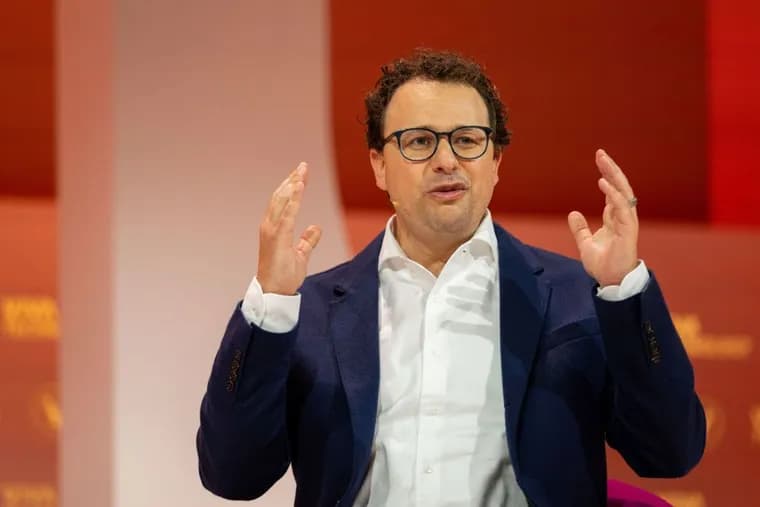
Anthropic CEO Dario Amodei has pushed back against claims that his company believes humans should "surrender human free will" to AI systems. In a long post on X on Wednesday, he called the suggestion "absurd."
"We should never sacrifice legitimacy or self-determination at the altar of efficiency or security," he wrote. He said his argument against autocracy applies "word for word" against governance by AI, that turning governance over to AI is a bad idea, and that nobody who had carefully read his writing or interviews could reasonably conclude he believes otherwise. Amodei says his published essays have repeatedly called for democratic oversight of AI, with the technology strengthening democratic institutions and humans keeping ultimate decision-making power.
TechCrunch reports that the statement follows a growing chorus of Anthropic rivals suggesting human agency could be at risk if AI is developed irresponsibly. Earlier this month, OpenAI CEO Sam Altman said he wanted to ensure people continue to have "agency over the future." Meta's chief AI officer Alexandr Wang wrote in an essay on X that we "should not be okay with a 'handover' of society to AI," and that it is hard to imagine humanity keeping control over fully unconstrained recursive self-improvement.
Amodei separated a broad surrender of free will from the idea that advancing AI systems can do specific tasks in a more automated way, such as driving a car, designing a cancer drug or writing software end to end. He suggested drawing a line at recursive self-improvement (RSI), meaning AI that improves itself without human help, writing that "we may want limits on this process." He also wrote that, as Anthropic said publicly in early November, it does not expect it to be safe for Claude to build successive frontier models fully autonomously, without meaningful human supervision or understanding.
TechCrunch notes that Anthropic is nonetheless laying the groundwork for RSI by using AI for a growing share of its own research and development. The company said in June that Claude authored more than 80% of the code merged into its codebase. An assessment published this month by METR, an AI safety research nonprofit, found Anthropic's models improving at about twice their historical rate, driven mainly by AI-assisted research. Anthropic's IPO filings describe each Claude generation speeding up development of the next, which it calls "closing the loop." TechCrunch adds that Anthropic is by no means alone in pursuing RSI or broader task automation.
Amodei accused competitors of "vibes-based commercial and political positioning," disingenuously using phrases such as "human control and agency" or "AI should just be a tool" without approaching the AI race any differently. Their products, he wrote, do not differ materially in their orientation toward task automation, and every company claims to understand the risks and to offer safeguards.
Key facts
- Amodei called the suggestion that Anthropic believes humans should surrender free will to AI "absurd" in a long X post on Wednesday.
- He suggested drawing a line at recursive self-improvement, writing that "we may want limits on this process."
- Anthropic said in June that Claude authored more than 80% of the code merged into its codebase.
- METR found this month that Anthropic's models are improving at about twice their historical rate, driven mainly by AI-assisted research.
- Amodei accused competitors of "vibes-based commercial and political positioning" while building products that automate tasks in much the same way.
Why it matters
The question of who stays in control of AI has become a point of open dispute among leading AI companies. TechCrunch places Amodei's post after a growing chorus of rivals warning that human agency could be at risk if AI is developed irresponsibly, including recent remarks by OpenAI's Sam Altman and Meta's Alexandr Wang. The sharpest issue is recursive self-improvement. Many safety experts see it as inevitably leading to a loss of human control, a point TechCrunch says Amodei implicitly acknowledged when he raised the possibility of limits.
Who it affects
The dispute directly involves Anthropic, whose stated beliefs are at issue, and the competitors Amodei criticized. It also concerns engineers and safety experts who have to audit increasingly capable systems. More broadly, the debate is about whether people keep decision-making power as AI takes on more tasks. Anyone following Anthropic's IPO filings will find the company describing there how each Claude generation accelerates the next.
How to use it
There is no new product or policy here. The post is useful as a statement of position that can be held against company practice. Amodei draws two distinctions: automating specific tasks is different from surrendering human free will, and governance by AI is a bad idea. On self-improving AI, readers can watch whether the possible limits he mentions turn into anything concrete, and how the share of Anthropic's research and code handled by AI changes.
How solid is it
This account rests on a TechCrunch report that quotes Amodei's X post directly, along with remarks by Altman and Wang. TechCrunch's account does not name who accused Anthropic of believing humans should surrender free will, and does not say that Altman or Wang made that specific accusation. No reply from OpenAI, Meta, Altman or Wang to the post is reported. The 80% code figure is Anthropic's own statement. The METR assessment is described as independent, and the report gives no method or time window for its finding.
Risks and caveats
Amodei wrote only that "we may want limits" on self-improvement; the report describes no specific limit, mechanism or commitment. It says Anthropic is laying the groundwork for recursive self-improvement, not that it has achieved it. TechCrunch also questions the idea of meaningful human supervision: in its assessment, AI is already advancing faster than engineers and safety experts can fully audit it, leaving them increasingly reliant on other AI systems to judge it. The problem compounds when models behave deceptively, particularly when they recognize they are being evaluated. The pursuit is industry-wide: TechCrunch also points to OpenAI's claim this week to have solved a major open problem, the exact speed limit of matrix multiplication.
“We should never sacrifice legitimacy or self-determination at the altar of efficiency or security”
— Dario Amodei, Anthropic CEO, in a post on X