Anthropic's Amodei and Nvidia's Huang clash over AI slowdown plan
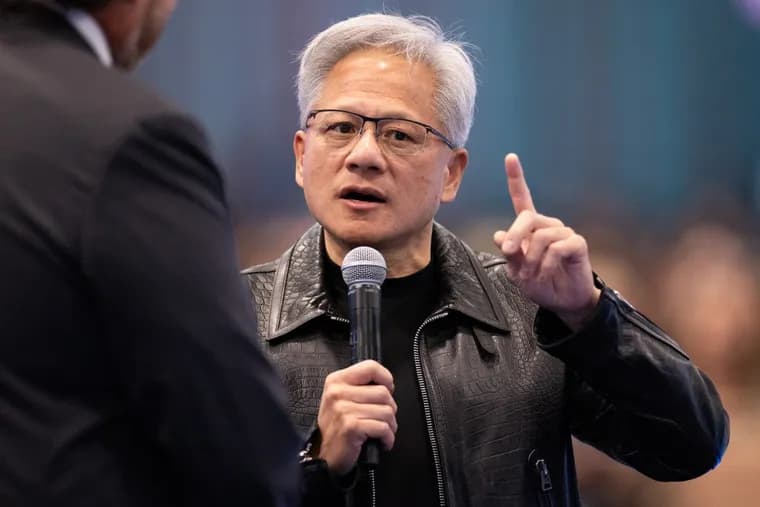
TechCrunch's Equity podcast devoted its latest episode to a question its hosts, Anthony Ha, Kirsten Korosec and Sean O'Kane, could not fully agree on: are AI industry leaders actually trying to slow development down, or just talking about it? The trigger was a plan Anthropic CEO Dario Amodei published to "pace the frontier," which drew quick, wide support from other industry figures, reportedly including OpenAI CEO Sam Altman and, to some degree, Elon Musk, according to Anthony. At the same time, Nvidia CEO Jensen Huang pushed back publicly, echoing President Donald Trump's claims that the AI backlash is a hoax and that regulation is unnecessary.
Sean said the coalescing around Amodei's plan amounted to a near-immediate flip of what he had argued on the show a week earlier, when he did not expect any kind of slowdown because, in his view, these companies are not structured in a way that allows one. He still thinks the plan is short on details, saying he is missing specifics both on why leaders think there are dangers and on what they actually mean by slowing down. Anthony added that the ideas behind the plan were not solely Amodei's; they had been circulating in the AI safety community for a while, and he was struck by how fast much of the industry lined up behind them, which he called both encouraging and a reason for skepticism about whether it reflects genuine change.
Kirsten laid out the substance behind the plan as she understood it: independent third-party evaluators working inside companies like Anthropic and OpenAI to monitor safety practices and incidents, though she stressed a lot of vagueness remains around how that would function; a proposal for major AI companies in democratic countries to coordinate on safety standards and limits; and a broader push for international coordination. Anthony pointed out that none of these three measures explicitly commits anyone to going slower than today, since both Altman and Amodei favor the word "pace" over "slowdown."
Much of the conversation turned to Huang's response. Kirsten noted considerable pushback to Amodei's plan, most visibly from Huang, including a call he took on-stage from Trump at the All-In Summit; the episode does not quote what either man said on that call. Sean argued Huang has stepped into a role once associated with Microsoft's Satya Nadella, who Sean said lost his standing as "the adult in the room" after promising to "make Google dance" and seeing the opposite happen instead. Huang, Sean said, now serves as a useful liaison between the AI industry and the Trump administration. Kirsten called Huang's on-stage appearance "a little staged" and said it underlined how much Nvidia stands to gain from AI advancing without any pacing at all. Anthony added that Trump's and Huang's interests are aligned, with Huang telling Trump what he wants to hear.
The hosts also debated whether market forces alone could substitute for new safety measures. Kirsten asked whether existing regulation plus competitive pressure might already be enough: if a company released something unsafe, wouldn't it lose customers and face regulators? Sean rejected that in the current environment. "We have a federal government at the moment that certainly does not seem eager to enforce regulations broadly speaking, let alone specifically speaking here," he said. He also argued there is little consumer choice actually disciplining the market: enterprise customers, who now generate much of the industry's revenue, are not going to switch, say, from OpenAI's Codex to Anthropic's Claude Code over a principled objection to something one company did, and the labs are cushioned by enough investment capital to absorb losses even when they do occur. "There does not seem like there is a ton of consumer choice driving this market, in the sense of, okay, if one of these companies does something really bad, then they will see an impact in how many cancellations there are or whatever," he said.
Key facts
- Anthropic CEO Dario Amodei published a plan to "pace the frontier" that quickly drew support across the industry, including from OpenAI CEO Sam Altman and, to some degree, Elon Musk.
- Nvidia CEO Jensen Huang publicly pushed back, echoing President Trump's claims that the AI backlash is a hoax and regulation is unnecessary, including during an on-stage call from Trump at the All-In Summit.
- The plan's substance, as described on the podcast, involves three ideas: independent third-party evaluators monitoring safety inside labs like Anthropic and OpenAI, coordination among major AI companies in democratic countries on safety standards, and broader international coordination.
- Host Sean O'Kane said none of these measures explicitly commits anyone to slowing down, and that a week earlier he had argued these companies are not structured in a way that allows a slowdown at all.
- Sean argued market discipline is not really constraining the industry because enterprise customers rarely switch AI vendors on principle and labs are cushioned by heavy investment.
Why it matters
The episode captures a live disagreement inside the AI industry over whether a headline-grabbing safety plan from Anthropic's Dario Amodei represents a real change of course or a vague, low-cost gesture that stops short of committing anyone to actually slowing down, at a moment when Nvidia's Jensen Huang is publicly arguing the opposite: that no slowdown is needed at all.
Who it affects
The frontier AI labs named in the discussion, chiefly Anthropic and OpenAI, whose internal safety practices would be the subject of the proposed third-party evaluators; Nvidia, whose CEO has taken the most visible public stance against the plan; and, by extension, enterprise customers of these companies, whose purchasing behavior the hosts argue is not currently exerting much safety pressure on the market.
How to use it
There is no product, price or policy to act on yet: the proposals described, independent evaluators, cross-company safety coordination among democratic-country labs, and international coordination, remain general ideas raised in public commentary rather than adopted commitments, so there is nothing concrete for a company or regulator to implement based on this discussion alone.
How solid is it
The account comes from three TechCrunch journalists discussing public statements and a blog post rather than from a primary document; the hosts themselves flag the plan as "short on details" and note that none of the three measures they describe explicitly requires slowing anything down, which limits how much weight the discussion itself puts on the plan's substance.
Risks and caveats
The hosts' own assessment is that market forces are unlikely to enforce safety on their own: they argue the federal government is not currently inclined to enforce existing regulation, and that enterprise customers, who now drive much of AI industry revenue, have little practical incentive to switch providers over safety concerns, while heavy investment funding lets labs absorb the fallout from mistakes rather than face real financial consequences.
“We have a federal government at the moment that certainly does not seem eager to enforce regulations broadly speaking, let alone specifically speaking here.”
— Sean O'Kane, on TechCrunch's Equity podcast