Trump defies MAGA backlash, defends AI data centers
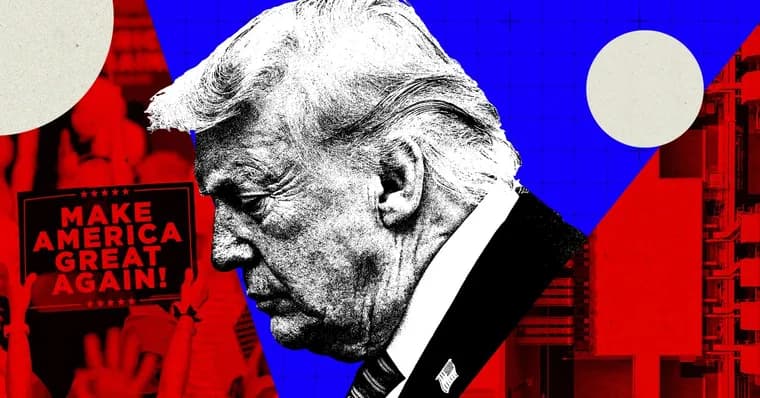
A WIRED weekly column on data centers reports a widening split inside the Republican Party over the industry ahead of the midterms. GOP strategists are warning that voters increasingly resent data centers, yet President Trump keeps defending them.
The numbers back up the strategists' worry. A poll released by The New York Times found that more than 60 percent of Americans, including 47 percent of Republicans, oppose data center construction. In August the National Republican Senatorial Committee sent AI companies a private memo warning that "campaign or party committees can not fix the toxic brand of an entire segment of the economy." Last week GOP strategist Tony Fabrizio told party candidates in a memo that "unqualified support for building more AI data centers is a losing position."
Trump is not listening. In late August he posted on Truth Social that only communities that wanted to be "backwards and poor" would refuse data centers coming to town, and last week he kept posting in support of AI data centers. An analysis by The New York Times of thousands of responses to those posts on his own platform found that anti-data-center and anti-AI comments, including from staunch MAGA accounts, outnumbered positive ones by four to one.
Molly McCann Sanders is one of the voices behind that backlash. She is the president of the Eagle Forum Education & Legal Defense Fund, the group Phyllis Schlafly founded, and describes herself as "a crunchy MAHA mom." A pro-life Catholic from Texas with staunchly conservative views on immigration, she says she is "alarmed by the idea that these data centers can move in and pollute" and is wary of an industry she doesn't consider herself an expert on. She loves Trump but thinks "he's wrong about data centers," calling his "backwards and poor" post "not the right way to go about this" and insisting "we do have legitimate concerns, there are real problems."
The counterargument inside Trump's circle is geopolitical. Hugo Lowell, a WIRED colleague who covers the White House, says Trump "is bullish on AI" because "he's been told that restricting data center development means restricting compute, which means the US loses to China." Former White House AI czar David Sacks and Palantir cofounder Joe Lonsdale echo the China argument; Lonsdale debated Steve Bannon's tech editor Joe Allen on the subject at a side event during the midterm convention, which Sanders says was the only time she heard data centers discussed there at all.
Voters, however, have not settled on which party to trust: the same New York Times poll found that AI and data centers rank low among voters' priorities, and almost 20 percent of respondents don't know which party would handle the issue better. Some Republican candidates are already breaking from Trump's line regardless. Tom Tiffany, the Trump endorsed GOP nominee for governor of Wisconsin, has attacked his Democratic opponent David Crowley over what Tiffany calls pro-data-center views. Still, Lowell says Trump "thinks MAGA at the end of the day will back him, on Epstein, on Iran, on AI."
The rest of the column rounds up related developments. The Washington Sun reports that the Interior Department is weighing at least 12 data center proposals across at least 17,600 acres of public land, more than previously known. In Pennsylvania, organizers who helped block a data center project told WIRED writer Natalie Fertig that politicians in both parties still seem not to care about their concerns. Amazon has admitted, per Reuters, that it permanently lost customer data stored in data centers hit by Iranian drone strikes earlier this year. And Virginia governor Abigail Spanberger signed an executive order creating a state AI task force that may limit data centers, notable because Virginia is home to Data Center Alley, a global hub for the facilities. The column also mentions Bezzy, a server shaped plush toy that plays real recorded drone noise from people living near a Virginia data center, part of a wider campaign to raise awareness of the backlash.
Key facts
- A New York Times poll found more than 60 percent of Americans, including 47 percent of Republicans, oppose data center construction.
- Trump posted on Truth Social in late August that only communities wanting to be "backwards and poor" would refuse data centers; an NYT analysis found responses to his posts ran four to one against him.
- GOP strategist Tony Fabrizio and the National Republican Senatorial Committee have separately warned the party that defending data centers is a political liability.
- Conservative activist Molly McCann Sanders, president of the Eagle Forum Education & Legal Defense Fund, says Trump is "wrong about data centers" over pollution and property concerns.
- The Interior Department is considering at least 12 data center proposals on at least 17,600 acres of public land, and Virginia's governor signed an executive order that may limit them.
Why it matters
The episode shows AI infrastructure has stopped being a purely technical or economic story and become a live midterm liability for the party that has championed it. It matters specifically because Trump is standing against his own party's strategists: the NRSC and Fabrizio memos are internal warnings, not opposition talking points, and he is dismissing them in public rather than adjusting course.
Who it affects
Republican candidates in competitive races, such as Wisconsin's Tom Tiffany, who must decide whether to follow Trump's pro-data-center line or distance themselves from it. It also affects the AI industry, which depends on political goodwill for continued buildout; conservative activists and groups like the Eagle Forum who are organizing around pollution and property concerns; and residents near existing or proposed sites in Virginia and Pennsylvania.
How to use it
Treat the NRSC and Fabrizio memos as an early signal of a coming shift in Republican messaging on AI infrastructure. The concrete places to watch for the politics turning into actual policy are Virginia's new state AI task force, whose scope is not yet defined, and the Interior Department's review of at least 12 data center proposals on public land, where a location or company has not yet been named.
How solid is it
This is a WIRED weekly column by named senior writer Molly Taft, built on on the record quotes from a named conservative activist and named WIRED colleagues who cover the relevant beats. The poll and comment analysis figures are attributed by name to The New York Times, and the public land and Amazon items are attributed to the Washington Sun and Reuters respectively, though this text cites those outlets' findings rather than linking their underlying data directly.
Risks and caveats
The source does not name which company or state is behind the 12 data center proposals on public land, nor give a timeline or scope for Virginia's task force. It also does not say whether the Iranian drone strikes that hit Amazon's data centers targeted Amazon specifically or were part of a broader attack. The Bezzy plush toy detail is a genuine product mentioned as a lighter aside within otherwise straight political reporting, not a joke to be read as evidence of policy change.
“Only communities that wanted to be "backwards and poor" would refuse data centers coming to town.”
— Donald Trump, Truth Social post, late August