Anthropic's Model Hardware Standard lets AI agents control lab hardware
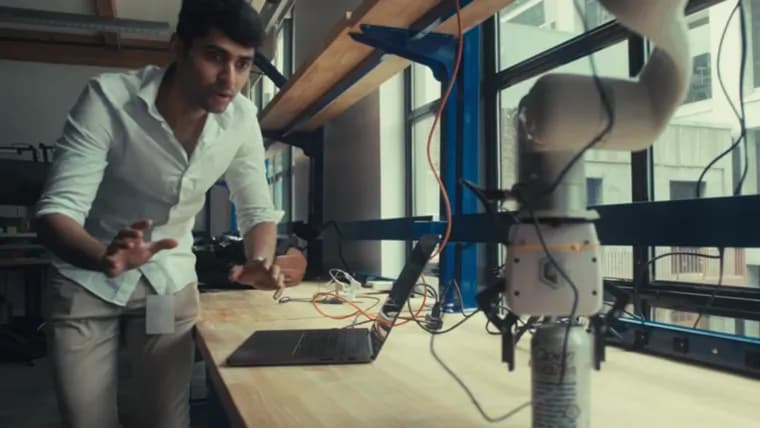
Anthropic has introduced the Model Hardware Standard (MHS), a "research preview" set of standardized drivers designed to let AI agents interface with and control arbitrary physical devices, extending agentic AI beyond the text, images, code and other purely digital actions it has mostly been limited to so far.
Anthropic is positioning the effort first as a tool for scientists, aimed at streamlining the arduous custom software integrations labs typically build by hand to get an experiment's disparate hardware components working together. MHS is meant to give devices a common interface and a common data format so they can talk to each other across a network without a bespoke "translator" program in between, according to Anthropic. The company says the standardized system could reduce weeks or months of exacting experimental setup down to hours or minutes.
Anthropic Technical Staffer Alek Kemeny says the idea for MHS came from watching neuroscientist Arco Bast work through an experiment on memory formation in the brain at the HHMI Janelia Research Campus in Ashburn, Virginia. Kemeny said Bast had built an interface to get the experiment's rotating laser beams, microscopes, cameras and other components coordinating through one common interface. Kemeny recalls thinking at the time: "This idea could be used to have AI run any science experiment in the world."
Nothing about a common machine-interface language requires AI, and Anthropic says MHS devices can be controlled directly in real time through command-line prompts and API code files. But connecting an MHS system to an AI model through the Model Context Protocol lets scientists interact with devices in natural language instead, and lets the model reason through each step of an experiment, update parameters in real time and, in some cases, recover from hardware errors without human intervention, according to Anthropic.
Anthropic has not published a launch or general-availability date beyond the current research-preview stage, nor pricing, licensing terms or a sign-up process. It also has not named HHMI Janelia as a formal partner, and gives no list of which specific devices or manufacturers MHS supports: the lasers, microscopes and cameras mentioned are examples from Bast's own lab setup, not an official compatibility list.
Key facts
- Anthropic introduced the Model Hardware Standard (MHS), a "research preview" set of standardized drivers that let AI agents interface with and control physical devices.
- MHS targets scientists first, aiming to replace the custom software integrations labs build by hand; Anthropic says it could cut weeks or months of experimental setup down to hours or minutes.
- Anthropic Technical Staffer Alek Kemeny says the idea came from watching neuroscientist Arco Bast coordinate lasers, microscopes and cameras for a memory-formation experiment at the HHMI Janelia Research Campus in Ashburn, Virginia.
- MHS devices can run without AI, controlled directly via command-line prompts and API code files.
- Connecting an MHS device to a model through the Model Context Protocol lets scientists give natural-language instructions, and lets the model reason through each step, adjust parameters and, in some cases, recover from hardware errors without help, Anthropic says.
Why it matters
Agentic AI has so far stayed mostly inside a computer, limited to text, images, code and other software-side actions. Anthropic's Model Hardware Standard (MHS) is a step toward extending that into the physical world by giving lab equipment, and the AI agents that might control it, a shared driver interface instead of one-off custom code for each device. Anthropic frames the immediate payoff as speed: replacing the bespoke "translator" software labs currently build by hand with a common interface and data format could turn weeks or months of experimental setup into a matter of hours or minutes, the company says.
Who it affects
The stated audience is scientists and research labs, whose staff currently spend significant time writing custom integration code just to get instruments talking to each other. The framing example is neuroscientist Arco Bast at the HHMI Janelia Research Campus in Ashburn, Virginia, whose manual work wiring together rotating laser beams, microscopes and cameras for a brain memory-formation experiment reportedly convinced Anthropic Technical Staffer Alek Kemeny that AI could run experiments this way more broadly. Beyond science, MHS is aimed at anyone building agentic systems that need to reach past software and into physical equipment.
How to use it
MHS does not require AI at all: Anthropic says devices built to the standard can be controlled directly in real time through command-line prompts and API code files. The AI path runs through the Model Context Protocol, Anthropic's own protocol for connecting models to external systems. Linking an MHS device to a model over MCP lets a scientist give instructions in plain natural language, and lets the model work through each experimental step, adjust parameters as it goes, and in some cases recover from hardware errors on its own. Anthropic has not published pricing, licensing terms or a sign-up process for the research preview, and has not said when, or whether, MHS will move beyond that stage.
How solid is it
Every claim here, including the promise to cut setup to "hours or minutes," the natural-language control, and the hardware-error recovery, comes from Anthropic's own announcement rather than an independent test or a third-party benchmark. No specific list of supported devices or manufacturers is given: the lasers, microscopes and cameras mentioned are examples from Bast's personal lab setup, not an official compatibility list, and HHMI Janelia is not named as a formal partner or pilot site, only as the source of the idea. Anthropic also does not say how often the described hardware-error recovery actually succeeds, beyond its own qualifier that it works only "in some cases."
Risks and caveats
Giving a model real-time control over physical hardware, lasers included, raises the cost of a mistake well past a bad line of code, and Anthropic's own wording that models can recover from hardware errors "in some cases" implies they sometimes cannot. MHS is still at the research-preview stage, with no announced timeline, pricing or public device-compatibility list, so how it holds up outside a single lab's controlled setup is untested in what Anthropic has published so far.
“This idea could be used to have AI run any science experiment in the world”
— Alek Kemeny, Anthropic Technical Staffer