Artcraft releases seven open source Adobe clones, says it used Claude Opus 5.5
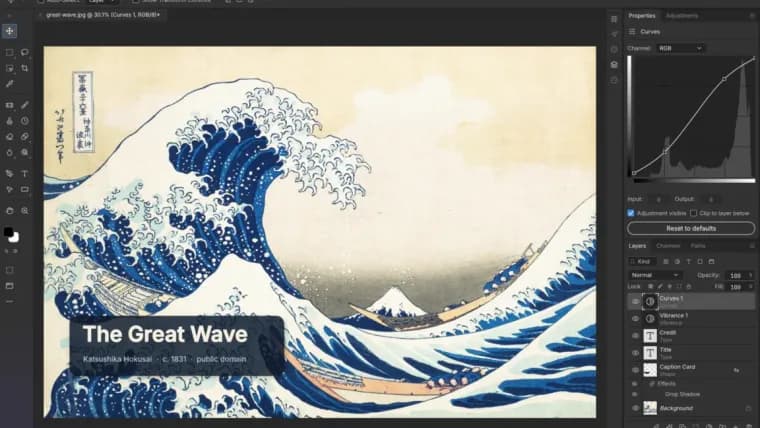
Artcraft began last year as a "controllable AI for artists", a product for precise editing of AI-generated images and videos after they are created. Over the weekend the brand changed course and debuted a suite of seven open source apps that recreate the user interface and tools of Adobe's Photoshop, Illustrator, Premiere, Lightroom, After Effects, InDesign and Acrobat Pro.
Announcing the apps on Reddit earlier this week, software developer Brandon Thomas said he used Anthropic's Claude Opus 5.5 to create "clean-room replacements" for Adobe's closed source software. They are written in Rust, with WebAssembly versions available for use in a browser. The article describes the approach as AI-powered reverse engineering that aims to mimic the look, feel and functionality of Adobe's software, with what Thomas hopes will soon be perfect fidelity.
The launch has drawn criticism. Commenters on Hacker News and elsewhere have taken pains to point out the new software's many current shortcomings. Thomas himself calls the current state a "super early alpha". Even so, he made what the article calls a grandiose promise that it will soon become something just as functional as anything Adobe has put out.
On Reddit he wrote: "We're going to reach 100% [feature] parity within a month", describing plans to squash bugs and add features quickly with the help of community reports. Days later, on Hacker News, he amended that slightly: "99% parity will take a while, but I'm sure it'll be measured in months and not years."
The article frames the project as the latest entry among free and open-source alternatives that have long let people avoid the difficulty and expense of dealing with Adobe's Creative Suite.
Key facts
- Artcraft, which started last year as a "controllable AI for artists", pivoted over the weekend to a suite of seven open source apps.
- The apps recreate the interface and tools of Photoshop, Illustrator, Premiere, Lightroom, After Effects, InDesign and Acrobat Pro.
- Brandon Thomas said he used Anthropic's Claude Opus 5.5 to build "clean-room replacements" in Rust, with WebAssembly versions for browsers.
- Thomas promised 100% feature parity within a month on Reddit, then said on Hacker News that 99% parity would be measured in months, not years.
- Thomas describes the current state as a "super early alpha", and commenters have pointed out many shortcomings.
Why it matters
Free and open-source alternatives to Adobe's Creative Suite already exist, and some or all of its capabilities have been replicated before. What is new here, as the article presents it, is the method and the breadth: one developer says he used an AI model to recreate seven separate Adobe products at once, covering image editing, vector graphics, video, photo management, motion graphics, page layout and PDF work.
Who it affects
People who want to avoid the difficulty and expense of dealing with Adobe's Creative Suite are the obvious audience. The apps are open source and the Rust code also ships as WebAssembly for browser use. Thomas also invites community bug reports, so early testers will shape how quickly the apps improve.
How to use it
The apps are open source, and WebAssembly versions are available for use in a browser. Thomas plans to fix bugs and add features quickly with the help of community reports, so feedback from users is part of the plan. The article gives no repository name, license or download link.
How solid is it
Not very, yet. Thomas himself calls the current state a "super early alpha", and commenters on Hacker News and elsewhere have pointed to many current shortcomings. His parity promises moved within days: from 100% within a month on Reddit to 99% in "months and not years" on Hacker News. The "clean-room" label and the use of Claude Opus 5.5 are his own statements as reported by the article. The article gives no explanation of how the reverse engineering was carried out or what clean-room involved in practice.
Risks and caveats
Perfect fidelity to Adobe's look, feel and functionality is a hope, not an achievement. The article lists no specific shortcomings, only that commenters see many. No response from Adobe is given. No usage, download or user figures are given, and the source gives only relative dates (over the weekend, earlier this week).
“We’re going to reach 100% [feature] parity within a month”
— Brandon Thomas, on Reddit