BSD Unix comic part 6 traces how BSD broke free of AT&T licensing
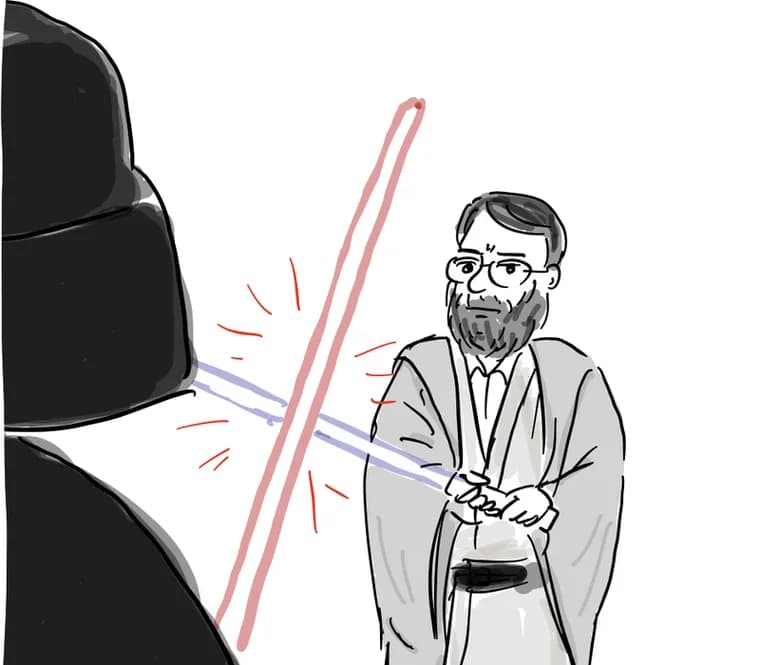
The sixth and final part of the BSD Unix series on fosscomics.com, titled "The Struggle for Freedom", tells how BSD stopped depending on AT&T's code and license. It is a comic, so much of the story is carried in speech bubbles and short narration boxes.
The story starts with price. Early Unix was available through inexpensive source-code licenses because a 1956 antitrust settlement kept AT&T out of the commercial computer business, and some early licenses cost just $99. DARPA also valued Unix's source-code availability, and that was why it chose BSD Unix over DEC's VMS for building the Internet. Then AT&T's breakup in 1984 opened the way for it to sell Unix commercially, and the company raised the price from $99 to $250,000.
BSD still required an AT&T license. As fees rose, some companies wanted BSD's networking code on its own. CSRG, the Berkeley group behind BSD, decided to release its networking code and utilities separately and to write its own license. Networking Release 1 (Net/1) came out in June 1989. The new BSD license allowed use without an AT&T source license. People could modify the code or redistribute it as source or binaries without paying Berkeley royalties. They had to retain the source copyright notices and credit UC Berkeley and its contributors in product documentation. The comic shows Net/1 available by mailed tape for $1,000 or as a free FTP download, and selling well enough that grants and tape sales funded development "for a while".
That funding let CSRG go further. The comic has the group note that it had already changed much of the kernel, so the remaining work was the tools and the C library. With help from outside contributors, most of the AT&T code was rewritten in eighteen months. With most of AT&T's Unix code removed, a completely free BSD Unix was released in June 1991. The source was still available on tape for the $1,000 copying fee, or as a free download by FTP.
CSRG then founded a company called BSDi to sell BSD Unix commercially, and the University of California also began selling BSD Unix in the early 1990s. An advertisement claimed it was 95% cheaper than AT&T Unix. That did not go down well with AT&T.
In April 1992, AT&T subsidiary USL sued BSDi, and UC Berkeley was added to the lawsuit later. AT&T accused the BSD side of distributing Unix code without permission. The BSD side answered that AT&T's Unix System V itself included plenty of BSD code, such as virtual memory, TCP/IP and vi. The BSD license allowed anyone to use that code if they kept the copyright notices, but AT&T removed the notices from the source and sold Unix as though it had written all the code itself. The BSD side filed a countersuit against AT&T.
In February 1994, the two sides agreed that each could sell Unix, provided CSRG removed some remaining AT&T Unix code. The comic's closing summary says BSD Unix began with AT&T's code but much of it had been rewritten, and evidence had emerged that AT&T had incorporated BSD's TCP/IP, virtual memory and vi code while removing copyright notices. Even so, legal uncertainty hung over BSD distribution during the lawsuit, and the two years lost before a completely free BSD Unix appeared gave Linux room to grow. A final speech bubble has a character saying that if BSD Unix could have been installed on an Intel 386 PC, there would have been no need to write Linux.
Key facts
- AT&T raised the Unix license price from $99 to $250,000 after its 1984 breakup, according to the comic.
- CSRG released Net/1 in June 1989 under a new BSD license that allowed use without an AT&T source license, with copyright notices kept and UC Berkeley credited.
- Most of AT&T's code was rewritten in eighteen months with outside contributors, and a completely free BSD Unix followed in June 1991.
- USL, an AT&T subsidiary, sued BSDi in April 1992; the BSD side countersued, and in February 1994 both sides agreed each could sell Unix once CSRG removed some remaining AT&T code.
- The comic argues the two years lost before a completely free BSD appeared gave Linux room to grow.
Why it matters
The comic explains why BSD ended up with a permissive license and a code base free of AT&T's Unix code. The chain it lays out is short: AT&T's price rise made the old arrangement costly, CSRG split out its networking code under its own license, then rewrote the AT&T parts. The BSD license it describes asks little of users: keep the copyright notices and credit UC Berkeley and its contributors in product documentation, with no royalties to Berkeley. It also offers a view of why Linux found room to grow, though that is the comic's reading of events.
Who it affects
The story is about CSRG at Berkeley, AT&T and its subsidiary USL, BSDi, the University of California, and the companies, schools and research labs that licensed Unix. DARPA appears as an early backer of BSD Unix for building the Internet. For present-day readers it is background for anyone who uses or builds on BSD-licensed code or follows the history of open source.
How to use it
It is a six-part comic history, and this is the last part. Read it as a compact timeline: 1984 breakup and price rise, June 1989 Net/1, June 1991 free BSD, April 1992 lawsuit, February 1994 settlement. The reference list at the end points to deeper sources, including Marshall Kirk McKusick's essay on twenty years of Berkeley Unix and Andrew Leonard's 2000 article on BSD Unix.
How solid is it
The comic cites numbered references, among them Leonard's article, McKusick's essay in Open Sources, a Federal Judicial Center account of the AT&T breakup and Dennis Ritchie's page on old Unix licenses and price lists. Some figures are thinly supported in the text: the $250,000 price has no stated year or license type beyond the 1984 breakup context, and the 95% cheaper figure is an advertisement's claim with no baseline prices. The dialogue lines are speech bubbles, not quotations from named people.
Risks and caveats
This is a simplified, illustrated retelling, and it takes the BSD side of the dispute. No terms of the February 1994 settlement are given beyond the single sentence about each side being able to sell Unix and CSRG removing some remaining AT&T code: no amounts, no court, no judge. The source does not say which court the 1992 lawsuit was filed in, nor the lawsuit's outcome beyond the 1994 agreement. The closing remark about Linux is a bubble not attributed by name, with no date given.
“But legal uncertainty hung over BSD distribution during the lawsuit, and the two years lost before a completely free BSD Unix appeared gave Linux room to grow.”
— Narration, fosscomics.com, BSD Unix Part 6