Canva releases Canva Craft, its first in-house image generation model
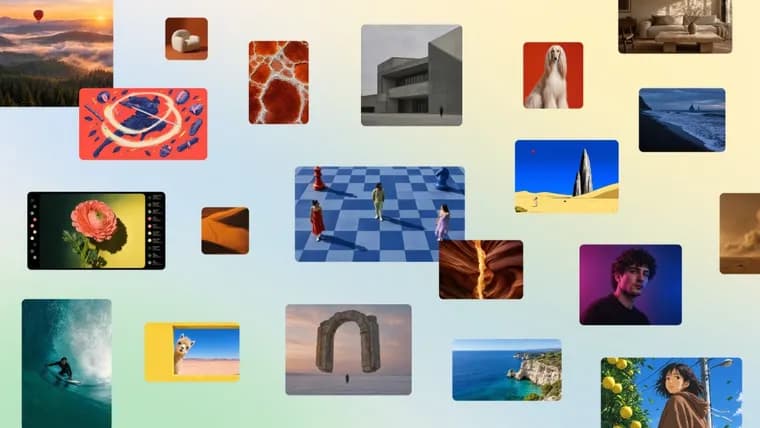
Design platform Canva has released its first image generation model, called Canva Craft. Canva's research team built it to compete with same-category models from Google, OpenAI, ByteDance and Meta.
Canva says the model works in two stages. First it interprets the user's prompt and builds a plan covering spatial relationships of elements, relative scale, visual hierarchy and information for text generation. Then it generates the image, at up to 2K resolution and in a possible 30 different aspect ratios for various platforms. Canva says this approach produces accurate object details and legible text, and that users can make precise edits without changing other parts of the image.
The training data is unusual. Canva says that instead of photographs it used designs: human-designed templates from its library, including posters, social posts, presentations, infographics, menus and typography-rich layouts. As a result, images made with Canva Craft can be converted into layered designs using Canva Magic, the company's image-to-design transformer. Canva released its own model that understands designs and layers last year.
Canva Craft is available now to all users on the platform, through the Dream Lab tab. It will also come to the Canva API. Canva plans to support image generation in third-party chatbots such as ChatGPT and Gemini through Canva's MCP.
TechCrunch notes that Canva has used a number of image models for generation on its platform, so the new model will likely help the company save on API costs. Canva itself says that besides costs, the model gives it better quality and speed control. The company acquired media generation platform Leonardo.ai in 2024, and says researchers from Leonardo contributed to the new model. It is also developing two cost-efficient versions, Craftfast and Craft-ultrafast, which it says will be released soon.
On the business side, TechCrunch reports that Canva was on track for $4 billion in revenue last year, but cut its growth forecast for 2026. According to external analysts, its valuation reportedly fell from $42 billion to $35 billion as a result.
Key facts
- Canva Craft is Canva's first image generation model, built by its research team and aimed at competing with models from Google, OpenAI, ByteDance and Meta.
- It works in two stages: it plans the layout (spatial relationships, scale, visual hierarchy, text), then generates an image of up to 2K resolution in a possible 30 aspect ratios.
- It was trained on human-designed templates from Canva's library, not photographs, so outputs can be converted into layered designs with Canva Magic.
- It is available to all users via the Dream Lab tab; Canva API access and support in third-party chatbots such as ChatGPT and Gemini through MCP are planned.
- Two cheaper versions, Craftfast and Craft-ultrafast, are in development and due soon.
Why it matters
Canva is moving from using a mix of outside image models to having its own, and it is entering a field with models from Google, OpenAI, ByteDance and Meta. The distinguishing choice is the training data: designs and templates instead of photographs. Canva says this gives legible text and accurate object details, and lets outputs become layered, editable designs through Canva Magic. TechCrunch also says an in-house model will likely save API costs; Canva adds that it gives better quality and speed control.
Who it affects
All Canva users can now use the model from the Dream Lab tab. Developers may use it later through the Canva API, and people who work in ChatGPT or Gemini may get Canva image generation there once the planned MCP support arrives. The model is also a competitive signal for the other companies Canva names as rivals.
How to use it
Open the Dream Lab tab on the Canva platform and select Canva Craft; it is available to all users. Generated images can be turned into layered designs with Canva Magic. API access and chatbot support through MCP are planned but have no date. Craftfast and Craft-ultrafast are due "soon".
How solid is it
The description of the two-stage design, the training data and the availability comes from Canva, as relayed by TechCrunch. The source gives no benchmark results and no head-to-head comparison with Google, OpenAI, ByteDance or Meta models. The cost-saving point is TechCrunch's own inference ("likely"), with no figure given. The valuation drop is reported per external analysts, not confirmed by Canva, and the $4 billion revenue figure is what the company was "on track" for, not a reported actual.
Risks and caveats
Quality claims such as legible text and precise edits are Canva's own and unverified in the source. No pricing or usage limits are stated. The API, chatbot support and the two cheaper versions have no dates beyond "soon" or none at all. The business backdrop is a cut 2026 growth forecast and a reported valuation fall from $42 billion to $35 billion, according to external analysts.