Cognition CEO denies SpaceX tried to acquire the startup
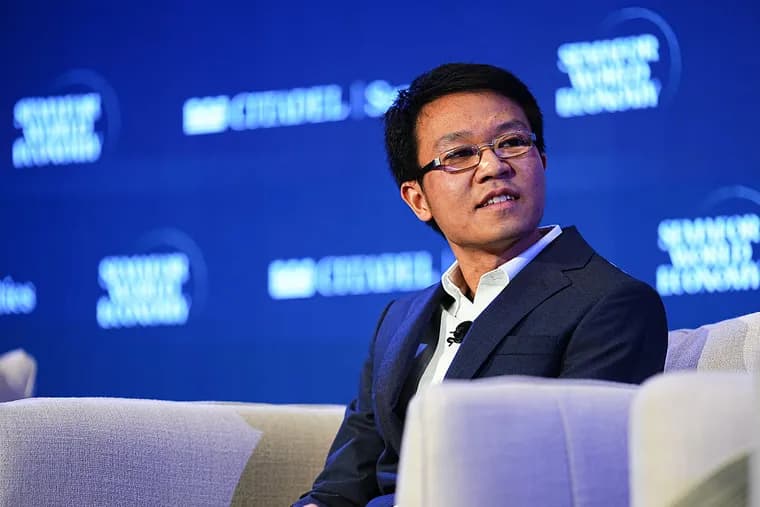
Bloomberg reported Wednesday, citing sources familiar with the matter, that Elon Musk's SpaceX had attempted to acquire AI coding startup Cognition as SpaceX works to catch up to OpenAI, Anthropic, and Google in the AI race. Cognition CEO Scott Wu disputed the report soon after it published, writing on X that the story was inaccurate, that Cognition "is not for sale," and that the two companies haven't been in talks. Bloomberg's own account is more qualified than Wu's denial: it reports that the acquisition talks are no longer active, but that SpaceX and Cognition are still discussing working together, potentially with Cognition using SpaceX's computing capacity. Wu did not address that specific claim in his denial, and SpaceX and Cognition did not respond to requests for comment.
The report comes days after SpaceX closed a $60 billion acquisition of Cursor, another AI coding startup, with that deal closing the week before. SpaceX had already acquired Musk's AI company, xAI, earlier in 2026. It then went public in a blockbuster IPO in June, with its market capitalization rising to nearly $2.3 trillion at its peak. SpaceX has sold investors on ambitions that include eventually building data centers in space, but its xAI business remains relatively early-stage and has fallen behind competitors, and it has also had to contend with its chatbot Grok's repeated controversies, including last year's "MechaHitler" incident and this year's nonconsensual sexual imagery scandals, as it tries to win over enterprise customers.
Last week, Musk told SpaceX employees that in about "four or five years, AI will be 99% of the value" of the company, though achieving that will require SpaceX to pull in much more revenue from AI than it currently does. AI-assisted coding has emerged as one of the clearest ways to monetize AI: Anthropic's rapid growth, fueled in large part by its Claude Code tool, is one example, and bringing Cursor into the fold was part of the same strategy for SpaceX. The two companies were already working together before the Cursor acquisition closed, and this month Cursor and SpaceX jointly released Grok 4.6, a new model the article says scores higher on benchmarks for coding and complex multi-step agentic tasks.
Adding Cognition, whose coding agent is called Devin, and an enterprise customer base that includes Mercedes-Benz, Citi, and Goldman Sachs, would have given SpaceX another way to deepen its push into AI coding and compete for enterprise customers. Cognition remains one of the largest independent AI coding startups that has not yet been acquired by a major AI model maker. Bloomberg's separate reporting on the state of talks, that an acquisition is no longer being discussed but a working relationship still is, including Cognition possibly using SpaceX's spare computing capacity, was not addressed in Wu's public denial; SpaceX currently sells that computing capacity to other AI players, including Anthropic, until it needs the capacity for itself.
Cognition raised a $1 billion round in late May at a $25 billion post-money valuation, and Bloomberg reports it is now in early talks for a new funding round at a $40 billion valuation. The company made headlines last year when it acquired the remaining assets of rival startup Windsurf, after Google DeepMind separately acqui-hired Windsurf's CEO and top researchers in a $2.4 billion deal for talent and licensing rights; the price of Cognition's own acquisition of Windsurf's remaining assets is not disclosed. After the merger, Cognition laid off 30 employees and offered buyouts to the remaining 200 Windsurf staff; those who chose to stay faced strict expectations, including a workweek of more than 80 hours and six days a week in the office. The article notes that this kind of intense work culture would not be out of place at a Musk company: Musk has said he personally works up to 120 hours a week and often sleeps on office or factory floors.
Key facts
- Bloomberg reported, citing sources familiar with the matter, that Elon Musk's SpaceX attempted to acquire AI coding startup Cognition as SpaceX works to catch up to OpenAI, Anthropic, and Google; Cognition CEO Scott Wu denied the report soon after on X, calling it inaccurate and saying Cognition "is not for sale."
- The report followed SpaceX's $60 billion acquisition of Cursor, another AI coding startup, which closed the week before; SpaceX also acquired xAI earlier in 2026 and went public in June, with its market capitalization peaking near $2.3 trillion.
- Bloomberg reports the Cognition acquisition talks are no longer active, but that SpaceX and Cognition are still discussing working together, potentially with Cognition using SpaceX's spare computing capacity; Wu did not address that specific claim in his denial.
- Cognition, maker of coding agent Devin, counts Mercedes-Benz, Citi, and Goldman Sachs among its enterprise customers; it raised $1 billion in late May at a $25 billion post-money valuation and is reportedly now in early talks for a new round at a $40 billion valuation.
- Cognition acquired Windsurf's remaining assets last year after Google DeepMind's separate $2.4 billion acqui-hire of Windsurf's CEO and top researchers, then laid off 30 employees and offered buyouts to the remaining 200 Windsurf staff, with those who stayed facing a workweek of more than 80 hours and six days in the office.
Why it matters
This is less a story about a completed deal than about the wave of consolidation moving through AI coding tools, and about SpaceX's expanding bet on AI as a business line beyond rockets. SpaceX closed a $60 billion acquisition of Cursor only a week earlier, has already folded in Musk's xAI, and Musk has told employees that in about four or five years, AI will be "99% of the value" of the company. Google DeepMind separately acqui-hired Windsurf's CEO and top researchers for $2.4 billion last year, and Anthropic's growth, powered in part by Claude Code, is cited in the article as proof that AI coding tools can be monetized at scale. Cognition remains one of the largest independent AI coding startups that has not yet been acquired by a major AI model maker, which is what makes a denied approach from SpaceX notable even though nothing was signed.
Who it affects
Cognition and its CEO Scott Wu are the most direct subject, along with the company's enterprise customers, including Mercedes-Benz, Citi, and Goldman Sachs, who would have been affected by any change of ownership. SpaceX and its AI arm, xAI, are the other side of the reported approach, as is Cursor, which SpaceX already owns and which jointly released Grok 4.6 with SpaceX this month. Anthropic is named as one of the AI companies that already buys spare computing capacity from SpaceX, the same capacity Cognition could reportedly end up using as part of a working relationship with SpaceX, before SpaceX eventually needs that capacity for itself. The 200 former Windsurf employees who were offered buyouts, and the ones who stayed on under the stricter post-merger schedule, are also part of the picture the article draws around how Cognition operates after an acquisition.
How to use it
There is no deal to act on: as of Wu's denial, Cognition says it is not for sale, and its enterprise customers and Devin users see no change in who they are dealing with. Anyone tracking AI coding tools has a concrete product to look at instead: Grok 4.6, which Cursor and SpaceX jointly released this month and which the article says scores higher on coding and complex multi-step agentic benchmarks. Investors or partners watching Cognition specifically should note that it is reportedly in early talks for a new funding round at a $40 billion valuation, up from the $25 billion post-money valuation it raised at in late May, rather than any acquisition talks with SpaceX.
How solid is it
The acquisition claim itself rests on Bloomberg's reporting, sourced to unnamed people familiar with the matter, which this account is relaying rather than independently confirming. Cognition's denial is on the record and specific: CEO Scott Wu called the story inaccurate and stated directly that Cognition is not for sale. But the two accounts do not fully line up. Wu says the companies "haven't been in talks," while Bloomberg's own reporting describes acquisition talks as no longer active rather than as never having happened, and adds that conversations about a looser working relationship, including possible use of SpaceX's computing capacity, are continuing; Wu's denial does not address that computing-capacity detail. Neither SpaceX nor Cognition responded to requests for comment, so the acquisition side of the story rests on Bloomberg's sourcing rather than on-the-record confirmation from SpaceX itself.
Risks and caveats
No timeline is given for Cognition's separately reported $40 billion valuation funding round; it is described only as being in "early talks." The central tension in the story, Wu's flat denial against Bloomberg's more qualified account of talks going inactive rather than never happening, is not reconciled by anything on the record here. The article also does not state that Musk personally directed or was aware of SpaceX's approach to Cognition; only SpaceX as a company is named as the would-be acquirer. And the piece carries background risk for SpaceX's enterprise AI ambitions: its Grok chatbot has been the subject of last year's "MechaHitler" incident and this year's nonconsensual sexual imagery scandals, controversies that sit alongside SpaceX's push toward enterprise customers like the ones Cognition already serves.
“is not for sale”
— Scott Wu, Cognition CEO, on X