David Silver pledges his Ineffable Intelligence fortune to charity
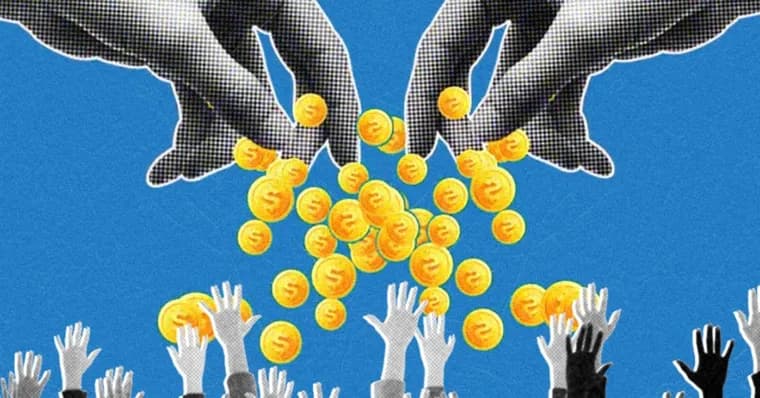
David Silver spent 2013 to 2025 as a researcher at Google DeepMind, where he specialized in reinforcement learning and, in 2016, led the development of AlphaGo, the first AI to beat a human champion at Go. In January he left to found Ineffable Intelligence, raising $1.1 billion from investors at a $5.1 billion valuation, reportedly the largest seed round in Europe's history. He has vowed to donate every dollar he personally collects from any future sale of the company to charity, telling WIRED he plans to direct the money toward causes like the Malaria Foundation that can save the most lives in the near term, rather than, in his words, 'the galactic future of humanity.'
Silver formalized the commitment through Founders Pledge, a nonprofit, founded in 2015, that has entrepreneurs sign a binding contract to give away wealth, in contrast to the public but nonbinding Giving Pledge. Founders Pledge cofounder David Goldberg says the group's goal is to find 'the very best ways to deploy capital at scale to make the world better,' and pushes back on comparisons to effective altruism, calling the organization 'far more humanist.' The value of pledges the nonprofit has recorded has jumped from $400 million in 2023 to $4 billion so far this year, and the AI industry now accounts for a third of its lifetime pledge total. Silver is one of a growing list of AI founders making similar commitments, alongside Microsoft AI CEO and DeepMind cofounder Mustafa Suleyman and Lovable founder Anton Osika, who has pledged to give away half of his equity proceeds. The article notes that if OpenAI and Anthropic go public as planned, minting large numbers of new millionaires, AI could soon make up an outsize share of tech philanthropy overall.
That prospect has revived older debates about megadonor giving. Linsey McGoey, a sociology professor at the University of Essex and author of 'No Such Thing as a Free Gift,' argues that appealing to capitalism to fix problems capitalism itself created, including extreme wealth concentration, is 'like calling upon the arsonist to hose down the house he's just set on fire.' Apolline Taillandier, a political theory researcher at the University of Cambridge, points out that megadonors 'are not elected' and 'have no need to account for their decisions.' The piece places the new AI philanthropists alongside established examples: the Gates Foundation has given away more than $100 billion to poverty and disease causes in its 25 years, and Mark Zuckerberg and Priscilla Chan have pledged their $200 billion fortune to the Chan Zuckerberg Initiative. Gates Foundation CEO Mark Suzman has separately acknowledged the pitfalls of relying on megadonors, saying in 2023 that 'it's not right for a private philanthropy to be one of the largest funders of multinational global health efforts' after the foundation became the WHO's second-largest donor, though he attributed the imbalance partly to shrinking government contributions. A study cited in the piece found that reliance on philanthropic funding led the WHO to prioritize donors' preferred causes over other urgent issues, such as non-communicable diseases; the WHO put forward a new financing model in 2022.
The piece also raises the risk that a philanthropic pledge could be used to justify reckless behavior. It points to Sam Bankman-Fried, the crypto founder and self-described effective altruist sentenced in 2024 to 25 years in prison for fraud, whose decisions a former colleague testified were driven by cold statistical risk calculations. Silver rejects any comparison to that logic, saying his pledge is not a hedge against AI going wrong: he believes superintelligence will have a 'radically positive impact.' He argues the pledge instead removes a personal financial incentive that could otherwise push development astray, saying 'building a superintelligence company is a huge responsibility to the planet, and that responsibility shouldn't be led by personal greed.'
Key facts
- David Silver raised $1.1 billion at a $5.1 billion valuation for Ineffable Intelligence, reportedly Europe's largest seed round, and signed a binding Founders Pledge contract to give away all proceeds from any future sale of the company.
- Founders Pledge's recorded pledge value has grown from $400 million in 2023 to $4 billion so far this year, with the AI industry now accounting for a third of its lifetime total.
- Other AI founders are making similar commitments, including Microsoft AI CEO Mustafa Suleyman and Lovable founder Anton Osika, who has pledged half his equity proceeds.
- Critics including sociologist Linsey McGoey and Cambridge researcher Apolline Taillandier argue megadonor philanthropy lets founders sidestep the systemic causes of wealth inequality while remaining unaccountable, citing a study that found donor-driven funding skewed WHO health priorities.
- Sam Bankman-Fried's 2024 sentencing to 25 years in prison for fraud is raised as a cautionary example of effective-altruism logic used to justify reckless risk-taking.
Why it matters
Silver's pledge is not an isolated gesture: Founders Pledge data shows AI founders already account for a third of the nonprofit's lifetime pledge total, and the article frames this as the moment the industry's giving pattern is being set, right as potential OpenAI and Anthropic IPOs could mint a new wave of wealthy founders and employees. How that money gets pledged, and under what terms, will shape how much of the AI industry's windfall ends up funding causes like global health rather than staying concentrated with a handful of individuals.
Who it affects
Silver himself, and the charities his pledge will eventually fund, such as the Malaria Foundation. It also affects Founders Pledge as an organization, whose AI-driven growth is central to its case that it can move capital at scale, other AI founders named as making comparable commitments (Mustafa Suleyman, Anton Osika), and institutions like the Gates Foundation and the WHO, which the piece uses as evidence of both the promise and the pitfalls of relying on megadonor funding for global health.
How to use it
Founders Pledge differs from the public Giving Pledge in one key way: it requires signatories to enter a binding contract rather than make a nonbinding public promise. Silver's commitment, like the mechanism generally, only pays out if and when he sells his stake in Ineffable Intelligence; the piece does not say when that might happen or what would trigger it. Readers evaluating claims of AI-industry philanthropy should keep that distinction between a signed pledge and an actual, realized donation in mind.
How solid is it
The piece is built on a WIRED interview with Silver himself, plus on-record quotes from Founders Pledge cofounder David Goldberg, Gates Foundation CEO Mark Suzman, and two independent academics (McGoey and Taillandier) who were not involved in Silver's pledge. The claim that Silver's seed round was Europe's largest is explicitly sourced to unnamed reports rather than asserted outright. Terms and mechanisms vary by founder: Osika's pledge is described as a straight commitment to give away half his equity, not necessarily structured through Founders Pledge the way Silver's is.
Risks and caveats
McGoey's central objection is that philanthropy funded by AI wealth cannot resolve inequality the industry itself deepens, and Taillandier notes megadonors face no electoral or formal accountability for their giving decisions. The WHO example, where donor preferences reportedly skewed the organization's health priorities, illustrates that risk concretely. The piece also raises, without endorsing, the possibility that a charitable pledge could function as moral cover for accelerationist risk-taking, the same logic a colleague said drove Sam Bankman-Fried's decisions before his fraud conviction; Silver directly denies that his own pledge works that way.
“You can't necessarily appeal to capitalism to solve some of the problems created by capitalist practices themselves ... the exacerbation of extreme wealth concentration and massive inequalities. It's like calling upon the arsonist to hose down the house he's just set on fire.”
— Linsey McGoey, professor of sociology, University of Essex