DDR5 memory prices climb near 500% in a year on AI datacenter demand
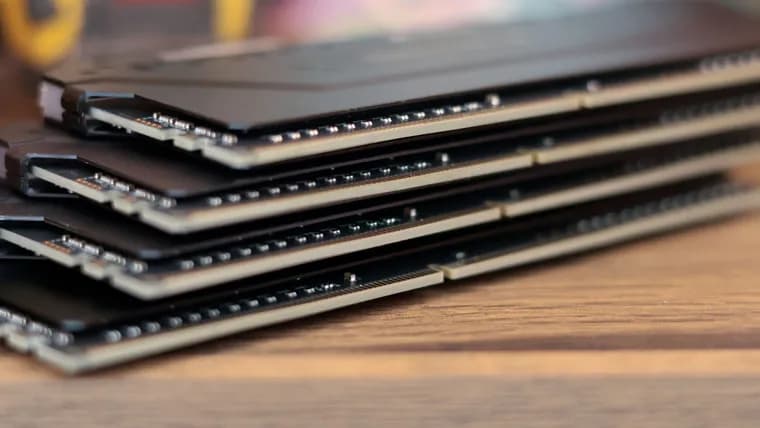
Tom's Hardware compared average memory prices from PCPartPicker today, which the outlet dates to August 2026, against prices from a year earlier, and found DDR5 has become dramatically more expensive. A 128GB DDR5 kit now costs $3,399, about ten times the lowest price ever tracked for that capacity. A standard 64GB (2x32GB) DDR5-5600 kit that cost under $200 last summer now demands over $1,100, a 5x jump, and the outlet reports year-over-year increases nearing 500% for high-capacity DDR5 kits generally. Even a lower-capacity or lower-speed kit that cost $72 a year ago is now $392.
DDR4 has not been spared either. Builders staying on older AM4 or LGA1700 platforms have created a knock-on scramble for DDR4 supply, pushing those kits up anywhere from 120% to nearly 180%: one example kit that cost $105 last year is $281 now. That is a smaller jump than DDR5, but still a sharp one.
The price spike is not confined to the US. German tech site ComputerBase has tracked the same trend in Europe, reporting that average RAM prices there have risen 345% compared with September 2025, with hard drive and SSD prices up more than 125% over the same period.
The article attributes the crisis to AI datacenter demand consuming the world's DRAM supply. Hyperscale buyers have reportedly already locked in almost all global DRAM production capacity for 2027, putting down advance deposits to guarantee supply; DRAM is now, by the article's account, worth over half as much per kilogram as solid gold. PC and smartphone makers are left competing for what remains. All four major memory vendors, SK Hynix, Samsung, Micron and China's CXMT, have seen revenues double, triple or more within a single year.
The outlook offered in the piece is bleak. SK Hynix CEO Kwak Noh-jung has warned that 2027 will be the worst year for memory supply in the industry's history, with demand expected to outstrip production capacity well into 2030. ADATA chairman Simon Chen goes further, suggesting the DRAM crisis could last another decade and dismissing the idea that an AI bubble is about to burst. The article's own conclusion is that consumer prices would only fall if the AI market contracted sharply, which would itself mean a broad correction across financial markets.
Key facts
- A 128GB DDR5 kit now costs $3,399, about 10x the lowest price ever tracked for that capacity.
- A standard 64GB (2x32GB) DDR5-5600 kit rose from under $200 last summer to over $1,100 now, a 5x increase, with high-capacity DDR5 kits up nearing 500% year over year overall.
- DDR4 kits are up 120% to nearly 180% as builders on older platforms compete for the remaining supply.
- European RAM prices rose 345% and SSD/HDD prices over 125% versus September 2025, according to Germany's ComputerBase.
- Hyperscale AI datacenter buyers have reportedly locked in almost all global DRAM production capacity for 2027, and SK Hynix's CEO warns 2027 will be the worst supply year in the industry's history.
Why it matters
Consumer memory prices have detached from their historical range because DRAM manufacturers are prioritizing hyperscale AI datacenter buyers, who have reportedly locked in most of 2027's production capacity in advance. It is a concrete sign that AI infrastructure buildout is now reshaping the price of ordinary consumer hardware, not just server-grade components, and the effect is showing up in DDR4 and non-memory parts too.
Who it affects
Anyone buying or upgrading a PC, whether on current DDR5 platforms or older DDR4 systems, feels this directly. The article notes the squeeze extends to hard drives and SSDs too, and the trend is global, not US-specific, per the European data cited. Hyperscalers who have already secured DRAM capacity are, by contrast, insulated from the shortage they are driving.
How to use it
The article's practical advice is blunt: if an upgrade is not urgent, wait, since prices are elevated across the board and DDR4 is no safe harbor at 120% to 180% higher than a year ago. Anyone who does need to buy now should expect DDR5 kit prices roughly 5x to 10x above pre-crisis levels depending on capacity, and budget accordingly rather than assume prices will normalize soon.
How solid is it
The core figures come from Tom's Hardware's own comparison of PCPartPicker average pricing, which the outlet itself describes as somewhat approximate but broadly accurate. That is corroborated independently for the European market by Germany's ComputerBase, and reinforced by on-record forecasts from SK Hynix's CEO and ADATA's chairman, so several independent sources point the same direction and rough magnitude.
Risks and caveats
Two of the cited examples, the kit that went from $72 to $392 and the one that went from $105 to $281, are not tied to a specific capacity or speed tier, so they illustrate the trend rather than pin down an exact figure. The claim that hyperscalers have locked in 2027 DRAM capacity is reported as unconfirmed, with no named buyers or dollar amounts. The 'nearing 500%' figure is itself an approximation rather than a precise year-over-year calculation across all kit sizes. And the multi-year shortage forecasts come from executives at companies that benefit financially from sustained high prices.