DeepMind's WeatherNext AI predicts hurricanes a day earlier
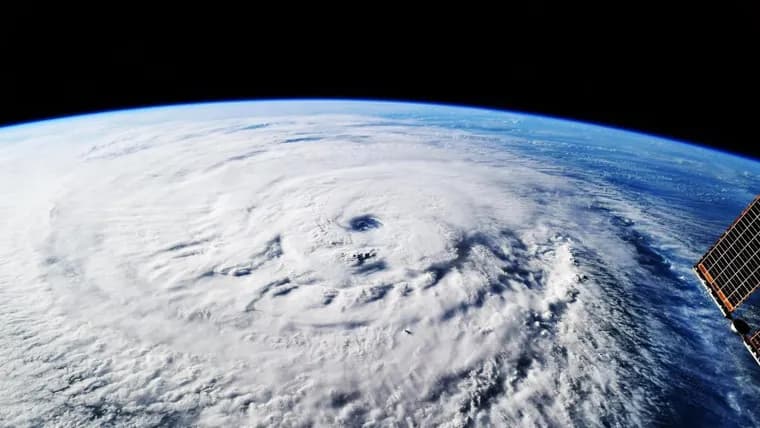
In October 2025, a storm formed over the Caribbean Sea and weather models disagreed on its path: would it stay weak and hit Haiti, or intensify and strike Jamaica. WeatherNext, an AI weather model built by Google DeepMind and Google Research, forecast the latter. Five days before landfall, it predicted with 80 percent confidence that the system would hit Jamaica as a Category 5 hurricane. The storm, Hurricane Melissa, proved catastrophic, causing flooding and landslides across Jamaica, but the early, confident AI forecast gave forecasters more time to warn communities in its path so they could prepare.
A paper published Thursday in Nature reports that WeatherNext predicts cyclones with what the researchers call unprecedented accuracy. On average, the model gives forecasters about a day more lead time than existing models: its three-day-out forecasts are as accurate as previous models' two-day-out forecasts. The researchers say that historically, gaining a single extra day of forecast lead time has taken a decade of work.
Mike Brennan, director of the US National Hurricane Center, said even a few hours of extra warning can make a difference, since organizing evacuations, staging supplies and moving resources to respond to a hurricane are all time-sensitive tasks where a wrong call carries real consequences. Ferran Alet, a Google DeepMind research scientist and one of the paper's lead authors, said building WeatherNext meant working around a data problem: extreme cyclone events are rare, so there isn't much cyclone-specific data to train on, even though there is plenty of general weather data. The team's approach was to train a single model to be good at both weather forecasting broadly and cyclone prediction specifically.
Key facts
- WeatherNext, an AI model from Google DeepMind and Google Research, predicted five days ahead and with 80 percent confidence that a Caribbean storm would hit Jamaica as a Category 5 hurricane, which became Hurricane Melissa in October 2025.
- A paper published Thursday in Nature reports that WeatherNext gives forecasters about a day more lead time on cyclone predictions than existing models, on average.
- The model's three-day-out forecasts are as accurate as previous models' two-day-out forecasts.
- The researchers say gaining a single extra day of forecast lead time has historically taken a decade of work.
- WeatherNext was trained on general weather data alongside scarce cyclone data, according to lead author Ferran Alet.
Why it matters
The extra day of lead time matters because hurricane decisions are time-sensitive: organizing evacuations, staging supplies and moving resources all need to happen early, and getting the timing wrong carries real costs. Historically, gaining a single day of forecast lead time took a decade of research progress, so WeatherNext's jump is a sharp acceleration relative to that pace. Hurricane Melissa shows what that looks like in practice: the model's early, confident forecast gave forecasters more warning time before the storm caused flooding and landslides across Jamaica.
Who it affects
National forecasting agencies such as the US National Hurricane Center, which incorporates model output into its warnings, and communities in a storm's path, in this case Jamaica, whose evacuation and preparation windows depend on how early and how confidently forecasters can call a storm's track and intensity.
How to use it
The article describes WeatherNext as a research model built by Google DeepMind and Google Research and detailed in a Nature paper, referenced as an input alongside the tools the US National Hurricane Center already uses, not as a public product. No pricing, licensing or public access details are given in the source.
How solid is it
The central claim rests on a peer-reviewed paper published in Nature, and it is corroborated by an on-the-ground account from Mike Brennan of the US National Hurricane Center describing the practical value of the extra lead time. The source gives one concrete case, Hurricane Melissa, plus an average lead-time figure of about a day, but no broader accuracy metric, error margin, or named competing model for comparison.
Risks and caveats
The source does not give the paper's full author list, its title, or when WeatherNext was first developed. The 'unprecedented accuracy' framing comes from the researchers themselves in their own paper, and the one-day lead-time figure is presented as an average, so individual forecasts, especially for storms unlike Melissa, could perform better or worse.
“Time is really golden when it comes to those types of decisions, so the ability to push forecast accuracy out as much as a day beyond what we've previously been able to do is really valuable.”
— Mike Brennan, director of the US National Hurricane Center