Discovered Materials raises $9M to hunt chip-cooling materials with AI agents
Chips running AI workloads run hot, and the resulting power and cooling demand is one reason data centers consume so much electricity. Discovered Materials, a startup that emerged from Y Combinator, wants to use AI to find new materials for building more efficient chips. It closed a $9 million seed round from Lightspeed India Partners, with investment from Peak XV Partners and angel investors Paul Graham, Gokul Rajaram, and Thariq Shihipar.
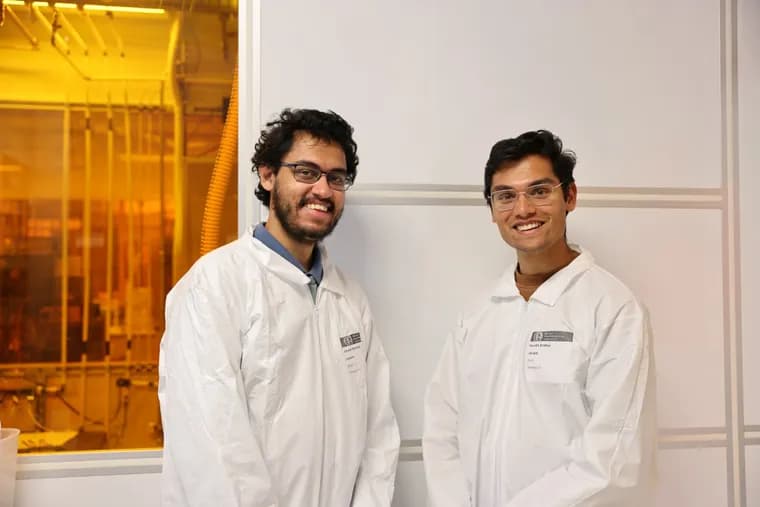
The company was founded by Advaith Sridhar, who previously worked on agents at Persona AI and Luma Labs, and Akash Ramdas, who holds a doctorate in materials science from Stanford. Together they built a software pipeline that uses Anthropic models in a custom harness to generate candidate materials, then runs them through physics simulation models the founders trained themselves to check whether the candidates are actually worth pursuing. Sridhar told TechCrunch that Ramdas used to make about 20 guesses a day by hand during his PhD; the company's AI agents now run thousands of guesses a day, working around the clock in the cloud on research directions Ramdas sets for them.
Discovered Materials released examples of hundreds of new materials today, along with a benchmark it calls the "Material Discovery Bench," built to track how frontier models handle this kind of search. Companies including MatNex, SandboxAQ, and CuspAI run similar efforts, but Discovered Materials is betting that narrowing its focus to the thermal problems of semiconductor materials will set it apart. The startup says it has already found several materials that match the properties of materials already used by major chipmakers, though it declined to share further details.
One obstacle is the engineering trade-space: a material that cuts heat generation or improves heat dissipation might still be too hard to manufacture into an actual chip, or its electrical properties might be compromised. "It's a bit of playing whack-a-mole with atomic structures," said Hemant Mohapatra, the Lightspeed partner who led the round. "A material is only useful in the real world if all of them converge at once, which is what makes this a really interesting search problem." Mohapatra expects the business of predicting novel substances to become commoditized as models keep improving; he sees Discovered Materials' edge as Ramdas' deep domain experience and the founders' ability to run a lab that can quickly test and validate candidates, something he says they have already done with several new materials.
When the company finds valuable candidates, Sridhar says it will try to patent their use in GPUs, or the process for making chips out of them, and license the patents to chipmakers. He hopes to have materials worth patenting within the next year.
Despite the enthusiasm, no drug or material discovered by AI has yet made a commercial impact. The closest case is Insilico Medicine's Renterosib, the first drug discovered with generative AI to reach a Phase II clinical trial. On the materials side, promising candidates have turned up too, such as MatNex's rare-earth-free permanent magnets and semiconductor materials worked out by Panasonic and Citrine Informatics, but none of these have been commercially deployed at scale. Mohapatra does not think finding more candidates is the real bottleneck for AI materials science; instead, he said, "filtering them correctly and synthesizing them is the bottleneck." Sridhar agrees that the final stretch resists automation: "a lot of this will involve actually going into wet labs and like making things as well. And this is the process that cannot be sped up."
Key facts
- Discovered Materials closed a $9 million seed round from Lightspeed India Partners, with investment from Peak XV Partners and angels Paul Graham, Gokul Rajaram, and Thariq Shihipar.
- Founders Advaith Sridhar (previously at Persona AI and Luma Labs) and Akash Ramdas (a Stanford materials science PhD) combine Anthropic-model AI agents with self-trained physics simulation models to generate and verify candidate materials.
- The company's AI agents now run thousands of material guesses a day, versus about 20 a day Ramdas made manually during his PhD.
- Discovered Materials released examples of hundreds of new materials and a benchmark called the "Material Discovery Bench" to track how frontier models handle the search.
- No AI-discovered material or drug has yet made a commercial impact at scale; the closest is Insilico Medicine's Renterosib, the first AI-discovered drug to reach a Phase II clinical trial.
Why it matters
AI workloads generate so much heat that cooling has become a major driver of data center power consumption, and Discovered Materials is one of a growing set of startups turning AI on the problem AI itself created: finding new materials that let chips run cooler. Unlike broader materials-discovery players such as MatNex, SandboxAQ, and CuspAI, the company is betting that narrowing its focus specifically to semiconductor thermal materials, backed by a founder with a materials science doctorate, is the path to a defensible business rather than a commodity search tool.
Who it affects
Chipmakers are the intended customers, since Discovered Materials plans to license any patented materials or manufacturing processes to them rather than build chips itself. Data center operators stand to benefit indirectly if cooler-running chips ever reach production. The round also brings in a concrete set of backers, Lightspeed India Partners as lead plus Peak XV Partners and angels Paul Graham, Gokul Rajaram, and Thariq Shihipar, and puts Discovered Materials in direct competition with other AI materials-discovery startups chasing the same investor and customer base.
How to use it
There is no product for outside users yet. Discovered Materials' business model is to patent promising materials, or the processes for turning them into chips, and license those patents to chipmakers once candidates are validated; Sridhar hopes to have something worth patenting within a year. The company did make its "Material Discovery Bench" and examples of hundreds of new materials public today, giving outsiders a way to see how the approach performs, though the specific materials found for chipmakers have not been disclosed.
How solid is it
The technical claims rest on a real, described pipeline: Anthropic models generating candidate materials inside a custom harness, checked against physics simulation models the founders trained themselves, with Ramdas' Stanford materials science doctorate and Sridhar's agent-building background at Persona AI and Luma Labs behind it. The $9 million round and its named backers are concrete. But the company itself says it cannot share details of the materials it claims already match existing chipmaker materials, and lead investor Mohapatra frames the search as still unsolved, calling it "whack-a-mole" and noting a material is useful only once several properties converge at once, and that he is not convinced finding candidates is even the hard part.
Risks and caveats
By the article's own account, no material or drug discovered by AI has yet made a commercial impact; the nearest comparison, Insilico Medicine's Renterosib, has only reached a Phase II clinical trial, and other materials candidates like MatNex's rare-earth-free magnets or Panasonic and Citrine Informatics' semiconductor work remain undeployed at scale. Even a material that reduces heat or improves dissipation can be too hard to manufacture into a real chip or can compromise electrical properties, and Mohapatra says the actual bottleneck is filtering and synthesizing candidates, not finding them. Sridhar himself acknowledges that turning candidates into real materials still requires wet-lab work that, in his words, "cannot be sped up."
“It's a bit of playing whack-a-mole with atomic structures. A material is only useful in the real world if all of them converge at once, which is what makes this a really interesting search problem.”
— Hemant Mohapatra, Lightspeed India Partners