DEF CON's Franklin project adds MSSPs and AI digital twins to defend water utilities
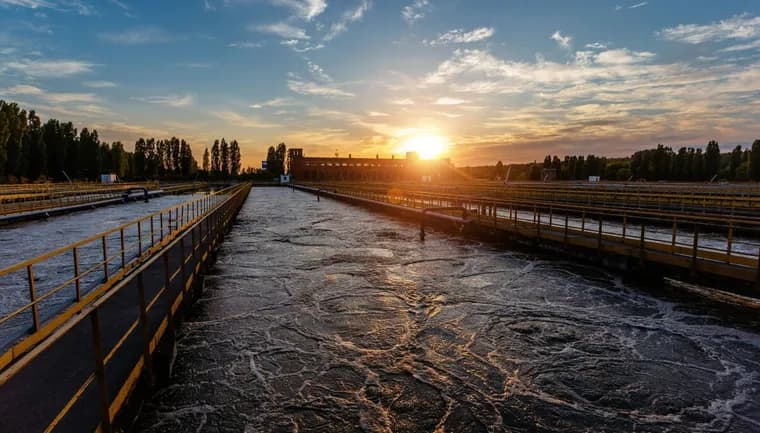
On Friday at DEF CON, the volunteer hacker initiative DEF CON Franklin and the National Rural Water Association (NRWA) announced a new program called the Water Watch Center, aimed at small US water utilities serving fewer than 10,000 people. The program will initially fund five managed detection and response (MDR) providers, Defendify, Legato Security, L1 Secure, Rapid7, and Sentinel Technologies, to help those utilities detect and mitigate breaches. The providers will share threat information with each other and with the NRWA, which already provides technical assistance to small water and wastewater utilities in all 50 states.
Jake Braun, who co-founded the Franklin project at DEF CON in 2024 (when 350 people signed up to volunteer their time), described the new setup as a pyramid: the NRWA at the top, the MDR providers' sensors hunting for vulnerabilities across utility networks, and Franklin volunteers underneath fixing issues or acting on instructions. "We've had our volunteer experts out for two years in these water utilities, in the trenches with these folks, and the thing that we've realized is that there's just not a scalable delivery mechanism for cyber for these utilities when there's 150,000 of them, and 98 percent of them are small businesses," Braun told The Register. His answer was to borrow the managed-security-service-provider (MSSP) model already used for small businesses generally. The five initial MSSPs are meant to expand to 10, matching the 10 CISA regions, with Franklin volunteers connecting utilities to providers and turning CISA and ISAC alerts into actual remediation rather than just notifications.
The announcement follows a wave of suspected Iranian hacking activity against numerous, mostly small, community water systems in recent weeks; the attackers reportedly exploited programmable logic controllers left directly exposed to the internet with default or weak passwords. The article states there is no indication the attackers used AI in these intrusions, but cyber and national security experts who spoke to The Register at Black Hat and DEF CON said it is only a matter of time before they do.
To prepare for that, the Water Watch Center has partnered with Vanderbilt University to apply research from DARPA's Cyber Agents for Security Testing and Learning Environment (CASTLE) program. The partnership will build digital twins of a few Water Watch Center utility environments and run red-team attack agents against blue-team defense agents inside them, repeatedly, to see which defensive configurations hold up. "They let it fight each other a gazillion times, and then they figure out when does the blue team win, so we can train agents to then later drop into these 150,000 water utilities," Braun said. He framed the effort as a response to workforce math: "There's already a 500,000-person shortage of cyber professionals. The idea that we're magically going to find 150,000 new people is a fantasy. There is no other way to really be able to combat the AI attacks that are going to be coming at these things." The article does not report a funding amount, a timeline for reaching 10 MSSPs, or any results yet from the Vanderbilt/DARPA testing, which is described as a newly formed partnership.
Key facts
- The Water Watch Center, launched Friday at DEF CON by DEF CON Franklin and the National Rural Water Association, initially funds five MDR providers: Defendify, Legato Security, L1 Secure, Rapid7, and Sentinel Technologies.
- It targets small US water utilities serving fewer than 10,000 people; per Jake Braun, 98 percent of the country's roughly 150,000 water utilities are small businesses.
- The five MSSPs are meant to expand to 10, matching the 10 CISA regions, with Franklin volunteers acting as the layer that turns CISA/ISAC alerts into actual remediation.
- Vanderbilt University is applying DARPA's CASTLE research to build digital twins of Water Watch Center utility environments and run red-team versus blue-team AI agents against them, aiming eventually to deploy AI-based defenses across US water systems.
- The launch follows suspected Iranian hacking of small water systems that left internet-exposed PLCs with default or weak passwords; the article says there is no sign AI was used in those attacks, though experts expect that to change.
Why it matters
US water utilities are overwhelmingly small operations without in-house security teams, and recent suspected Iranian intrusions show that even basic exposure, like internet-facing PLCs with default passwords, is still going unpatched. The Water Watch Center is an attempt to give thousands of these utilities professional-grade monitoring by borrowing the managed-security-service-provider model already used for small businesses, rather than trying to hire in-house staff at each utility.
Who it affects
Small US water and wastewater utilities serving fewer than 10,000 people are the direct beneficiaries, connected to the program through the National Rural Water Association's existing reach across all 50 states. The five MDR providers, and Vanderbilt University researchers working under DARPA's CASTLE program, are the organizations building and running the defenses.
How to use it
The article does not describe a signup process, cost, or funding source for participating utilities, and does not say whether the MDR providers are paid or by whom. Utilities work through the NRWA and Franklin volunteers, who connect them to the five MSSPs; that network is expected to grow to 10 MSSPs, one per CISA region.
How solid is it
The account comes from a direct interview with Jake Braun, the Franklin project co-founder, plus the article's own reporting on recent Iranian-linked attacks corroborated by unnamed cyber and national security experts at Black Hat and DEF CON. No independent results from the Vanderbilt/DARPA digital-twin testing are reported yet, since that partnership is described as newly formed rather than as having produced findings.
Risks and caveats
No funding figures, budget, or timeline are given for the Water Watch Center, the MSSP expansion to 10 providers, or the eventual rollout of AI-based defenses. The recent Iranian hacking activity described did not, per the article, involve AI, so Braun's warning about future AI-driven attacks is presented as an expectation from sources rather than an observed trend.
“There's already a 500,000-person shortage of cyber professionals. The idea that we're magically going to find 150,000 new people is a fantasy. There is no other way to really be able to combat the AI attacks that are going to be coming at these things.”
— Jake Braun, co-founder of the DEF CON Franklin project