EU's new packaging rules could price small makers out of the single market
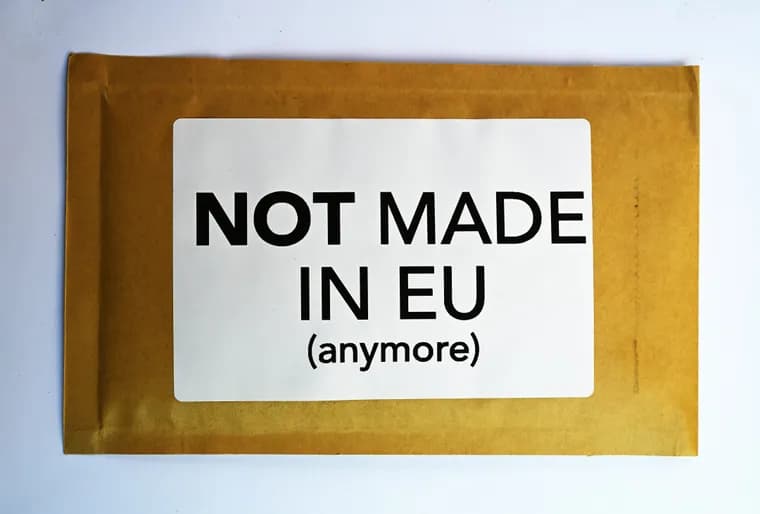
Lectronz, a marketplace for open-source hardware makers and DIY electronics whose sellers are mostly engineers, independent designers and hobbyists working out of spare rooms and garages, argues in a first-person essay that the European Union's new Packaging and Packaging Waste Regulation (PPWR) threatens to push makers and micro-entrepreneurs out of the EU market. The PPWR, which generally applies from 12 August 2026, builds on the EU's existing Extended Producer Responsibility (EPR) framework, under which businesses that place packaging on the market help pay for its collection and recycling, an idea the essay calls sensible. The problem, it argues, is implementation: instead of one EU-wide system, the PPWR keeps a fragmented national model, so a business selling directly to customers across the bloc must register and meet its packaging obligations separately in every member state where that packaging becomes waste. For large companies that is a normal cost of doing business; for a micro-business selling only a handful of items into each country, the essay says the administrative burden can be "wildly disproportionate" to the amount of packaging involved.
To illustrate, the essay walks through a hypothetical example: a Greek engineer who designs a €25 open-source sensor board and, in his first year, sells five boards to Germany, two to France, two to Austria and one to Belgium, generating around 50 grams of packaging per shipment. That makes him a packaging-waste producer in four countries at once. Using what it calls indicative prices from national schemes and compliance providers, the essay puts his annual bill at about €110 in French registration fees plus €190 to €300 for a mandatory authorised representative; €50 to €100 in Belgian administrative fees plus €250 to €450 for a representative there; free German registration but packaging-scheme participation starting around €10 plus roughly €190 for a representative; and €250 in Austrian fees plus about €100 for a representative. The total, in what it calls an optimistic scenario, comes to about €1,150 a year for those four of the EU's 27 member states alone, and covers roughly half a kilogram of packaging. Selling profitably across all 27 states, it argues, would take not 10 boards a year, not 100, but literally thousands from the outset: "it simply isn't worth it anymore."
The essay frames this as a broader threat to how innovation starts. Most successful companies, it argues, began by selling 10 units, then 100, then 1,000, and marketplaces like Lectronz exist to give that early experimentation room: in the past year, some Lectronz sellers sold hundreds of products, but half of the platform's registered sellers got fewer than 10 orders, which the essay treats as normal rather than a failure. It argues that EU policymakers who complain about the bloc's lack of innovation are, with rules like this, making it as hard as possible for innovation to emerge at all, leaving an environment where "only big players like Amazon, Temu, or eBay can exist." The impact reaches well past hardware, it says, touching artists who sell their work online, craftspeople selling through their own sites or platforms like Etsy, and local food producers exporting across the EU, a group the essay estimates could run to "potentially hundreds of thousands of people." It also stresses that the rules bind any business that sells to EU buyers, not only businesses based in the EU.
Lectronz has a direct stake in the outcome. The essay says the platform takes a 5 percent fee on every transaction, waived on a seller's first five sales, and that despite a surge of new sellers in 2026 it generates "roughly the equivalent of one modest salary." If the new rules push many sellers to leave the EU market, the essay warns, Lectronz's own business could become unviable, something it calls "personally heartbreaking" after years of building the platform. For now, it says sellers should not expect immediate disruption, since it remains unclear how national authorities will actually enforce the rules against makers and micro-enterprises, and it will keep monitoring the situation.
The essay proposes three fixes. First, an EU-wide de minimis threshold that would exempt sellers and micro-enterprises below a set waste-volume or turnover level from cross-border packaging obligations. Second, a centralised "EU EPR One Stop Shop" portal, modelled on the EU's existing VAT One Stop Shop, where sellers would register, report and pay once for every member state, ideally through an open API rather than web forms. Third, a mechanism letting marketplaces such as Lectronz or Tindie register and pay on behalf of all their sellers collectively, as though they were a single producer, which the essay says would be a non-trivial cost and administrative load for Lectronz itself but calls achievable under the right conditions. Slovak artist and micro-entrepreneur Jeanette Koňarčíková has started a petition specifically because the rule reaches artists and craftspeople as well as hardware makers, and the European Commission runs its own public feedback page on the issue. Separately, the Commission has proposed suspending the requirement to appoint an authorised representative in every destination country until 2035, but that proposal has not yet been adopted, and the essay says it would fix only part of the problem, since the underlying obligation to register and report separately in each country would remain. Absent broader changes, it says, the near-term fallback for an EU-based maker facing strict enforcement is to stop selling into the EU altogether and ship only to markets like the US, which it argues can make more financial sense than shipping to a next-door EU country, tariffs included.
Key facts
- The EU's Packaging and Packaging Waste Regulation (PPWR), in force since 12 August 2026, requires businesses to register and report packaging waste separately in every member state where it ends up, instead of once for the whole bloc.
- In the essay's worked example, a hobbyist selling 10 boards into four EU countries in a year faces about €1,150 in registration and authorised-representative fees, for roughly half a kilogram of packaging.
- Lectronz argues that selling profitably across all 27 EU member states would take not 10 boards a year, not 100, but literally thousands from the very start.
- Half of Lectronz's registered sellers got fewer than 10 orders in the past year, and the marketplace itself says it generates only roughly the equivalent of one modest salary.
- The European Commission has proposed suspending the authorised-representative requirement until 2035, but the proposal is not yet adopted and would leave the underlying per-country registration and reporting obligations in place.
Why it matters
The essay ties a routine-sounding compliance rule to a much larger claim: that the EU's own regulatory design works against the small-scale experimentation it says it wants more of. Its core argument is that Extended Producer Responsibility, a sound idea on its own (businesses should help pay for the packaging waste they create), turns into a barrier to entry once the EU implements it as 27 separate national systems instead of one, so the administrative cost of compliance, not the environmental cost of the packaging itself, ends up deciding whether a micro-business can sell across the single market at all. Lectronz frames this as self-interested but also structural: if the rule pushes enough small sellers out of cross-border trade, it argues, the EU loses the layer of experimentation, people testing an idea by selling 10, then 100 units, that larger companies grow out of, even as EU policymakers keep calling for more innovation.
Who it affects
Directly, open-source hardware makers and DIY-electronics sellers who trade through platforms like Lectronz, most of them individuals working from spare rooms or small workshops rather than registered manufacturers. The essay says the same obligations extend to artists selling their own work online, craftspeople selling through their own sites or platforms like Etsy, and local food producers who export across the EU, a combined group it estimates could reach hundreds of thousands of people. It also affects marketplaces themselves, since Lectronz says a mass seller exodus could make its own business unviable, and it applies to any seller anywhere who ships to EU buyers, not only businesses established in the EU. Slovak artist and micro-entrepreneur Jeanette Koňarčíková has started a petition specifically because the rule reaches beyond hardware into art and craft work too.
How to use it
There is no product here, only a set of actions the essay lays out for people already selling into the EU or weighing whether to. In the near term, and only if enforcement turns out to be strict, its fallback is to stop shipping into the EU and sell exclusively to non-EU markets such as the US, which it argues can pencil out better than shipping to a neighbouring EU country even with tariffs factored in, though it says that is not a workable option for every seller. For the policy fight, it points to two concrete channels already open: signing Jeanette Koňarčíková's petition, and submitting feedback through the European Commission's own public consultation page on the regulation. Its longer-term asks are aimed at the EU itself: adopt a de minimis threshold that exempts small sellers by turnover or waste volume, build a single EU-wide portal for registering and paying once (mirroring the VAT One Stop Shop), or let marketplaces file and pay on behalf of all their sellers as one collective producer.
How solid is it
This is a first-person opinion essay published by Lectronz on its own site and reposted to Hacker News, where it drew 805 points and 544 comments, not an independent policy analysis. Lectronz has a direct financial stake in the outcome: it says the rule could make its own marketplace unviable, and it states upfront that it supports the underlying goal of the regulation while objecting to how the EU implemented it. The central cost figures, for France, Belgium, Germany and Austria, are explicitly labelled by the essay as "indicative prices" from unnamed national schemes and compliance providers, not official tariffs, and the worked example built on them, the Greek engineer and his sensor board, is explicitly framed as hypothetical ("Imagine an engineer...") rather than a real, named seller.
Risks and caveats
The €1,150 total covers only 4 of the EU's 27 member states; the essay gives no per-country breakdown or comparable total for the other 23, so it is not a full picture of what selling EU-wide would cost. The European Commission's proposed fix addresses only the authorised-representative requirement: even if adopted, the essay says the underlying obligation to register and report separately in each country would remain, and the proposal itself has not yet been adopted. The essay also admits enforcement is still unclear, telling Lectronz sellers not to expect immediate disruption because how national authorities will actually apply the rules to individual makers and micro-enterprises is unknown. It gives no total count of Lectronz's registered sellers, only that half got fewer than 10 orders in the past year; no euro figure for what "roughly the equivalent of one modest salary" amounts to; and no date or signature count for Koňarčíková's petition. Because the essay comes from a company whose own business depends on the outcome, its worst-case framing is best read as advocacy for specific fixes rather than a neutral accounting of the regulation.
“The weight-based environmental contribution associated with half a kilogram of packaging should be measured in cents. The bureaucracy required to account for it is measured in thousands of euros.”
— Lectronz, in the original essay