Fender CEO compares bandmates to analog AI amid PR backlash
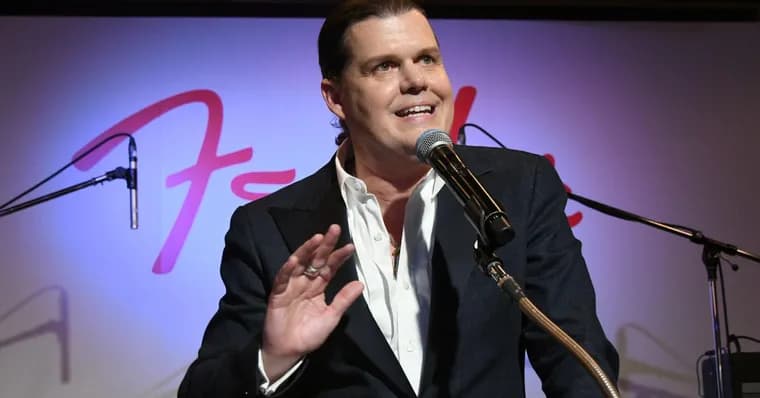
Fender CEO Edward "Bud" Cole gave an interview to T3 in May, timed to the Telecaster's 75th anniversary, arguing that AI has effectively existed in music as long as there has been recorded music. "I think AI has existed in music as long as there's been recorded music," he said. Cole described learning to play cover songs as a kind of analog AI: "I actually believe cover music has been sort of analog AI for a long time." He recalled listening heavily to R.E.M., U2, The Smiths and The Cure until he got sick of just listening and decided to learn guitar so he could play the songs himself.
Cole extended the comparison to bandmates. In his account, a songwriter might start with just a chorus or a riff, and a drummer or bassist then builds it into a full song, a collaborative process he suggested AI can also fill. "I actually think that we are in the brink of freeing up people to move beyond the same old covers and to really get into working like they do with their bands," he said. He also predicted AI would help newer players cross "the chasm" from songwriting student to songwriting master, connecting them with other musicians and making them more productive.
The Verge, publishing this as a critical opinion piece rather than neutral reporting, argues the analogy breaks down on scale and on substance. No person could learn every song used to train a typical generative AI model, which in Suno's case is suspected to run into the millions, versus the handful of covers a guitarist might learn. The piece also argues the comparison erases the countless human decisions, emotional, physical or accidental, that go into performing or writing a song. Guitarist Steve Onotera, known as Samurai Guitarist, is cited making the point that a player's own physicality and small, unavoidable errors keep their playing from ever exactly replicating someone else's work, unlike a model reproducing patterns from a prompt.
The comments are resurfacing now because Fender is already facing backlash after sending cease-and-desist letters to guitar builders claiming copyright over the Stratocaster body shape; some influential guitar YouTubers say they are done buying Fender gear over that dispute, and Cole's AI remarks are compounding the anger. T3 editor-in-chief Mat Gallagher's original feature mostly paraphrased Cole rather than quoting him directly, and Fender did not immediately respond to The Verge's request for comment or clarification.
The piece also pushes back on Cole's claim that AI will help players cross from student to master, pointing to what it calls mounting evidence that relying on AI tools leads to deskilling: using AI to suggest rhymes or metaphors is not the same as practicing songwriting, and writing many mediocre songs before a good one is presented as the actual mechanism of improvement.
Key facts
- Fender CEO Edward "Bud" Cole told T3 in a May interview that cover songs and bandmates are a form of "analog AI": "I actually believe cover music has been sort of analog AI for a long time."
- Cole said AI could help newcomers cross "the chasm" from songwriting student to master and make players more productive, comparing that role to a bandmate building on a riff.
- The remarks resurfaced amid backlash over Fender sending cease-and-desist letters to guitar builders claiming copyright of the Stratocaster body shape, and some guitar YouTubers say they are done buying Fender gear over it.
- The Verge counters that scale differs: an average generative AI model such as Suno is suspected to train on millions of songs, far more than any person could learn by ear.
- Guitarist Steve Onotera (Samurai Guitarist) is cited arguing a player's physicality and small human errors keep their playing from ever exactly replicating another musician's work, unlike AI output.
Why it matters
This is a flashpoint in the wider tension between musicians and AI, made sharper because it comes from the CEO of one of the biggest guitar makers, at the exact moment his own company is under fire for aggressive intellectual-property enforcement against builders. A CEO normalizing an AI-training comparison for human musicianship, while his company polices copyright on a guitar body shape, reads to critics as a contradiction worth calling out.
Who it affects
Guitarists and Fender customers weighing whether to keep buying the brand, the guitar builders who received cease-and-desist letters over the Stratocaster shape, and musicians more broadly who are debating where AI fits in songwriting and performance.
How to use it
There is no product or feature here to adopt. The practical use of the piece is as ammunition in AI-and-music debates: the scale gap (millions of training songs versus a handful of learned covers) and the absence of human physicality and moment-to-moment decision-making in AI output are the concrete counterarguments raised against Cole's analogy.
How solid is it
The source material is a real interview Cole gave to T3 around the Telecaster's 75th anniversary, but T3 editor-in-chief Mat Gallagher's original feature mostly paraphrased Cole rather than quoting him directly, so some framing reaches readers through an intermediary account rather than Cole's own words throughout. The Verge's piece is explicitly a critical opinion take, not neutral reporting, and Fender did not respond to its request for comment, so there is no company rebuttal on record.
Risks and caveats
No specific date is given beyond "May," and no date is given for when the comments started recirculating. The guitar YouTubers said to be boycotting Fender are not named. The article does not explain how the Stratocaster body-shape copyright claim legally connects to the cease-and-desist letters beyond stating Fender sent them. Readers should treat this as The Verge's critical opinion piece rather than straight news.
“I actually believe cover music has been sort of analog AI for a long time”
— Bud Cole, Fender CEO, to T3