F/OSS Comics part 3 retells how Bill Joy's BSD tapes led to 3BSD
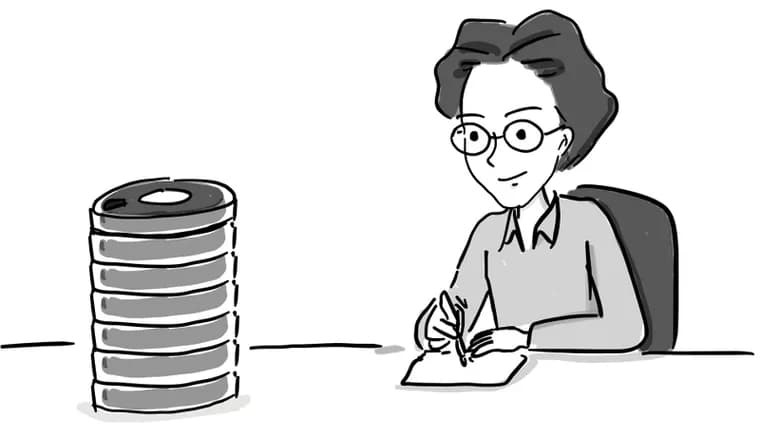
Part 3 of the F/OSS Comics series on BSD Unix, titled "The Beginning of BSD Unix", tells the early Berkeley story in comic panels with short prose captions and numbered references.
It starts in 1976. When Ken Thompson returned to Bell Labs, Bill Joy and Chuck Haley began exploring the Unix kernel themselves. Other universities wanted copies of Berkeley's Pascal compiler, so in early 1977 Joy put together the Berkeley Software Distribution, or BSD. It bundled the Pascal system with ex, a line editor developed from em. The article stresses that early BSD was not a standalone operating system but a collection of software to install on an existing Unix system. About thirty copies were sent out over the following year.
Getting BSD required an AT&T Unix source license, and Berkeley charged only for the tape and distribution. The article ties this to Berkeley's tradition of sharing research software, and adds that the Free Speech Movement, hippie culture and antiwar activism are also said to have influenced Joy's decision to charge so little. It also notes that universities and research institutions could obtain Unix, source code included, for a modest licensing fee, which helped the system spread. One panel has a character remark that the antitrust agreement bars the company from the computer business and from selling Unix as a product.
The second distribution, 2BSD, followed. Joy improved the Pascal system based on user feedback and bundled it with vi (ex's visual mode), the C shell and other tools. Nearly seventy-five tapes were shipped over the following year. Joy did more than fix bugs: he handled every distribution request, copied BSD onto tapes and mailed them out himself.
The next section, "A VAX arrives at Berkeley, 1978", moves to virtual memory. Professor Fateman's group was getting a VAX, described in the comic as 32-bit with a whole megabyte of memory. Bell Labs already supplied VAX Unix, called 32/V, but 32/V did not use the VAX hardware's virtual-memory capabilities, so a program's address space was limited by physical memory. Professor Richard Fateman's work on the computer algebra system Macsyma needed more. Macsyma, developed at MIT beginning in the late 1960s, worked with symbolic expressions: it could factor expressions, compute derivatives and perform integration. Virtual memory uses disk storage to give programs an address space larger than physical memory.
Ozalp Babaoglu, a Berkeley graduate student working with Professor Domenico Ferrari, was asked by his adviser to add virtual memory to VAX Unix. Joy helped him integrate the virtual-memory code into 32/V and debug it. Debugging continued through the holidays at the end of 1978, and by January 1979 most of the bugs had been fixed. Then the system ran without crashing.
Joy ported ex, vi, the C shell and other 2BSD tools to the VAX, while Peter Kessler and Marshall Kirk McKusick ported the Pascal system. These programs were bundled with the standard 32/V utilities and the virtual-memory kernel that Babaoglu and Joy had integrated and debugged. The result was 3BSD, which began shipping in December 1979.
The installment closes on ARPANET, which had connected research institutions funded by the Defense Advanced Research Projects Agency, or DARPA, since 1969. The sites used different computers and operating systems, which made software expensive to port or rewrite. DARPA became interested in Unix's portability and took notice of Berkeley's successful distribution of 3BSD to research institutions.
Key facts
- In early 1977 Bill Joy assembled the first BSD, bundling the Pascal system with the ex line editor; it was an add-on collection for an existing Unix system, not a standalone OS, and about thirty copies went out over the following year.
- 2BSD added vi, the C shell and other tools to an improved Pascal system; nearly seventy-five tapes shipped over the following year, with Joy copying and mailing them himself.
- In 1978 and 1979 Ozalp Babaoglu and Joy added virtual memory to VAX Unix (32/V), driven partly by Professor Richard Fateman's Macsyma work; most bugs were fixed by January 1979.
- 3BSD combined the 2BSD tools, the Pascal system, the 32/V utilities and the virtual-memory kernel, and began shipping in December 1979.
- DARPA became interested in Unix's portability and noticed Berkeley's distribution of 3BSD to research institutions.
Why it matters
The installment explains how BSD started as a small tape of add-on software and grew into a full Unix distribution with its own kernel work. Two threads stand out: Berkeley's habit of sharing research software for little more than the cost of a tape, and the virtual-memory work on the VAX that produced 3BSD. The article connects the second to DARPA's interest in Unix's portability across the varied computers of ARPANET sites.
Who it affects
Readers interested in the history of Unix, open source and operating systems, and anyone following the F/OSS Comics series, of which this is part 13 and the third on BSD Unix. The people at the centre are Bill Joy, Chuck Haley, Ozalp Babaoglu, Richard Fateman, Peter Kessler and Marshall Kirk McKusick.
How to use it
Read it as a short, illustrated primer on early BSD history. The numbered references at the end (McKusick's Twenty Years of Berkeley Unix, Leonard's Salon piece, the TUHS 2BSD archive, Toomey's IEEE Spectrum article and others) point to deeper sources for anyone who wants to check details or read further.
How solid is it
The captions rest on cited secondary sources, chiefly McKusick's 1999 essay, plus Andrew Leonard's 2000 Salon article, an SRI International page on ARPANET, a biographical note on Babaoglu and the TUHS archive of the original 2BSD distribution. The tape counts are given as approximations ("about thirty", "nearly seventy-five"). The speech-bubble lines are comic dialogue, not sourced quotations.
Risks and caveats
The influence of the Free Speech Movement, hippie culture and antiwar activism on Joy's low pricing is presented only as something "said to" be the case. No price or fee amount is given for the BSD tape or for Unix licensing. The article gives no exact count of 3BSD tapes shipped and does not say what DARPA actually did after noticing 3BSD. This part does not cover later BSD releases such as 4BSD or the AT&T litigation. Dialogue and scenes are dramatisation for the comic format.
“Early BSD was not a standalone operating system: it was a collection of software to install on an existing Unix system.”
— F/OSS Comics #13, BSD Unix, Part 3