Fervo Energy powers up first 33 MW at Google-backed geothermal plant in Utah
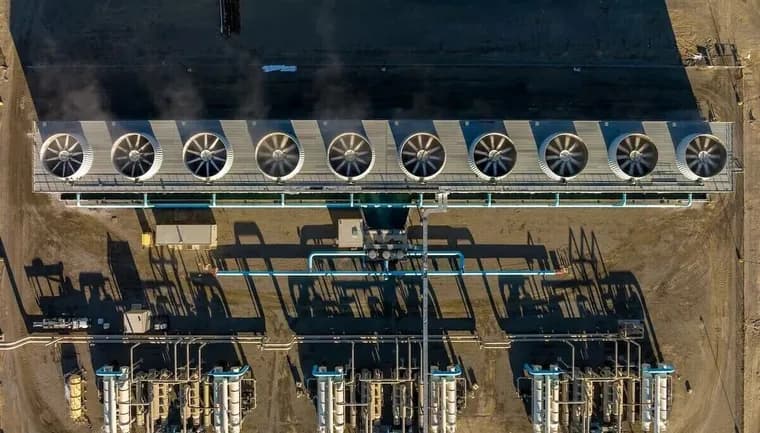
Fervo Energy, an enhanced geothermal systems (EGS) provider backed by Google, achieved first power this week at its Cape Station power plant in Beaver County, Utah. The first of three 33 MW "GeoBlocks" has started supplying electricity to the grid and is expected to reach commercial operation next week, with another 66 MW of capacity due online by New Year. Fervo says the station has the potential to eventually scale to more than four gigawatts of capacity; for now, the company is working toward fulfilling 900 MW of contracted capacity. The plant is expected to produce just 100 MW by January 1, growing to half a gigawatt by 2028.
The technology works by drilling two parallel wells roughly 8,000 feet (2,438 meters) underground, then fracturing the rock between them so water can pass from one well to the other, picking up heat from the Earth's crust along the way and reaching about 190 degrees Celsius. That steam then drives turbines, much like in a conventional power plant. Fervo adapted much of the drilling technique from the oil and gas industry to make reaching those depths economical. The company first proved the approach in 2023 at its Project Red demonstration site, which generated a modest 3.5 MW; Cape Station is, in the company's words, orders of magnitude larger.
Google is one of the main beneficiaries of the buildout and has been an early backer of geothermal power since at least 2008. Beyond its deal with Fervo, Google has also agreed to buy power from competing geothermal operator Ormat Technologies, and earlier this year announced a separate 150 MW deal with Ormat and Nevada utility NV Energy to supply its datacenter expansion. Meta, facing its own grid constraints, has likewise invested in the technology, partnering with Sage Geosystems in 2024 to deliver up to 150 MW of power.
Geothermal still has hurdles to clear against conventional generation. Think tank Rhodium estimated last year that the technology could meet up to 64 percent of datacenter power demand by the end of the decade, but warned that datacenters could end up paying a 20 percent premium for it.
Key facts
- Fervo Energy's Cape Station plant in Beaver County, Utah, put its first 33 MW GeoBlock onto the grid this week, with commercial operation expected next week
- Another 66 MW is due online by New Year; the site is meant to grow to 100 MW by January 1 and half a gigawatt by 2028, with Fervo citing over 4 GW of eventual potential
- Fervo is working toward fulfilling 900 MW of contracted capacity using wells drilled about 8,000 feet (2,438 meters) deep that heat water to around 190 degrees Celsius
- Google, an early geothermal backer since at least 2008 and a Fervo investor, has also struck a separate 150 MW deal with Ormat Technologies and NV Energy for its datacenters
- Meta partnered with Sage Geosystems in 2024 for up to 150 MW of geothermal power; think tank Rhodium projects geothermal could cover up to 64% of datacenter demand by decade's end, at a possible 20% price premium
Why it matters
Cape Station is Fervo's first commercial-scale deployment of enhanced geothermal systems (EGS), a technology that borrows oil-and-gas drilling techniques to tap heat far below the surface. It marks a jump from Fervo's 2023 demonstration site, which produced just 3.5 MW, to a plant Fervo says could eventually exceed 4 gigawatts, positioning geothermal as a serious contender for the always-on power that datacenters need.
Who it affects
Google, which has backed Fervo and geothermal power more broadly since at least 2008, stands to benefit directly, and has separately struck a 150 MW deal with Ormat Technologies and NV Energy for its own datacenter expansion. Meta is pursuing a similar path through a 2024 partnership with Sage Geosystems for up to 150 MW. The story matters to any hyperscaler wrestling with grid constraints for AI-driven power demand.
How to use it
This is infrastructure news rather than a product or service; there is nothing for consumers or developers to adopt. Utilities and datacenter operators evaluating power-purchase deals can weigh Fervo's staged rollout, current capacity of 33 MW rising toward 100 MW by January and half a gigawatt by 2028, against Rhodium's estimate of a possible 20 percent price premium for geothermal power.
How solid is it
The account comes from a single Register report; no Fervo, Google, Meta or Rhodium spokesperson is quoted directly, and no exact calendar dates are given for 'this week' or 'next week.' The figures on capacity, well depth and temperature are stated plainly and consistently, and the piece draws on Rhodium's prior published estimate for the demand-share and premium figures.
Risks and caveats
The 4 gigawatt figure is Fervo's own stated potential, not a committed build-out, and the near-term numbers (100 MW by January 1, half a gigawatt by 2028) are projections. Rhodium's think tank estimate that geothermal could meet up to 64 percent of datacenter demand by the end of the decade comes with a caveat that it could carry a 20 percent price premium over conventional power, and the source does not disclose the cost of the Cape Station project or the deals with Ormat, NV Energy or Sage Geosystems.