Crusoe drops $1.25B Boom Supersonic turbine deal for its AI data centers
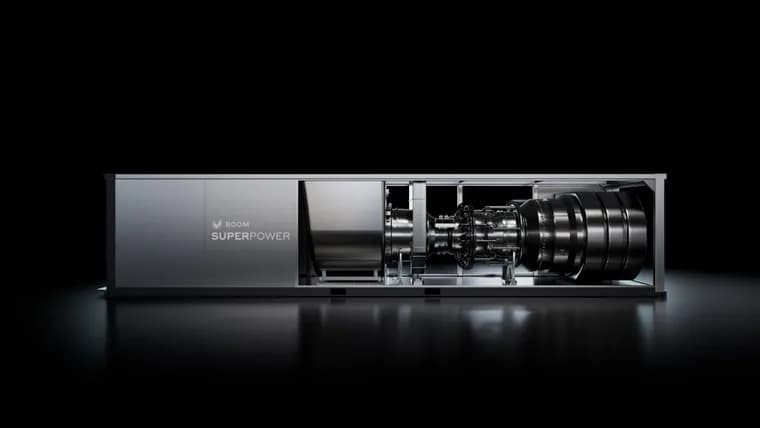
Crusoe, a Denver-based AI data center builder that recently raised $3.9 billion, has ended a deal to buy 29 of Boom Supersonic's 42-megawatt Superpower stationary gas turbines for $1.25 billion. Boom, also based in Denver, is developing the Overture supersonic passenger jet and last year launched a side business selling a stationary version of its Symphony jet engine, called Superpower, which shares about 80% of its parts with the airborne engine. Crusoe had signed on as Boom's first customer for the new turbine line, with deliveries originally set to begin in 2027. Boom CEO Blake Scholl announced on X on Friday, after congratulating Crusoe founders Cully Cavness and Chase Lochmiller on the company's recent fundraising, that the two companies are no longer moving forward with the turbine launch partnership, though he said other customers remain in Boom's pipeline. Scholl wrote that turbines are 'no longer part of Crusoe's near term primary power mix at Abilene/etc., so a launch partnership just didn't make sense,' adding that Boom will deliver about 250MW of Superpower turbines to other sites next year and is targeting 1GW by 2028. Crusoe confirmed to TechCrunch that it is no longer doing business with Boom. Spokesperson Andrew Schmitt said the company builds 'AI factories from the power up' and stays flexible on energy sources, including turbines, wind, solar, batteries and the grid, as its portfolio grows, adding that 'the partnership isn't the right fit today.' Crusoe's initial 1.2 gigawatt Abilene, Texas data center, built for Oracle and OpenAI, is powered by the grid, with a gas-turbine plant used only for backup. The company is also building a separate 900 megawatt Abilene data center for Microsoft that will run on on-site gas turbines. The collapse of the deal is a setback for Boom, which raised $300 million last year largely to commercialize the stationary power business; Scholl had previously said the plan was to use profits from that business to help fund Overture's development. Scholl could not be reached for comment beyond his X post before TechCrunch's publication.
Key facts
- Crusoe has ended a $1.25 billion deal to buy 29 of Boom Supersonic's 42-megawatt Superpower stationary gas turbines.
- Boom CEO Blake Scholl said turbines are no longer part of Crusoe's near-term primary power mix at its Abilene sites, so the launch partnership no longer made sense.
- Deliveries had been planned to start in 2027; Boom says it will still deliver about 250MW of Superpower turbines to other customers next year and is targeting 1GW by 2028.
- Crusoe's 1.2GW Abilene data center for Oracle and OpenAI runs on grid power with gas turbines only for backup, while a separate 900MW Abilene site for Microsoft will run on on-site gas turbines.
- The lost deal is a setback for Boom, which raised $300 million last year partly to fund the Superpower business, which Scholl had said was meant to help finance the Overture supersonic jet.
Why it matters
The reversal shows how fluid AI data center power strategy still is: a company that signed a headline $1.25 billion turbine order less than two years before deliveries were due can walk away entirely once its near-term power mix changes, leaving a supplier's new product line without its first customer.
Who it affects
Boom Supersonic loses its launch customer for the Superpower turbine business, a setback for a company that raised $300 million last year partly to commercialize it and had hoped to use its profits to help fund the Overture supersonic jet. Crusoe, its investors, and partners like Oracle, OpenAI and Microsoft, whose Abilene campuses depend on Crusoe's power choices, are also affected.
How to use it
There is no product or pricing action for readers here; this is a corporate contract cancellation, not a launch. Boom says it still has other customers in its pipeline for Superpower turbines and expects to deliver about 250MW next year, rising toward a 1GW target in 2028.
How solid is it
The account rests on Boom CEO Blake Scholl's own public statement on X and Crusoe's on-record confirmation and quotes to TechCrunch, so both sides of the cancellation are directly attributed rather than inferred.
Risks and caveats
Neither company detailed why the partnership specifically fell apart beyond Crusoe's near-term power mix, and it is not stated whether any money had already changed hands under the $1.25 billion agreement or whether a financial penalty applies. Scholl could not be reached for further comment before publication.
“The TL/DR is that turbines are no longer part of Crusoe's near term primary power mix at Abilene/etc., so a launch partnership just didn't make sense.”
— Blake Scholl, Boom Supersonic CEO