Flock built an AI tool that identifies and tracks drivers, contradicting its own claims
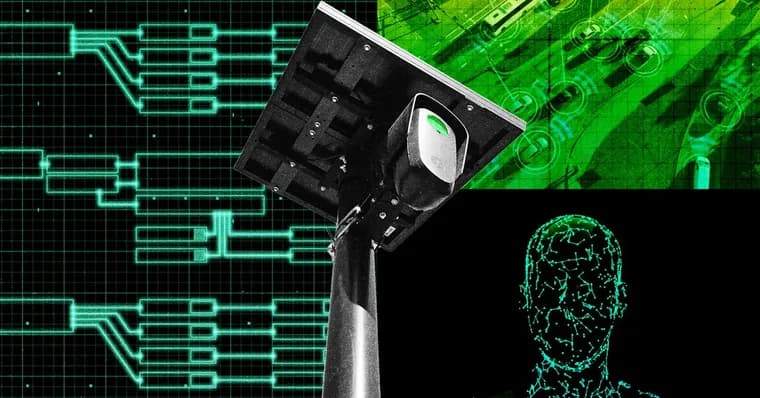
Flock Safety has told the public for years that its vehicle surveillance technology 'cannot recognize, identify, or track individuals.' WIRED found that the company has built a system that does both: an AI tool for police, originally called Nightshift and now renamed OS Investigate, that can identify drivers and track vehicles by their patterns of movement. The finding did not come from Flock. WIRED located the tool's code, a cache of more than 450 files, sitting on Flock's own website, served by its login pages to anyone who loaded them, and used those files to reconstruct portions of the authenticated police interface, its prompts, search fields, tools and controls, without ever gaining actual access to the product. Buchodi, a pseudonymous independent security and privacy researcher who has spent more than a decade reverse engineering consumer software and surveillance technology, examined the code separately for WIRED and reproduced key parts of the analysis. Flock says OS Investigate is still being tested with a small group of law enforcement partners and that its final capabilities may not match what WIRED reviewed.
The tool draws on a network of cameras that logs the movements of drivers in more than 6,000 communities. It can pick out potential witnesses by how often their cars pass through a neighborhood, or surface a driver's 'associates' by finding other vehicles that repeatedly pass the same cameras at the same time. Because the system also reaches police case files, 911 dispatch logs and commercial identity records, a license plate can be turned into a name, a home address and a list of relatives. It can also search for a person within an area drawn on a map, based on nothing more than a physical description.
OS Investigate ships with 69 prewritten prompts that officers can select, review, edit and submit, or replace with prompts of their own; the code describes 45 tools available to the AI, giving it access to plate scans and camera metadata, arrest records, case files, dispatch logs, ballistics results, and commercial databases that hold Social Security numbers, dates of birth, phone numbers, email addresses, relatives and associates. This inverts how Flock has long described its own business: a camera reads a plate, checks it against a list of wanted vehicles, and otherwise simply logs and ignores the car. With OS Investigate's preloaded prompts, an officer no longer needs a plate, a name or a crime to start a search. They supply a place, a stretch of time and a pattern of behavior, and the system is designed to hand back the people who fit.
One preloaded prompt reads: 'Find me witnesses based on vehicles most seen in [neighborhood] during [last 14 days] during [daily timeframe] (will not include whitelisted vehicles).' Selecting it pastes the text into a chat box for the officer to edit before submitting; the output is a list of plates that other tools in the product then convert into names and addresses. A second prompt instructs the system to list everyone arrested more than twice in two years for any offense except narcotics, map where those people live, pull the calls for service logged at their homes, and 'do a workup on the top three individuals,' chosen by the software itself. A 'workup,' in Flock's own terminology, is a one-command background check: starting from a name and date of birth, it returns vehicles and any prior listing as a suspect, then, on a second screen, relatives, phone numbers and online accounts. A separate tool takes a single plate and ranks its likely 'associates': it counts how often other plates appear at the same cameras within a two-minute window of the target by default, flags any vehicle that co-occurs three or more times, applies a default confidence threshold of 0.75, and can return up to 20 associated vehicles for one input plate.
Nineteen of the 69 preloaded prompts are built to hunt for patterns rather than look up a specific record; fourteen require no plate, no name and no description at all, just a location, a time window and a behavior. One group of these asks for vehicles that visited three or more retail locations in a city within three days, several banks within a week, or several gas stations between midnight and 5 am; WIRED reports that none of these examples names a target or an incident. A filter built into the tool strips out buses, semi trucks, work vans and trailers, so a delivery driver making repeated stops would not surface the way an ordinary driver making the same rounds would. The same pattern search extends to travel between cities: prompts flag vehicles that left one city for another and returned within a week, made repeat roundtrips over 14 days, or passed through three areas in sequence.
Before running a search, the software can ask an officer for a written justification. By default a reason is required, but the code WIRED reviewed places no requirement on what that reason says or how long it must be; where a department also requires a case number, the form checks only that it is at least three characters long. WIRED could not determine whether Flock runs additional checks on its own servers once a request is submitted. The code has a real limit as evidence: it shows what tools and prompts exist and what data they can reach, not how the system behaves once a query is sent. It contains no instructions given to the underlying model, and does not show what Flock's servers return or whether any command is ever refused.
Privacy and legal experts told WIRED that Flock's tools already raise serious constitutional concerns by giving police broad, often warrantless access to a record of people's movements, and that these prompts go further, turning a tool meant to find a known vehicle into one that casts suspicion on drivers based on where and how often they drive, regardless of whether they are wanted for anything. 'I think that most people imagine that license-plate readers are checking license plates and they're looking if a vehicle is wanted. And if it's not wanted, the police will move along,' said Jay Stanley, a senior policy analyst with the ACLU's Speech, Privacy, and Technology Project. 'But we're increasingly seeing the aggressive deployment of AI by Flock, and in some ways, like China, very little space between what can be done and what is being done.' Noel Pichardo, a former Pawtucket, Rhode Island, police officer who reviewed the prompts for WIRED, said, 'I don't know how anyone can argue against the idea that Flock literally tracks people.' Pichardo had testified against the technology before Rhode Island state lawmakers in 2024, weeks after serving a 30-day suspension for criticizing Flock and his department's leadership in a local newspaper; the state police chiefs' association publicly rebuked him days later, further investigation and discipline followed, and he resigned as his department moved to fire him. A detective at a California law enforcement agency, granted anonymity because he was not authorized to speak publicly, said the witness-finding prompts made him 'slightly uncomfortable,' but that Flock had already closed many vehicle theft cases for his department: 'We'll use whatever tool is available to solve crime. It isn't controversial.'
Flock did not respond to a list of questions about the product and did not dispute the capabilities WIRED described. In a statement, spokesperson Paris Lewbel called OS Investigate a separate product from Flock's license-plate-reader technology, meant to help investigators work across information their agencies already have access to, and said its capabilities and workflows may change significantly before any broader release. Flock's own public trust pages tell customers its technology is built for specific, case-based investigations and is 'not for watching people.' The findings emerge as Flock also faces bipartisan political pressure, a growing record of officers caught misusing its existing platform, and vandalism that has left cameras sawed off and their lenses painted over in cities around the country.
Flock's chief executive, Garrett Langley, has likened the tool to a crime analyst who is 'always awake, always watching out for you.' At a demonstration for police chiefs in Denver, he described searching every camera in a city for cars tailing an armored truck, pulling the registered owners of those vehicles, and checking their arrest records, in under a minute; he has said investigators who try it get 'addicted.' Langley started Flock in Atlanta, where his first camera was a phone in a waterproof box. The company now logs 20 billion plate scans a month, counts roughly 140,000 monthly active users, and was valued at $7.5 billion in its most recent funding round, backed by investors including Andreessen Horowitz and Founders Fund. At Flock's Atlanta headquarters, a gold painted camera covered in signatures commemorates an earlier ritual of marking every additional $1 million in revenue with a new camera; Langley recently told Vanity Fair, 'Now we do more like a million a day.' In the same interview, he said Flock would have solved the disappearance of Nancy Guthrie, Savannah Guthrie's mother, had its cameras been deployed where she vanished.
Andrew Guthrie Ferguson, a law professor at George Washington University, told WIRED a tool like this was inevitable: 'To use all the data collected, you need to build in the ability to query it. To make things easier for police officers who are not going to create their own agentic tools, you must preprogram the system with some natural language prompts and automated workflows.' What struck him was the specific choice of prompts Flock built in: 'It is not rocket science to figure out [that] police will want to find certain objects or patterns, but it is interesting to see what they preprogrammed. There are a lot of innocent activities that could be flagged.'
Key facts
- OS Investigate, Flock's AI tool for police (originally called Nightshift), can identify drivers and track vehicles by their movement patterns, something Flock has told the public for years its technology cannot do.
- WIRED found the tool's code, a cache of more than 450 files, exposed on Flock's own website and served by its login pages to anyone who loaded them; a pseudonymous researcher, Buchodi, independently corroborated the analysis.
- The tool ships with 69 preloaded prompts and 45 available tools, reaching plate scans, arrest records, dispatch logs, ballistics results and commercial databases that include Social Security numbers, phone numbers and relatives.
- Nineteen of the 69 prompts hunt for behavior patterns rather than a known plate; fourteen need no plate, name or description at all, just a location, a time window and a behavior.
- Flock did not dispute WIRED's findings; a spokesperson said OS Investigate is a separate, still developing product being tested with a small group of law enforcement partners, and that its capabilities may change before any wider release.
Why it matters
Flock has spent years telling the public, including on its own trust pages, that its cameras record license plates rather than the people driving them, and are 'not for watching people.' The code behind OS Investigate shows a system built to do the opposite: take a place, a time window and a behavior, and hand back the people who fit, without needing a plate, a name or a specific crime first. Privacy and legal experts told WIRED that Flock's tools already raise serious constitutional concerns by giving police broad, often warrantless access to a record of people's movements, and that these prompts go further, casting suspicion on drivers based on where and how often they drive rather than on any known connection to a crime. The gap between what Flock has promised and what its own code allows is the story.
Who it affects
Anyone whose driving passes through the more than 6,000 communities in Flock's camera network can be pulled into a search, whether or not they are suspected of anything; the tool can surface 'witnesses,' 'associates' and full background dossiers on people who were never named as a target. It also affects the police departments and officers who would use it, and Flock itself, which is already facing bipartisan political pressure, a growing record of officers caught misusing its existing platform, and vandalism against its cameras. Officers who question the technology can pay a price: Noel Pichardo, a former Pawtucket, Rhode Island, police officer, served a 30-day suspension after criticizing Flock and his department's leadership, was publicly rebuked by the state police chiefs' association, and resigned as his department moved to fire him.
How to use it
Officers work from a menu of the 69 preloaded prompts, selecting, editing or submitting one as written, or writing their own; choosing a prompt pastes it into a chat box for review before submission. Examples include a witness finder that lists vehicles most seen in a neighborhood over a chosen period, and a 'workup,' a one-command background check that starts from a name and date of birth and returns vehicles, prior suspect listings, relatives, phone numbers and online accounts. A separate associate-ranking tool takes a single plate and returns up to 20 vehicles that shared a camera with it three or more times within a two-minute window, using a default confidence threshold of 0.75. Before a search runs, the software can ask for a written justification, though the code places no requirement on what that justification actually says.
How solid is it
WIRED did not rely on a leak or an insider. It analyzed code Flock served publicly from its own login portals, enough to reconstruct portions of the authenticated police interface, its prompts, search fields, tools and controls, without gaining actual access to the product. Buchodi, a pseudonymous independent security and privacy researcher with more than a decade of experience reverse engineering consumer software and surveillance technology, examined the code separately and reproduced key parts of the analysis. Flock did not dispute the capabilities WIRED described, though it declined to answer WIRED's specific questions. The evidence has a real limit: the code shows what tools and prompts exist and what data they can reach, not how the system behaves once a query is submitted, since it contains no instructions given to the underlying model and does not show what Flock's servers return or whether they ever refuse a request.
Risks and caveats
Flock describes OS Investigate as still in testing with a small group of law enforcement partners and says its capabilities and workflows may change significantly before any broader release, so what WIRED reviewed may not match what eventually ships. Within the system as reviewed, the search-justification requirement is close to a formality: a reason is mandatory by default but unconstrained in content or length, and where a case number is also required, the form checks only that it is at least three characters long. WIRED could not determine whether Flock applies further checks on its own servers after a request is submitted. The reporting does not establish that any of this has yet been used against a specific person; Flock frames the tool as a way for investigators to work across data their agencies already have access to, not as a new surveillance capability.
“I don't know how anyone can argue against the idea that Flock literally tracks people.”
— Noel Pichardo, former Pawtucket, Rhode Island, police officer