Flock Safety employees called police on journalists filming its cameras
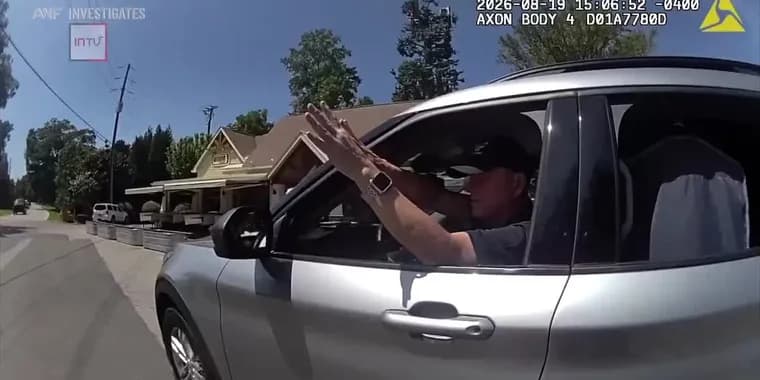
On Aug. 19, 2026, InvestigateTV national investigative reporter Brendan Keefe drove to a suburban street outside Atlanta after a family member spotted a Flock Safety technician installing an upgraded license-plate-reader camera. Keefe parked at a distance, wore a visible press vest and hat, displayed a press placard on his dashboard and began filming. The installer packed up and drove off; Keefe followed several cars behind hoping to document the next stop, and the installer called 911, telling a dispatcher he was being followed and had been "harassed" by someone "taking videos and pictures." Minutes later, in Milton, Georgia, a police officer pulled Keefe over and was joined by two more patrol units. Body camera and dashboard footage obtained by InvestigateTV show Keefe identifying himself as a journalist documenting Flock's camera rollout; the officer told him the installer feared being identified and worried about his and his family's privacy, and at one point remarked, "we should probably be a little more careful on who we put on TV." About 17 minutes after the stop began, Keefe was allowed to leave without being charged.
The stop was, per InvestigateTV, at least the second documented 2026 case of someone working for Flock calling police on people filming the company's public-facing operations. On June 5, 2026, police in Smyrna, Georgia responded to a 911 call from a Flock employee after a group of YouTube creators began filming outside the company's distribution center. The caller, who over the phone identified himself as quality manager James Boyce, told the dispatcher the group had been "harassing everyone" at the facility, described them as "three young white males, probably mid-twenties," and three times raised the possibility they were armed, though he told the dispatcher he had not seen any weapons. Security researcher Benn Jordan, who was filming alongside the YouTube creators, later called it hypocritical for a company that "collects data every single time you pass a camera and sends it to law enforcement" to object to being filmed itself. No one in the group was charged, though they were given an official trespass warning to leave the premises.
Flock's automated license-plate-reader network spans roughly 120,000 cameras used by police departments nationwide, and the company has faced a summer of criticism over privacy and alleged misuse, with "numerous communities" canceling contracts and lawmakers at multiple levels of government discussing or enacting bans. Flock nonetheless told a trade publication its new-customer growth is outpacing contract cancellations 10-to-1. In a written statement to InvestigateTV, a Flock spokesperson said the company does not object to the public or press photographing its cameras or personnel, but that employees and contractors "may contact law enforcement when they believe they are being threatened, harassed, followed, or otherwise face a safety concern." The spokesperson linked the Smyrna incident to a separate episode at company headquarters in which people allegedly claimed to have an interview with CEO Garrett Langley and tried to access the building, and cited a broader pattern of threats against Flock staff, including social media threats and the arrest of a California man accused of threatening a camera installer with a knife and vandalizing his vehicle.
Jordan had separately reported months earlier that an encryption flaw allowed access to dozens of Flock camera feeds; Flock said the vulnerability was present in only 60 to 70 of its AI-powered cameras and blamed an internet service provider for sending the wrong SIM cards. Jordan was later denied access to Flock's own Aug. 18-20, 2026 law enforcement conference, Flock Forward, in Atlanta, with his registration and hotel booking canceled four days before the event; InvestigateTV was also turned away when it asked to attend as press, with Flock calling the gathering "a customer event and not open to the media." Asked in an April 2026 interview whether the company considers law enforcement agencies or citizens to be its customers, Flock's Chief Communications Officer Josh Thomas said, "ultimately, I would argue that the whole community is our customer."
Key facts
- On Aug. 19, 2026, a Flock Safety technician called 911 on InvestigateTV reporter Brendan Keefe for filming a camera installation on a public street near Milton, Georgia; police stopped Keefe for about 17 minutes before releasing him without charge.
- It is at least the second such case in 2026: on June 5, a Flock employee later identified as quality manager James Boyce called 911 on a group of YouTube creators, including security researcher Benn Jordan, filming outside Flock's Smyrna, Georgia distribution center; no one was charged, though the group received a trespass warning.
- Flock's license-plate-reader network covers roughly 120,000 cameras, and the company says new-customer growth is outpacing contract cancellations 10-to-1, even as numerous communities have canceled contracts and lawmakers weigh bans.
- A Flock spokesperson said in writing the company does not object to the public or press photographing its cameras or personnel, but that employees may call police when they feel threatened, harassed or followed.
- Benn Jordan, who earlier reported an encryption flaw Flock said affected 60 to 70 of its cameras, was denied access to the company's Aug. 18-20 Flock Forward 2026 conference, with his registration and hotel booking canceled four days beforehand.
Why it matters
A Flock Safety field employee calling 911 on a journalist filming a camera installation from a public street, and another employee doing the same to a group of YouTube creators outside a company facility, are documented on 911 recordings and body camera footage obtained by InvestigateTV rather than relayed secondhand. Both incidents happened during a summer in which Flock, whose network covers roughly 120,000 license-plate readers used by police nationwide, has faced growing criticism over privacy and alleged misuse of its technology, with communities canceling contracts and lawmakers weighing bans, even as the company says new business is outpacing cancellations 10-to-1. The pattern raises the question of how a company built on constant public surveillance treats members of the public who point a camera back at it.
Who it affects
Flock Safety and its roughly 120,000-camera network; the police departments in Milton and Smyrna, Georgia that responded to the 911 calls, and Forsyth County, whose dispatcher first took the installer's call before transferring it; journalists and researchers who document Flock's public installations and facilities, among them InvestigateTV's Brendan Keefe, security researcher Benn Jordan and a group of YouTube creators; and Flock's own field employees and contractors, who a police officer said have been told to "not engage" when filmed or confronted, and whom the company says may call police when they feel threatened or followed.
How to use it
Both documented cases ended with police releasing everyone without charges, despite Flock employees describing the people filming them as followers or possible threats when they called 911. Flock's own written statement to InvestigateTV says the company does not object to the public or press photographing its cameras or personnel in public, which gives journalists and researchers documenting Flock installations a company statement to point to if confronted. Anyone hoping to attend Flock's own events as press or an independent researcher should expect friction: the company treats its annual Flock Forward conference as a closed "customer event," and Benn Jordan's registration and hotel booking were canceled four days before the 2026 edition.
How solid is it
The reporting rests on primary records rather than secondhand accounts: 911 call recordings InvestigateTV obtained through public records requests, police body camera footage, and Keefe's own dashboard camera video. Flock's side is represented through written statements from a company spokesperson, quoted at length for both the Milton stop and the Smyrna incident, and through on-record remarks from Chief Communications Officer Josh Thomas in an earlier interview. The article does not name the responding Milton officer, her supervisor or the specific department beyond Milton and Forsyth County, and it does not name the trade publication that reported Flock's 10-to-1 growth-to-cancellation figure or say when that figure was given.
Risks and caveats
The article gives no total count of the "numerous communities" that have canceled Flock contracts, so the scale of that pushback against the 120,000-reader network is not quantified beyond the phrase itself. Flock's account linking the Smyrna incident to a separate alleged security breach at its headquarters, involving people who claimed to have an interview with CEO Garrett Langley, comes from the company's own spokesperson and is not independently verified in the article. Flock frames its employees' 911 calls as safety responses within a broader pattern of threats and violent rhetoric against staff, including the arrest of a California man accused of threatening an installer with a knife, a context that sits alongside the filming incidents without being presented as their direct cause.
“That's the most absurd part of it, is that their response to this controversy is scrubbing data as a company that literally collects data every single time you pass a camera and sends it to law enforcement”
— Benn Jordan, security researcher