FTC bans foreign humanoid robots, citing security risks
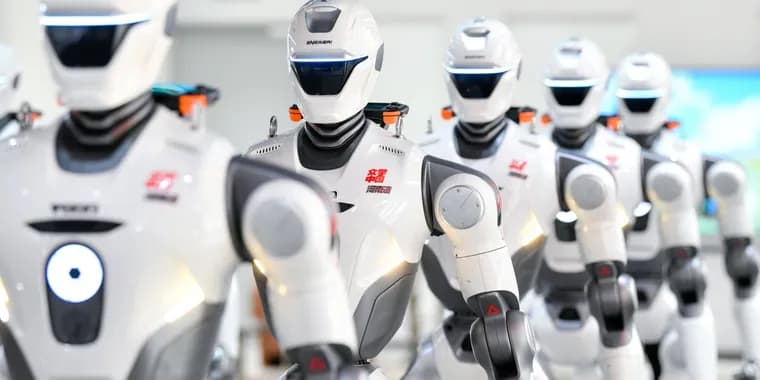
The Federal Trade Commission issued a sweeping ban last week on foreign made advanced robots, covering humanoids, quadrupeds and wheeled robots. The FTC gave two reasons: foreign made humanoids could collect large amounts of data, including inside homes and at sensitive facilities, posing a national security risk; and US robotics companies need protection from Chinese competition to build a more robust, secure domestic supply chain.
The move fits a pattern the Trump administration has used before with solar panels, electric vehicles and drones: when China becomes competitive on price in a strategic technology, Washington reaches for tariffs or purchasing rules to slow the flow of cheap imports. The administration is reportedly also considering a ban on open source Chinese AI models, which often rival OpenAI's and Anthropic's offerings at a much lower cost; blocking them would cost businesses an estimated $25 billion a year in lost savings. Robotics is now treated as an extension of that same AI industrial policy rather than a separate trade fight.
Some US robotics firms welcomed the ruling. Gavin Kenneally, CEO of Ghost Robotics, which builds four legged robots for inspection work, said stronger cybersecurity and a more level playing field would be good for customers and the industry. An FTC document released with the ruling cited a case in which a man gained control of 7,000 robot vacuum cleaners as an example of the risk.
But the rule has a practical problem for the sector it claims to protect. US robotics companies and academic labs rely heavily on cheap robots from China to do their research, building fleets that learn tasks from flipping waffles to doing laundry. Aaron Prather, director of market intelligence at the Association for Advancing Automation, said the ruling "creates a challenge for US humanoid researchers" because "Chinese models offer the best price to capability ratio available." An internal review by his trade group found that 90% of recent robotics research papers from US universities relied on robots made by Unitree, China's leading humanoid robotics company. The price gap is large: a four legged robot from Unitree runs around $4,600, while a comparable Boston Dynamics model can cost about $278,000.
The two industries are at very different stages. Unitree plans to go public this week, targeting a valuation of nearly $6 billion, while no US robotics company offers a meaningful comparison and existing US makers move far fewer units. Figure's humanoids are not yet selling at scale, and 1X's robots are not yet shipping to homes. Even so, the field is going mainstream: Google recently released a new AI model meant to help humanoids learn tasks faster, its most notable trick being tying a trash bag shut.
The FTC's order reportedly contains many carve outs, which makes its real world impact hard to predict. Its symbolic message is clearer: the administration now treats humanoid robotics not as a novelty act but as a strategic AI frontier worth shielding from foreign competition.
Key facts
- The FTC banned imports of foreign made humanoid, quadruped and wheeled robots last week, citing national security data collection risk and the need to protect the US robotics supply chain from Chinese competition.
- An FTC document tied to the ruling cited a case where a man gained control of 7,000 robot vacuum cleaners as evidence of the cybersecurity risk.
- An Association for Advancing Automation review found 90% of recent US university robotics papers relied on robots from China's Unitree; a Unitree quadruped costs around $4,600 versus about $278,000 for a comparable Boston Dynamics robot.
- The administration is also reportedly considering banning open source Chinese AI models, a move estimated to cost businesses $25 billion a year in lost savings.
- Unitree plans to go public this week targeting a nearly $6 billion valuation, while US rivals Figure and 1X are not yet selling humanoids at meaningful scale.
Why it matters
The FTC ban shows the Trump administration extending its AI protectionism beyond leading AI labs like OpenAI and Anthropic into a nascent, still stumbling robotics sector. Humanoid robots have mostly been known for falling over in demos, but the administration now treats the category as a strategic frontier of the AI industry, worth shielding from Chinese competition the way it has shielded solar panels, electric vehicles and drones in the past.
Who it affects
US robotics makers such as Ghost Robotics, whose CEO Gavin Kenneally welcomed the ruling, stand to benefit on paper. But US robotics companies and academic labs that build and train robot fleets are hit directly, since an Association for Advancing Automation review found 90% of recent US university robotics papers relied on robots from China's Unitree. Chinese makers like Unitree, which is heading toward a public listing targeting nearly $6 billion, and US rivals Figure and 1X, which are not yet selling or shipping at scale, sit on opposite sides of the new barrier.
How to use it
US researchers and companies that previously bought inexpensive Chinese humanoids and quadrupeds, at roughly $4,600 versus $278,000 for a comparable US made robot, can no longer import them under the new order, though the FTC's order reportedly contains unspecified carve outs. The ban covers hardware only for now; a parallel ban on open source Chinese AI models is still described as something the administration is reportedly considering, not something enacted.
How solid is it
The account comes from MIT Technology Review's AI newsletter, The Algorithm, drawing on the FTC's ruling and an FTC document released alongside it, plus on record comments from Ghost Robotics CEO Gavin Kenneally and Aaron Prather of the Association for Advancing Automation. No exact calendar date is given for the ban, only that it was issued "last week," and the carve outs in the FTC's order are not named or described.
Risks and caveats
The rule's stated goal is to protect US robotics companies, but by cutting off access to cheap Chinese hardware it could instead slow down the research those same companies and university labs depend on. The article frames this directly as a possible backfire: if robotics research is stunted because affordable robots are no longer available, the FTC ruling could hold the industry back rather than boost it. Consumers may also face higher prices, a trade off that has followed similar tariff and procurement moves on other technologies.
“Chinese models offer the best price-to-capability ratio available.”
— Aaron Prather, director of market intelligence, Association for Advancing Automation