Good culture, not AI tools, is the real productivity lever, essay argues
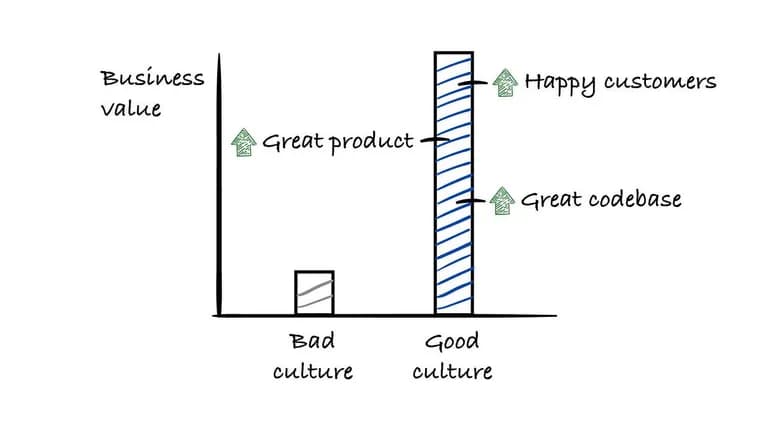
An anonymous engineering leadership newsletter argues that a strong workplace culture, not any AI tool, is the biggest lever a company has for real productivity. The author, who describes a 13-plus-year career split between engineering and engineering management, writes: "There is no better productivity hack than a great culture. No AI tools will provide bigger productivity gains." The piece opens by listing the kind of AI-hype phrases now common in engineering circles, including "you need to use this AI tool," "you need to be using this AI workflow," and claims that engineers should be "2x, 5x, or even 10x" more productive with AI, and argues that fixating on the tools while ignoring the environment they are used in is the actual mistake.
The trigger for the piece is a sentence the author says was heard repeatedly through 2025 and into early 2026, most damagingly from a CEO, CPO or CTO: "This is very easy to build now that we have AI, and we don't need as many people." The author argues that line destroys psychological safety on the spot, since it tells staff their jobs may not matter, and recalls a personal experience as an engineer and manager watching departments spend whole days blaming each other once trust broke down.
To explain why tools alone cannot fix this, the author invokes Conway's Law, the principle that organizations "are constrained to produce designs which are copies of the communication structures of these organizations." The argument: a company's output mirrors how its people communicate and work together, so a badly run organization keeps shipping a bad product no matter which AI tools it adopts, while a well run one keeps improving. The author compares good culture to health: without it, nothing else an organization does can work well.
The author also targets a second failure pattern: executives who see a rival claim, in the piece's words, "other companies are 10x more productive by using this AI tool," panic, and start blaming their own engineers for not matching it. According to the author, a lot of that "10x" reporting is more or less selling a specific AI product or a sponsored partnership, and the recommended response is to check the incentives behind whoever is making the claim before acting on it. Later in the piece, the same point is made about a related belief, that simply rolling out a new AI tool will make a team "magically" 2 to 5 times more productive; that expectation is called false as well.
The broader argument is that AI is an amplifier, not a fix. Bad communication and bad architecture get worse once AI is layered on top of them, while good culture and good architecture make AI more useful, because people keep helping each other and AI has a cleaner blueprint of the system to work from. Introducing AI into a dysfunctional organization, in this framing, just sends everyone in the wrong direction faster.
To help readers judge their own organization, the author lists nine yes or no questions: whether people know what they are responsible for, whether they can make decisions without unnecessary approvals, whether they feel safe challenging leadership, whether teams trust each other, whether priorities are clear, whether people can disagree constructively, whether the organization rewards outcomes, whether people understand why they are building something, and whether failures are treated as something to learn from rather than something to assign blame for. The piece also mentions a longer personal checklist for auditing engineering culture, available to the newsletter's paid subscribers, though no price is given in the piece itself.
On messaging, the recommendation is to present AI the same way earlier generations of tools were presented: as something great engineers and leaders learn to use to do the work better, not as a threat. Leaders should never suggest a team is being "replaced" or "not important anymore" because of AI, the author writes, since that alone breaks morale. The piece also argues adoption has to run bottom-up rather than be mandated top-down, because the tools change too fast for a single top-down rollout to keep up, and because it depends on constant knowledge-sharing between people actually using the tools day to day. In the author's words, "AI adoption is not a tooling problem, it's a leadership problem," and a company whose only goal is to raise AI usage numbers, rather than business outcomes, is "basically losing."
The piece ties this back to an earlier article from July 2025, titled "Companies should hire more engineers in the age of AI," restating that the best companies hire more engineers rather than fewer, because more people compound an organization's productivity once the culture underneath them is solid. Time to market, TTM, is framed as an increasingly decisive competitive metric in the AI era, and a company that restricts its own headcount and talent is described as accepting a long-term disadvantage, not a saving.
The piece ends by reframing the question leaders should be asking. Rather than "how do we get everyone to use AI," the author argues the real question is "how do we build an organization where great people can do their best work, and then use AI to multiply them."
Key facts
- The author, an anonymous newsletter writer with a self-described 13-plus-year engineering career, argues no AI tool produces bigger productivity gains than a genuinely good workplace culture.
- The author invokes Conway's Law, quoting it directly, to argue that an organization's product mirrors its internal communication structure regardless of which AI tools it adopts.
- The piece calls much of the "other companies are 10x more productive with this AI tool" messaging that triggers executive FOMO more or less marketing for a product or partnership, and urges leaders to check the incentives behind such claims.
- The author warns that saying "we don't need as many people" because of AI, a line heard repeatedly through 2025 and into early 2026, destroys psychological safety and damages culture, especially when it comes from a CEO, CPO or CTO.
- The piece argues AI adoption should happen bottom-up rather than be mandated top-down, calling it "a leadership problem" rather than a tooling problem, and points back to an earlier July 2025 article arguing that the best companies hire more engineers in the AI era, not fewer.
Why it matters
As companies pressure engineering teams to adopt AI tools and executives cite rivals' productivity claims to justify headcount cuts, this essay argues that organizational culture, not the tool, decides whether AI adoption actually helps or makes things worse. It reframes the AI productivity debate as a leadership and culture question, and directly challenges the "we don't need as many people now" style of messaging that the piece says became common through 2025 and into early 2026.
Who it affects
CEOs, CPOs and CTOs setting AI strategy; engineering managers caught between executive pressure and their teams; individual engineers whose sense of job security is shaken by "fewer people needed" messaging; and any organization currently mandating AI adoption from the top down or chasing a competitor's productivity claim.
How to use it
The piece offers a nine-question self-check for gauging an organization's culture: clear ownership, decisions made without unnecessary approvals, safety to challenge leadership, trust between teams, clear priorities, room to disagree constructively, rewarding outcomes, understanding of purpose, and treating failure as something to learn from rather than assign blame for. Its messaging advice is to present AI as an ordinary tool the team uses to work better, never as a replacement threat, and to let adoption spread bottom-up through peer knowledge-sharing rather than a top-down mandate. A longer, more detailed culture-assessment checklist from the same newsletter is mentioned as available to paid subscribers, though no price is stated in the piece.
How solid is it
This is a leadership opinion essay grounded in personal experience and a well-known management principle, Conway's Law, not a data-backed study; no survey, comparison or citation is offered to support the "culture beats AI tools" claim itself. The 2x, 5x and 10x AI-productivity multipliers that appear in the piece are presented only as examples of the hype the author is arguing against, not as figures being verified or endorsed, and the piece itself calls much of that "10x" reporting vendor marketing.
Risks and caveats
The author is not named or otherwise identified in the retrieved article text; the "13-plus-year career" framing is self-reported and unverified. The recommendations, including bottom-up adoption and culture-first messaging, are personal opinion, not tested organizational research. The same newsletter edition opens with a paid sponsorship from an AI-agent tooling vendor promoting a free webinar. It also promotes the newsletter's own paid subscription tier, a separate paid product store and a forthcoming book. That commercial context sits inside an essay that itself argues against over-relying on AI tools and recommends checking other people's incentives, though the piece never addresses the overlap directly.
“There is no better productivity hack than a great culture. No AI tools will provide bigger productivity gains.”
— the author