NASA's moon base plan faces extreme cold, radiation and asteroid strikes
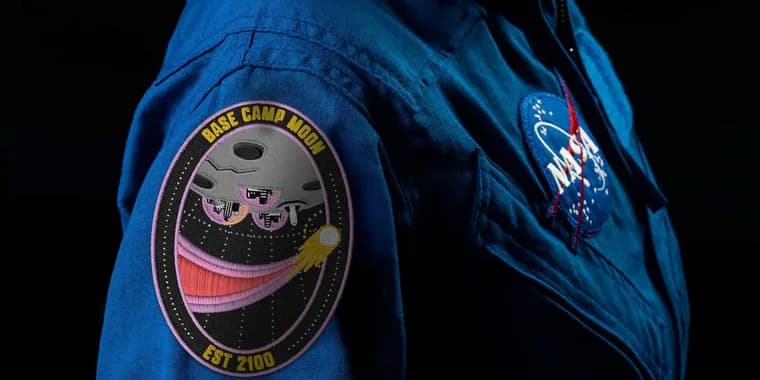
MIT Technology Review frames the current push to the moon as a second space race, this time between the US and China, with other nations and private spaceflight companies alongside. This year, under NASA Administrator Jared Isaacman, the agency has been announcing moon base plans at a steady clip. If all goes according to plan, and the plan will likely cost tens of billions of dollars to start, the base will include drones, robotic landers, communication satellites and a nuclear power plant, plus plant terrariums, moonquake sensors and mechanized scouts that explore craters for water.
The US is currently planning to start initial astronaut missions to the lunar surface in 2028, focused on exploration and technological experimentation. The idea is that some time in the 2030s there will be habitation quarters for long-term stays, surrounded by research stations, resource mining and processing plants, and landing pads. NASA's moon base program manager Carlos García-Galán says it is going to be an expanse, adding up to hundreds of square miles. China has near-identical plans for its own base. Being first matters, the article argues, because the victor gets to define what the moon is: a militarized outpost, a manufacturing hub or a wilderness to be preserved.
There are scientific reasons too. The moon holds primeval rocks that carry clues to the formation of the solar system, its lack of atmosphere suits telescopes, and ESA director general Josef Aschbacher calls the far side a fantastic place to explore the further universe. Launching from low-gravity lunar ground is also more energy efficient than launching from Earth, so the moon could be a stepping stone to Mars and beyond. To get there, a base has to be safe, somewhat self-sustaining so it can survive changing politics and not cost ruinous sums, able to use local resources and ideally earn revenue, and served by autonomous robots that can build and maintain it. Simon Middleburgh of Bangor University's Nuclear Futures Institute says it is almost like starting civilization from scratch. Decades on, let's say by 2100, bases could grow into cities.
The environment is brutal. In general, lunar daytime temperatures can reach more than 250 °F and nights can drop below minus 200 °F. The surface is constantly hit by carcinogenic radiation and meteoroids, and the volcanic dust is sticky and corrosive. The south pole, NASA's target, is harsher still. Its permanently shadowed craters are thought to harbor water ice, which could supply drinking water, crops, breathable air and rocket propellant, but they can be colder than minus 410 °F. Outside the craters, astronauts would face 14 days of sun followed by an equally long night. Philip Metzger of the Florida Space Institute puts the trade-off as acceptable risk of death: what can we reasonably survive without breaking the bank?
Temperature is one of the easiest problems, the article says: materials, radiators and heaters can handle the swings. Spacesuits have only proved themselves during brief excursions, though, and it is not yet clear how long they would last in such conditions. Radiation is far worse and comes in two forms. Galactic cosmic rays arrive almost constantly and can punch through thin shielding, where heavy ions fragment and create secondary particles, so a wall that is too thin can deliver a surprisingly large dose. Solar flares and coronal mass ejections are the second form. Metzger notes that during Apollo there would have been no way to keep a crew alive through a large flare. The answer is to get back inside a heavily shielded storm shelter, but astronauts may be miles away in a rover. Coronal mass ejections take hours to days to reach the Earth-moon system; solar flares can arrive in under an hour, and NASA physicist Stuart George says solar storm forecasting is about where weather forecasting was in the 1950s and 1960s. Against cosmic rays the only defense is mass, such as lunar rock, so Chris Dreyer of the Colorado School of Mines says to build habitat modules underground, for example in lava tubes. NASA has not mentioned subterranean plans, but may need them for a small lunar city. Radiation caps total lifetime time on the surface at around two years, experts estimate.
Meteoroids are the next threat. Artemis II astronauts saw flashes on the surface earlier this year, the deaths of small meteoroids. Earth's atmosphere burns up rocks up to around 50 feet across; the moon has no such shield, so small rocks hit often and could puncture a spacesuit or rover engine. Nicholas Schmerr of the University of Maryland says the simplest answer is burial, the same as for radiation. Even buried modules would struggle against a 50-foot asteroid, about the length of a semi-trailer. Planetary defense has advanced: NASA's DART mission showed an asteroid can be deflected by ramming it with an uncrewed spacecraft, experiments suggest a nuclear bomb could deflect or vaporize rocks, and telescopes such as the ATLAS quartet and the soon-to-be-launched NEO Surveyor aim to find 90% of near-Earth asteroids 460 feet across in the coming years. But 50-footers are so stealthy that they would probably be spotted only shortly before impact. One idea is turret-like launch sites on the moon firing projectiles at an incoming rock, though Philip Lubin of UC Santa Barbara warns that breaking it into a thousand pieces means a thousand impacts, which might be worse than letting it hit one place.
Key facts
- NASA, under Administrator Jared Isaacman, plans astronaut missions to the lunar surface from 2028 and long-stay habitation quarters in the 2030s, at a cost likely in the tens of billions of dollars to start; China has near-identical plans.
- The target is the lunar south pole, where permanently shadowed craters are thought to hold water ice but can be colder than minus 410 °F; elsewhere there are 14 days of sun followed by an equally long night.
- Radiation is the hardest problem: cosmic rays punch through thin shielding, solar flares can arrive in under an hour, and experts estimate lifetime surface time tops out around two years.
- Experts favor burying habitats under rock or in lava tubes; NASA has not mentioned any subterranean plans.
- Rocks up to around 50 feet across burn up over Earth but hit the moon, and even buried modules would struggle against a 50-footer that telescopes may spot only shortly before impact.
Why it matters
A permanent moon base is no longer only a slogan: the US has a stated 2028 start for astronaut surface missions and an expected 2030s window for long-stay quarters, and China has near-identical plans. The article argues that whoever gets there first defines the terms of what the moon is used for. The piece is useful because it turns the headline ambition into a list of concrete engineering problems: temperature, two kinds of radiation, meteoroids, dust, and the money to maintain it all. The scientific payoffs it names are primeval rocks, telescopes on the far side, and cheaper launches toward Mars and beyond.
Who it affects
Most directly the astronauts who would live and work on the surface, and the agencies and companies planning the missions: NASA, China, other nations such as ESA's member states, and private spaceflight firms. It also touches engineers and researchers in radiation shielding, robotics, nuclear power, planetary defense and solar forecasting, several of whom are quoted. For the general reader it explains why a moon city is a long-horizon idea rather than a near-term project.
How to use it
This is a feature article, not a product or a tool, so there is nothing to adopt. Read it as a primer on the constraints any lunar base has to meet and on the trade-offs experts describe: shielding mass versus cost, underground versus surface habitats, and early warning versus storm shelters. It is also a handy checklist for judging future NASA or Chinese announcements: do they say how crews will be protected from flares, cosmic rays and impacts?
How solid is it
The article is reporting and analysis of programs that have already been announced, and it leans on named experts from NASA, ESA, universities and research institutes, each with a stated role. The figures for temperatures, radiation timing and asteroid sizes are given as ranges or estimates ('can reach more than', 'experts estimate'). The plan's cost is only a qualitative 'tens of billions of dollars to start'. The text available for this retelling ends mid-article, so the closing section is not covered here.
Risks and caveats
Everything about the plan is conditional: the article says 'if all goes according to plan', and 2028 is what the US is currently planning. The 2100 date for lunar cities is explicitly a 'let's say' hypothetical. The water ice at the south pole is thought to exist, not confirmed. Spacesuits are proven only for brief excursions, solar storm forecasting is immature, and NASA has not mentioned underground habitats even though experts say burial is the simplest answer. Even then a 50-foot asteroid could threaten buried modules, and some defense ideas have downsides, such as fragmenting a rock into many impacts. The article's own framing also admits that the money for safety is limited.
“What it comes down to is acceptable risk of death”
— Philip Metzger, spaceflight engineering researcher at the Florida Space Institute