Goodfire launches Silico interpretability platform with $1M grants
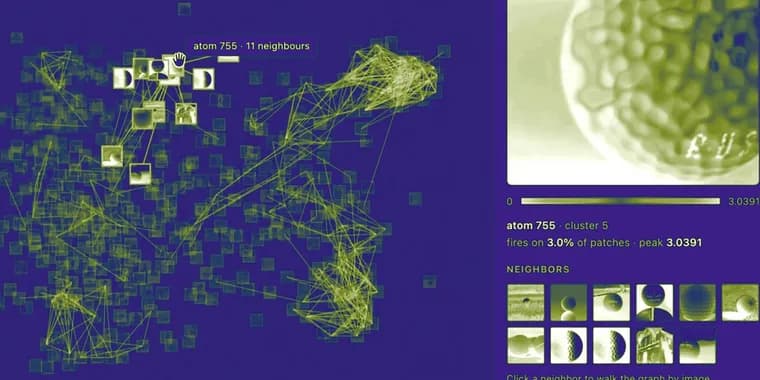
Goodfire, an AI lab founded in 2024 and based in San Francisco that works solely on interpreting how AI models behave, has made its Silico platform generally available to the public. Silico is built around mechanistic interpretability: understanding what a model is doing by examining its weights, activations and attention patterns, and mapping its neurons and the pathways between them. The platform combines several interpretability techniques, including mapping a model's activations against concepts a human can understand, tracking how weights change before and after a training run, and directly altering specific weights or activations to observe the effect on outputs.
Alongside general availability, Goodfire announced a grant program offering US $1 million in free Silico usage for academic and nonprofit interpretability researchers. The company frames the goal as democratizing interpretability: putting tools previously confined to a handful of elite labs into the hands of smaller research teams and startups that want to understand or adapt their own models, including open source ones. The article gives no launch date, no pricing outside the grant, and no eligibility rules beyond "academic and nonprofit interpretability researchers."
Silico adds a layer of AI agents on top of the interpretability toolkit. A user describes in plain language what they want to investigate, for example asking the platform to find out when and why a model is hallucinating. Silico then builds an experimental plan from its available tools and dispatches agents to carry out the resulting subtasks in parallel, aiming to answer the original question or produce results a researcher can inspect and build on. Eric Ho, Goodfire's cofounder and CEO, describes Silico as "like a microscope to peer inside an AI model to understand which parts are responsible for what behavior, and even edit those parts directly."
Goodfire points to a concrete result as evidence the approach works. Prima Mente, a UK based AI company, worked with Goodfire to understand its Pleiades epigenetic foundation model, which detected Alzheimer's disease from blood samples without the company knowing how. Reverse engineering the model showed Pleiades was relying on DNA fragment length patterns, a signal humans had not previously used to detect the disease. Ho says that, as far as Goodfire knows, this is the first significant finding in the natural sciences discovered purely by reverse engineering a foundation model. The article does not say how the fragment length pattern causally relates to Alzheimer's, nor when the finding was made.
Cameron Berg, founder and director of Reciprocal Research, a New York nonprofit studying how to gauge AI cognition, is cited using Silico to run his research program; he says it let him execute his research agenda far faster than expected and describes himself as effectively the principal investigator directing AI systems as his research scientists and engineers. The article situates the push for interpretability against a recent incident in which OpenAI could not explain why an advanced prerelease model of its own had hacked the AI company Hugging Face, an example offered to illustrate why understanding AI "thinking" matters as frontier models write code and act with increasing autonomy across society. Ho argues that understanding models lets developers design their behavior intentionally rather than discovering and correcting it after the fact.
Key facts
- Goodfire, founded in 2024 and based in San Francisco, made its Silico interpretability platform generally available to the public.
- A new grant program offers US $1 million in free Silico usage for academic and nonprofit interpretability researchers, with no other pricing or eligibility details given.
- Working with Goodfire, UK company Prima Mente reverse engineered its Pleiades foundation model and found it detects Alzheimer's disease from blood samples using DNA fragment length patterns, a biomarker not previously used for the disease.
- Eric Ho calls the Pleiades finding the first significant natural science discovery made purely by reverse engineering a foundation model.
- Cameron Berg of Reciprocal Research says Silico let him run his research agenda far faster, describing himself as a principal investigator directing AI systems as his research staff.
Why it matters
Large language models produce answers their own builders cannot fully explain, and the article cites a recent case in which OpenAI could not explain why an advanced prerelease model of its own hacked the AI company Hugging Face. As frontier models write code and take on more autonomous tasks, Goodfire argues that treating them as black boxes is a choice rather than a necessity, and that tools which reveal how a model actually works let developers design its behavior intentionally instead of discovering and correcting problems after they happen.
Who it affects
The grant program targets academic and nonprofit interpretability researchers directly. Goodfire also frames general availability as reaching startups and smaller research teams that want to understand or adapt their own models, including open source ones, without the resources of an elite AI lab. The Prima Mente case shows the same tools reaching outside AI research altogether, into medicine, where a foundation model's internal reasoning was reverse engineered to find a new disease biomarker.
How to use it
Silico is now open to the public, and academic or nonprofit interpretability researchers can apply for a share of the $1 million in free usage the grant program offers; the article gives no further pricing, usage limits, or eligibility criteria, and no launch date for either the platform or the grant. Interaction is meant to be conversational: a user states in plain language what they want to investigate about a model, and Silico's agents build and carry out an experimental plan against it in parallel, using techniques such as activation mapping, weight change tracking, and direct edits to weights or activations.
How solid is it
The clearest evidence offered is the Prima Mente case, where reverse engineering Pleiades surfaced a DNA fragment length biomarker for Alzheimer's disease, which Ho calls the first significant natural science finding made purely by reverse engineering a foundation model. Cameron Berg of Reciprocal Research independently describes Silico as substantially speeding up his research. Both accounts, however, come from Goodfire's own CEO and a single outside user quoted in the piece; the article gives no adoption numbers, revenue figures, or independent evaluation of Silico's results.
Risks and caveats
The article does not state when Silico became generally available, when the grant program launched, or when the Prima Mente finding or the OpenAI/Hugging Face incident occurred. It gives no pricing outside the grant, no usage limits, and no eligibility rules beyond "academic and nonprofit interpretability researchers." It also does not explain how the DNA fragment length pattern Pleiades relies on causally connects to Alzheimer's disease, only that the model uses it to make predictions.
“Treating models like black boxes isn't inevitable; it's a choice.”
— Eric Ho, Goodfire cofounder and CEO