Greg Brockman becomes OpenAI's de facto second-in-command
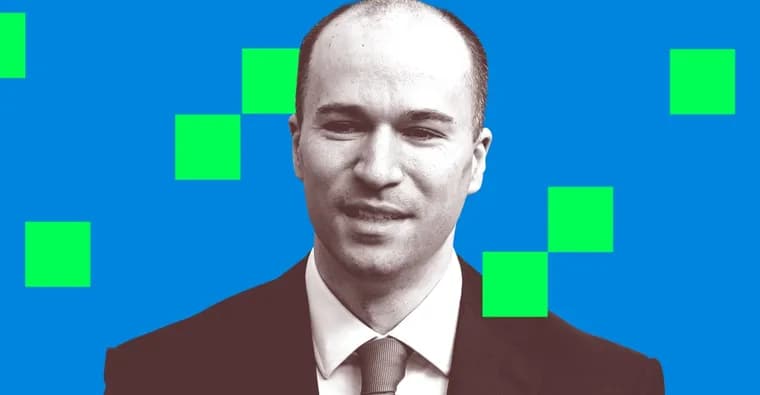
OpenAI has had a rough stretch: the company spent months fighting former cofounder Elon Musk in a jury trial, was hit with a trade secrets lawsuit from Apple, and faced scrutiny after an unreleased model reportedly hacked another AI company, all while preparing for an IPO and losing a steady string of executives. Through it, one person has quietly gathered power: Greg Brockman, OpenAI's president and cofounder. Sam Altman remains CEO, but on a day-to-day basis it is Brockman running the company.
Brockman has helped lead OpenAI since its founding, remembered as the engineering workhorse who pushed to build the scaled-up systems that trained the company's AI. He has been ambitious from the start: in a 2017 personal journal entry he wrote, "Financially what will take me to $1B?", and his current OpenAI stake is now worth nearly 30 times that figure. Back then he shared power with a handful of cofounders, including chief scientist Ilya Sutskever and CEO Sam Altman. His title has not changed in years, but his purview and job description have expanded significantly, to the point that he is now essentially second-in-command.
High-level departures have hit OpenAI all year, picking up in April with the exits of Bill Peebles, the former head of Sora; Kevin Weil, VP of OpenAI's science arm; and Srinivas Narayanan, CTO of B2B applications. Two more left separately citing medical reasons: CMO Kate Rouch, and Fidji Simo, OpenAI's CEO of AGI deployment, who went on leave in April before officially stepping down in July. The changes have continued: CRO Denise Dresser, who had taken on extra responsibilities after the April shake-up, announced her own departure earlier this month after just eight months in the role, and days later Brad Lightcap, who had been overseeing "special projects" after a long run as OpenAI's COO, said he would leave to start something new. OpenAI did not immediately respond to a request for comment from The Verge.
Not every departure fed Brockman's rise. Rouch, Peebles and Weil leaving did not directly affect his position, but others did. When Simo went on medical leave, Brockman took charge of all things product, including OpenAI's push into a super app. That authority grew further the following month, when OpenAI carried out another executive reorganization aimed at growing revenue: the change put Brockman in charge of product strategy and the company's entire "scaling" arm, giving him authority over nearly every part of its commercial operation. Simo's official resignation, coming just weeks after OpenAI filed to go public, cemented the arrangement. When Dresser's departure was announced, the press release quoted Brockman rather than Altman; he said the company would "build out the full system to make AI broadly useful for people and businesses."
Outside observers see the reshuffle as evidence that OpenAI is chasing revenue as its IPO nears, and trying to build products that set it apart from rival Anthropic. Harrison Rolfes, a senior research analyst at PitchBook, told The Verge that big shifts in an executive's scope of work tend to be a "signal towards where the company is headed strategically." He described Brockman as "more of a product scale and commercial sort of guy" whose deep technical knowledge "will collapse certain decision-making layers," and warned the shift could also push out lower-level staff, including researchers, who disagree with Brockman's approach, predicting they would leave rather than stay under an arrangement where his word now decides.
Brockman's authority is exceeded only by Altman, who consolidated his own power after clashing with OpenAI's board in 2023. The two didn't always agree in the company's early days: Brockman sometimes sided with Sutskever on questions of power and voiced doubts about some of Altman's ambitions, though he also worried about Musk "steamrolling" Altman. He has otherwise stayed close to Altman personally and professionally; when Altman was ousted as CEO in November 2023, Brockman immediately resigned in solidarity and began planning a new venture with him, and the two have grown only more aligned since. Attorney Ross Carmel, a partner at Sichenzia Ross Ference Carmel, said centralizing power carries practical benefits for OpenAI too, including the ability to cut some of its most expensive salary costs and improve its balance sheet as it approaches an IPO while lagging Anthropic on revenue. But he called the concentration of so many senior departures into one short stretch unusual, even though individual exits before a listing are not, and other experts told The Verge the pace was more intense than normal and could raise red flags. Brockman himself, speaking on CNBC's Squawk Box, said nothing was amiss: "There have been different eras where we have different sets of leaders in place ... I'm a constant, Sam [Altman] is a constant, and that, I think that we are stronger because of that resilience and diversity."
Brockman's constant throughout has been turning OpenAI's research into products; back in 2020 he called the launch of GPT-3 and its developer API the company's first time having "a general-purpose AI system that's immediately commercially valuable." Carmel said OpenAI likely hopes Brockman can now deliver consumer revenue rather than simply chase Anthropic in the enterprise market, since hardware and consumer products are "what Greg does well." Rolfes predicted OpenAI would ship some kind of consumer product under Brockman's oversight by the end of September, so he can "show that he deserves that position," and named the underlying worry among public investors: whether OpenAI can operate without depending heavily on both Brockman and Altman.
Key facts
- Greg Brockman, OpenAI's president and cofounder, now controls product strategy and the company's entire commercial "scaling" arm, making him de facto second-in-command while Sam Altman stays CEO and Brockman's own title stays unchanged.
- April saw the exits of Bill Peebles (former head of Sora), Kevin Weil (VP of OpenAI's science arm) and Srinivas Narayanan (CTO of B2B applications); CMO Kate Rouch and AGI-deployment CEO Fidji Simo left separately citing medical reasons, with Simo's April leave and July resignation directly widening Brockman's product authority.
- CRO Denise Dresser quit after eight months in the role, and longtime COO-turned-"special projects" lead Brad Lightcap announced he is leaving to start something new; Brockman, not Altman, was the one quoted in the press release about Dresser's exit.
- Attorney Ross Carmel says consolidating power under Brockman lets OpenAI cut costly executive salaries as it heads into an IPO while trailing Anthropic on revenue, though he and other experts call the clustering of so many senior exits in one short window unusual.
- PitchBook analyst Harrison Rolfes expects OpenAI to ship a consumer product under Brockman by the end of September, and frames investors' core worry as whether OpenAI can operate without depending heavily on both Brockman and Altman.
Why it matters
OpenAI is consolidating day-to-day control in Brockman, its president and cofounder, without changing his title: he now owns product strategy and the company's entire commercial "scaling" operation, on top of a product mandate he picked up when Fidji Simo went on medical leave. That shift is happening in the same stretch as OpenAI's IPO filing and a cluster of senior departures, and analysts read it as OpenAI orienting itself around revenue and consumer products rather than research alone, at a moment when it is trying to close a revenue gap with Anthropic.
Who it affects
Most directly, OpenAI's own leadership bench and the employees under it: PitchBook's Harrison Rolfes expects the changed hierarchy to push out lower-level staff, including researchers, who do not agree with Brockman's approach. It also affects prospective public shareholders in OpenAI's IPO, who according to Rolfes are already asking whether the company can run without leaning heavily on both Brockman and Altman, and Anthropic, repeatedly named as the competitive benchmark OpenAI is trying to catch on revenue and consumer products.
How to use it
There is no product or price here to act on. The practical signal for anyone tracking OpenAI is which executive speaks for it: press statements on product and commercial matters are starting to carry a Brockman quote rather than an Altman one, as happened when CRO Denise Dresser departed. PitchBook's Rolfes expects a concrete test of the new arrangement within weeks, predicting OpenAI will ship some kind of consumer product under Brockman's oversight by the end of September.
How solid is it
The account comes from The Verge's own reporting, built on named, on-the-record analysis from PitchBook's Harrison Rolfes and attorney Ross Carmel, plus a direct TV quote from Brockman himself on CNBC's Squawk Box and a quote pulled from OpenAI's own press release about Dresser's departure. OpenAI did not immediately respond to The Verge's request for comment, so the characterization of Brockman's expanded authority rests on the reporting and outside analysts' reading of the reorganizations rather than any on-the-record explanation from OpenAI about why the changes happened.
Risks and caveats
OpenAI did not immediately respond to a request for comment, and multiple experts told The Verge the concentration of senior departures in a short period was more intense than usual and could raise red flags, a reading Brockman personally disputed on CNBC. The dollar value of Brockman's OpenAI stake is not disclosed, only that it is worth roughly 30 times a $1B figure he mused about in a 2017 journal entry, and neither the April/July round of departures nor the follow-up reorganization is tied to a specific year in the reporting.
“There have been different eras where we have different sets of leaders in place ... I'm a constant, Sam [Altman] is a constant, and that, I think that we are stronger because of that resilience and diversity.”
— Greg Brockman, on CNBC's Squawk Box