Intel details a phased roadmap for post-quantum cryptography
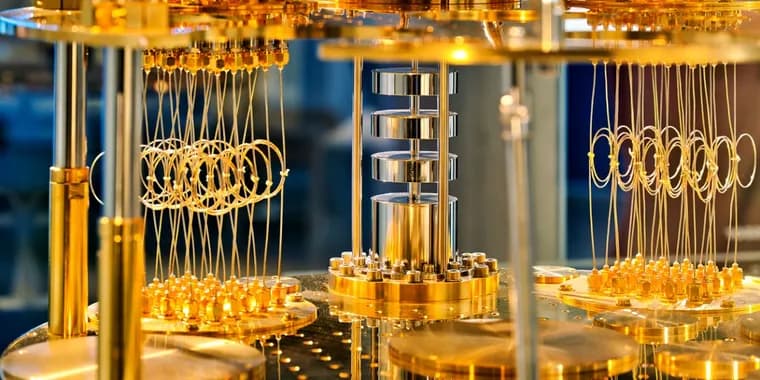
MIT Technology Review published this piece as sponsored content: disclosures at the top and bottom state it was produced by Intel and not written by the outlet's own editorial staff. It argues that post-quantum cryptography (PQC), the set of encryption methods built to withstand attacks from future quantum computers, is a manageable, phased modernization rather than an emergency. The piece rejects both ends of the current narrative, imminent catastrophe and distant irrelevance. Quantum computers, it says, are highly specialized accelerators that could eventually crack today's encryption, but they will not replace classical servers overnight or instantly break every protocol on the internet.
To size the timeline, the piece cites a survey run in late 2024 by the Global Risk Institute, a Toronto-based financial services think tank, which asked 32 quantum computing experts when a quantum computer might break a 2048-bit RSA key within 24 hours. Averaging the experts' optimistic and pessimistic estimates produced an even 50-50 probability of that milestone being reached by 2040. Intel uses this uncertain but bounded timeline to argue for deliberate planning over emergency reaction, while flagging a nearer-term risk: 'harvest now, decrypt later', where adversaries collect encrypted data today and hold it until a capable quantum computer can decrypt it. The piece says this matters most for data that has to stay confidential for more than 10 years.
The piece also points to new U.S. government directives for National Security Systems (NSS) as a reference other organizations can borrow discipline from without adopting the same deadlines. Beginning in January 2027, new NSS acquisitions must be capable of supporting Commercial National Security Algorithm Suite 2.0 (CNSA 2.0) requirements for PQC algorithms that NIST standardized and the National Security Agency selected. Implementation for new systems is required by 2031, with certain exceptions, and 100% adoption is targeted by 2035. Intel stresses these are not mandates for commercial enterprises, only signposts showing where vendors, standards bodies and auditors are headed.
On its own hardware, Intel says the Xeon 6 Processor already incorporates quantum-safe memory encryption using AES-256 and microcode signing to protect processor integrity, and that upcoming platforms will extend post-quantum algorithms to more firmware and software signing, device interconnects, attestations and secure boot. Because post-quantum algorithms carry larger key sizes and more computational overhead than legacy methods, Intel says it offsets the cost with dedicated cryptographic accelerators, optimized libraries and specialized CPU instructions, including Intel QuickAssist Technology, which offloads cryptographic workloads. The piece frames PQC as bigger than any single processor, spanning solid-state drives, network interface cards, operating systems, hypervisors, applications and connected services, and says Intel is building its own pieces of that stack while working with ecosystem partners on interoperability. It points readers wanting more detail to a separate post on Intel's Community forum, titled "Post-Quantum Crypto: Panic Like It's 1999?", credited only to 'my recent blog' without naming an author.
The piece closes with a five-step roadmap for enterprises: treat PQC as modernization rather than crisis mitigation; lean on vendors already shipping quantum-resistant, performance-accelerated hardware; start by mapping where cryptography lives, across data at rest, data in transit, digital signatures, code signing, device identity, password hashing and software updates; protect long-lived data and trust anchors such as root certificates and firmware signing keys before short-lived session keys; and design systems for algorithm rotation, since post-quantum algorithms are not simple drop-in replacements. Its conclusion: the shift to post-quantum cryptography is a measured, multi-year journey, not an overnight disruption, and organizations that treat it as engineering evolution, rather than reacting to alarmist headlines, will end up with more robust and maintainable cryptographic foundations.
Key facts
- MIT Technology Review discloses the piece as sponsored content produced by Intel, not written by its own editorial staff.
- A late-2024 Global Risk Institute survey of 32 quantum computing experts put an even 50-50 probability on a quantum computer breaking a 2048-bit RSA key within 24 hours by 2040.
- U.S. National Security Systems must support CNSA 2.0 post-quantum algorithms on new acquisitions starting January 2027, with implementation required by 2031 and 100% adoption targeted by 2035.
- Intel says its Xeon 6 Processor already ships quantum-safe memory encryption using AES-256 and microcode signing, with QuickAssist Technology offloading cryptographic workloads to offset PQC's performance overhead.
- The piece lays out a five-step enterprise roadmap: treat PQC as modernization, use trusted vendors, map where cryptography lives, protect long-lived data first, and design for algorithm agility.
Why it matters
The piece is Intel's case for treating the shift to post-quantum cryptography, the encryption methods built to survive attacks from future quantum computers, as a deliberate, multi-year modernization rather than a scramble. It rejects both ends of the current narrative, imminent catastrophe and distant irrelevance, and argues instead that quantum computers are specialized accelerators that will erode today's encryption gradually, not break it all at once. The near-term risk it flags is 'harvest now, decrypt later': adversaries archiving encrypted traffic today so they can decrypt it once a capable quantum computer exists, a threat the piece says matters most for data that must stay confidential for more than 10 years. It treats new U.S. government PQC deadlines for National Security Systems, phased in from January 2027 through full adoption by 2035, as evidence that a structured, multi-year timeline is workable rather than aspirational.
Who it affects
Most directly, organizations holding long-lived sensitive data, intellectual property, personal records, state secrets, the categories the piece says face the earliest exposure to 'harvest now, decrypt later' collection. U.S. federal agencies and contractors touching National Security Systems face the hardest deadlines: CNSA 2.0 support required on new acquisitions from January 2027, implementation by 2031, and 100% adoption by 2035. The piece frames those federal timelines explicitly as a reference other organizations can calibrate against, not a rule they must follow. It is also written for a narrower audience: IT and security decision-makers evaluating hardware vendors, since it doubles as a case for choosing Intel specifically, aimed at current and prospective buyers of the Xeon 6 Processor and Intel QuickAssist Technology.
How to use it
The piece sets out a five-step roadmap: treat PQC as modernization rather than crisis mitigation; lean on vendors, named as Intel, already shipping quantum-resistant, performance-accelerated hardware; start with visibility by mapping where cryptography is embedded, across data at rest, data in transit, digital signatures, code signing, device identity, password hashing and software update mechanisms; protect long-lived data and trust anchors such as root certificates and firmware signing keys ahead of short-lived session keys or rotating certificates; and design systems that can swap algorithms without business disruption, since post-quantum algorithms carry different key sizes and integration requirements than legacy methods. On its own hardware, Intel says the Xeon 6 Processor already ships quantum-safe memory encryption using AES-256 and microcode signing, with upcoming platforms extending PQC to more firmware and software signing, device interconnects, attestations and secure boot; QuickAssist Technology offloads cryptographic workloads to offset the performance cost of larger post-quantum keys. No pricing, availability date, or performance-benchmark numbers are given for either the Xeon 6 encryption features or QuickAssist Technology.
How solid is it
This is sponsored content. MIT Technology Review states, both at the top and bottom of the piece, that it was produced by Intel and not written by the outlet's own editorial staff, so none of the claims have gone through the publication's own reporting or fact-checking. The central data point, the 50-50 probability of a quantum computer breaking a 2048-bit RSA key within 24 hours by 2040, comes from one late-2024 survey of 32 experts run by the Global Risk Institute, a Toronto-based financial services think tank. The piece gives only the averaged optimistic and pessimistic estimates, not the individual responses behind them, so how wide the actual disagreement was is not visible. The claims about Intel's own hardware, the Xeon 6 Processor's encryption and QuickAssist Technology, are self-reported and not benchmarked in the piece. No specific PQC algorithm names, such as ML-KEM, ML-DSA or CRYSTALS-Kyber, appear anywhere in the text despite NIST being cited as the standardizing body, and no figure is given for how many organizations have already begun or completed a PQC migration.
Risks and caveats
The clearest caveat is the one MIT Technology Review discloses itself: this is paid, Intel-authored content, not journalism, and it reads that way, consistently favorable to Intel's own product line, without naming or comparing a single competing hardware vendor. No individual author, executive or spokesperson is credited, only 'Intel'. The piece's one first-person aside, pointing readers to 'my recent blog' on Intel's Community forum titled "Post-Quantum Crypto: Panic Like It's 1999?", is never tied to a named person. It also dismisses 'occasional click-bait headlines' about quantum computing without naming a single one, so readers cannot check what specific claim is being rebutted. The U.S. government timelines it cites apply to federal National Security Systems and are explicitly framed as non-binding signposts for everyone else: an organization following this roadmap is choosing its own pace, not meeting a mandate.
“Quantum computing will reshape cryptography, but despite what occasional click-bait headlines say, it will not upend business overnight.”
— Intel