Jensen Huang resigns as Nvidia CEO, and Silicon Valley still backs him
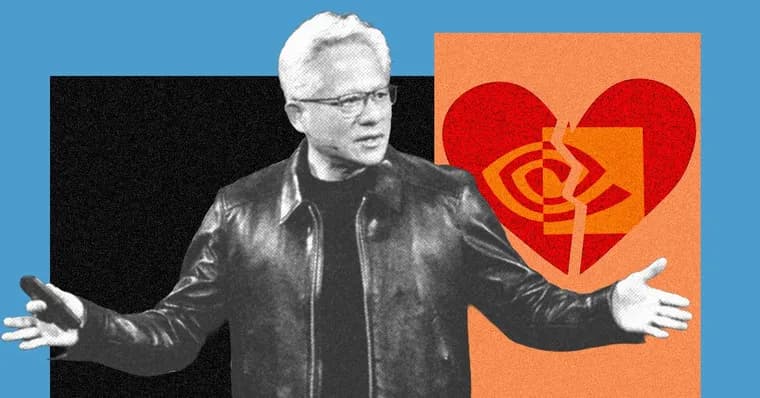
Wired's Model Behavior newsletter reports that Jensen Huang has resigned as Nvidia CEO. The trigger was news of his affair with Alice Huang, described as a businesswoman and suspected intelligence asset of China's Ministry of State Security, followed by news of two other alleged romantic relationships with Nvidia staffers. The response inside Nvidia and across Silicon Valley was muted at first, and the resignation has left the company and the wider AI industry stunned.
According to two current and three former Nvidia employees, who spoke anonymously to protect relationships at the company, rank-and-file staff carried on with business as usual when the first revelations emerged. They trusted the board to investigate and act, but few thought Huang would actually leave. Wired describes Nvidia's roughly 60,000 employees as loyal to the point that the company's global turnover rate is reportedly among the lowest in tech. Workers talk about having "green in your blood" or being "green-pilled" or on "team green." Huang was the company's soul, Wired writes, the founder who stuck with it through challenges for 33 years, and employees appreciated that he kept layoffs rare and red tape sparing. One employee said: "In just three days we went from superhero cape to 'Oops, I forgot my pants,' and nobody's quite sure how to swallow that." A former employee insisted in Huang's defense that something "more sinister" must have been in play, and that affairs alone shouldn't have led to his departure.
Huang's peers in Silicon Valley have stayed vocal in their support even after his ouster. Venture capitalist Antonio Gracias wrote on X earlier in the week that one mistake does not erase a lifetime of leadership and contribution in building NVDA. Venture capitalist Sarah Guo wrote on X after Huang resigned, and a few hours before the Reuters report, that a founder who has spent 30 years building such a unique company so capably has earned the presumption that he should keep leading it. Before the later alleged affairs became public, multiple industry executives told Wired that Huang is "irreplaceable" and that his biggest mistake, aside from the relationship with Alice Huang, was admitting the affair in writing to the whole company.
The story kept growing during the week. President Donald Trump said on Tuesday that the FBI "is looking into it." The New York Times reported on Wednesday that Huang also had an extramarital affair with a vice president at Nvidia, and Reuters revealed on Thursday a second "intimate relationship" with an employee. Authorities and Nvidia's board have yet to formally accuse Huang of wrongdoing in his dealings with Alice Huang, and China has denied that she is a spy. Nvidia's board has stated that it doesn't believe Huang compromised any secrets, but it has hired the law firm Wachtell Lipton to investigate. Some corners of Nvidia had already been whispering about the relationship: one venture capitalist who declined to be named recalled a recent dinner where an Nvidia executive claimed there had been rumors about Huang's romantic relationship with a young Asian woman.
That same investor had estimated on Monday a "less than 10 percent" chance that Huang would lose his job at the top of the world's most valuable company, predicting that "people are going to hate him for three months, and forget this ever happened." The resignation left them in shock.
The big anxiety in Silicon Valley is that instability at Nvidia will burst an AI bubble, though analysts aren't so sure. The chief executive of one AI company, speaking anonymously so as not to affect business relationships, says Nvidia's recent bankrolling of AI startups and its purchases of companies such as model-hosting provider Hugging Face have helped prop up the need for chips. A "new professional CEO won't do any of that," this executive says, meaning "systemic risk for the AI trade and AI bubble increases substantially." Between bubble talk and the Huang rumors, Nvidia shares have sunk in recent days to their lowest point in more than a year, and the company reports quarterly earnings next week. Inside Nvidia, meetings, projects and the company's aggressive culture are rapidly pressing ahead with what is left of Huang's vision.
Key facts
- Jensen Huang resigned as Nvidia CEO after news of an affair with Alice Huang, described as a suspected asset of China's Ministry of State Security, and then of two other alleged relationships with Nvidia staffers.
- The New York Times (Wednesday) reported an affair with an Nvidia vice president, and Reuters (Thursday) reported a second "intimate relationship" with an employee.
- Nvidia's board says it doesn't believe Huang compromised any secrets but has hired the law firm Wachtell Lipton to investigate; China denies Alice Huang is a spy, and Trump said the FBI "is looking into it."
- Employees and Silicon Valley investors, including Antonio Gracias and Sarah Guo, remain publicly supportive of Huang.
- Nvidia shares are at their lowest in more than a year, and an anonymous AI chief executive warns that a professional successor could raise systemic risk for the AI trade; earnings are due next week.
Why it matters
Nvidia is described as the world's most valuable company, and Huang is its founder, so his exit is a leadership shock at the center of the AI hardware trade. The story also carries a security angle: the first affair is with an alleged asset of China's Ministry of State Security, and Trump said the FBI "is looking into it." Wired adds the market worry that instability at Nvidia could burst an AI bubble, since an anonymous AI chief executive argues Nvidia's funding of AI startups and its purchases of firms such as Hugging Face have helped prop up demand for chips.
Who it affects
Nvidia's roughly 60,000 employees, who are described as unusually loyal and who now face a company without its founder. Investors who hold Nvidia shares, which have fallen to their lowest in more than a year. AI startups and companies that depend on Nvidia's financing and chips. Silicon Valley investors and executives who have publicly defended Huang.
How to use it
This is a story to follow rather than a tool to adopt. The next concrete marker named in the source is Nvidia's quarterly earnings report next week. The outcome of the Wachtell Lipton investigation and any formal accusation by authorities or the board are the other things to watch.
How solid is it
The piece is Wired's newsletter reporting, built on anonymous employees, anonymous investors and an anonymous AI chief executive, plus on-the-record posts from Gracias and Guo. The later affairs are attributed to the New York Times and Reuters rather than confirmed by Wired itself. The source does not say who exactly asked Huang to resign or whether the board forced him out. Authorities and the board have not formally accused Huang of wrongdoing, and no evidence of espionage or compromised secrets is presented. The article gives 33 years for Huang's time with the company in its own voice, while Guo's quote says 30 years.
Risks and caveats
The supportive voices are largely investors and employees with a stake in Nvidia, and Wired itself reports that one anonymous investor badly misjudged the outcome, putting the odds of Huang losing his job at under 10 percent on Monday. The former employee's claim that something "more sinister" was at play is not explained in the source. The bubble warning comes from a single anonymous executive, and Wired notes analysts aren't so sure. The source does not say who replaces Huang or whether an interim CEO has been named, and it gives no figure for the size of the share price drop.
“A founder who has spent 30 years building such a unique company so capably has earned the presumption that he should keep leading it”
— Sarah Guo, venture capitalist, on X after Huang resigned