Joi AI ran a 28-day paid study on AI-guided masturbation
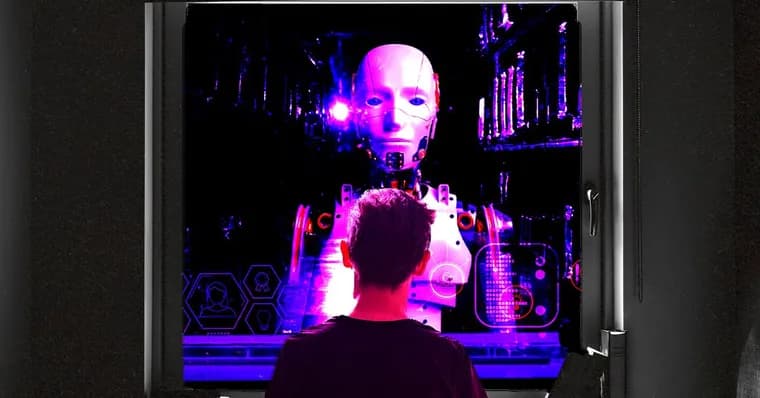
Joi AI, an AI companion company, ran an in-house 28-day study in July in which 10 paid 'masturbation consultants' masturbated every day except Sundays, using the company's AI companions twice a week and their own preferred methods the rest of the time. They logged mood, energy, cravings for vices and procrastination both before and after each session. The 10 participants were chosen from more than 150,000 applicants: five were handpicked by Joi AI and five came through public competitions, including one judged by porn stars and another seeking the 'most unhinged' fetish, won by an applicant with a balloon fetish. Each of the 10 received $2,000 for taking part; only 6 completed the full 28 days.
Ahead of the study, Joi AI surveyed 2,500 adults and found 75% masturbate to reduce stress or anxiety and 43% do so before a big event such as a date, exam or difficult conversation. A preliminary analysis of 134 session reports from the study, seen by WIRED, found participants' self-reported stress fell 25%, focus rose 17%, and cravings for nicotine, alcohol, junk food and doomscrolling fell 44% after masturbating. The same pre-study survey found 37% of respondents were already open to, or already practicing, AI-guided masturbation. Joi AI said AI-guided sessions produced satisfaction scores comparable to other methods, concluding there is no single best way to masturbate.
Julie Levin, Joi AI's head of brand and communications, said masturbation triggers a dopamine boost and called the drop in cravings for vices 'a genuine breakthrough,' floating masturbation as an unexpected tool against addiction. The company's own report went further, stating masturbation 'may be the most accessible tool people have for managing addictions,' a claim WIRED notes is not based in science.
Nicole Prause, a neuroscientist studying human sexuality and addiction who was not involved in the study, called that addiction claim 'a gross overstatement from the evidence they claim to have.' She said masturbation can never be blinded like a placebo, since participants always know whether they masturbated, and criticized the study for relying entirely on subjective self-report with no cognitive tests to back it up. Prause said she is not aware of any scientific evidence that masturbation reduces vulnerability to substance abuse, though her own separate laboratory research on male orgasms finds masturbation to be a potent mood-management method.
One of the six who finished, Keshav, a 38-year-old single Indonesian trader, described his AI companions performing sexual acts during five-minute video calls; he said his energy dipped slightly but his focus rose after ejaculating, and that the study left him more clear-minded and better equipped to approach women. Chloe Locatelli, a sex-tech researcher at King's College London who joined via a separate collaboration with Joi AI, said masturbation already relieved her stress daily but found the AI companions only partially arousing. She welcomed the goal of destigmatizing masturbation but warned that if AI companions became someone's only outlet for sexual exploration, that is not something she would encourage.
Joi AI's platform costs at least $3.99 a month, with an internal currency called 'Joi neurons' priced at $99.99 for 10,000 coins; private videos from companions cost 1,000 neurons, and some companions asked for virtual gifts such as handbags or lipstick, costing up to $5 in platform currency, before turning sexual. Separately, WIRED notes a 2024 review of 22 studies found masturbation tended to be negatively associated with sexual satisfaction among men, with mixed results for women, and a 2017 study in Archives of Sexual Behavior found masturbation is often compensatory for men when partnered sex is unavailable, while functioning more as a complement to partnered sex for women.
Key facts
- Joi AI paid 10 people $2,000 each to masturbate daily for 28 days in July, using its AI companions twice a week; only 6 of the 10 completed the study.
- A preliminary analysis of 134 session reports found self-reported stress down 25%, focus up 17%, and cravings for nicotine, alcohol, junk food and doomscrolling down 44% after masturbating.
- More than 150,000 people applied for the 10 spots, with some winners chosen through public competitions, including one won by an applicant with a balloon fetish.
- Neuroscientist Nicole Prause called Joi AI's addiction-management claim 'a gross overstatement,' criticizing the study's reliance on self-report with no cognitive tests.
- Joi AI's platform costs at least $3.99 a month, with an internal currency priced at $99.99 for 10,000 'neurons' and private companion videos costing 1,000 neurons.
Why it matters
Joi AI is part of a fast-growing AI companion industry that increasingly markets itself as a wellness and loneliness remedy rather than adult entertainment. This study, an in-house marketing exercise framed as research, shows how far that positioning has gone: a company selling erotic chatbot interactions is now producing its own data to argue the product also improves users' focus, stress and self-discipline. That blurs the line between promotional content and health claims in a largely unregulated product category.
Who it affects
Anyone using or considering AI companion apps marketed as wellness tools, and researchers such as Chloe Locatelli of King's College London, who studies how people form intimate and erotic relationships with AI companions. It also affects Joi AI's target audience: the company frames its product around 'solving male loneliness,' and several of the 10 study participants were reached through public competitions built around fetish content.
How to use it
Joi AI is a subscription platform: access starts at $3.99 a month. Deeper features run on an internal currency, 'Joi neurons,' priced at $99.99 for 10,000 coins; private videos from AI companions cost 1,000 neurons, and some companions requested virtual gifts, such as handbags or lipstick, costing up to $5 in platform currency, before becoming sexual.
How solid is it
The headline figures, a 25% drop in stress, a 17% rise in focus and a 44% drop in cravings, come from a company-run 'preliminary analysis' of 134 session reports, not a peer-reviewed or published study. Only 6 of the original 10 participants completed the 28 days, and every measure is self-reported: there was no control group and no cognitive testing to corroborate participants' impressions, a gap neuroscientist Nicole Prause flagged directly.
Risks and caveats
WIRED itself flags the report's claim that masturbation 'may be the most accessible tool people have for managing addictions' as not based in science, and Prause says she knows of no scientific evidence that masturbation reduces vulnerability to substance abuse. Because masturbation cannot be blinded the way a placebo can, self-report is especially prone to bias, and the study offers no data on whether any effects persisted after the 28 days ended. The article also raises a broader concern: whether users grow so attached to AI companions that they withdraw further from real-world connection.
“this is a gross overstatement from the evidence they claim to have.”
— Nicole Prause, neuroscientist studying human sexuality and addiction