Just Eat apologises for bizarre AI-generated menu pictures
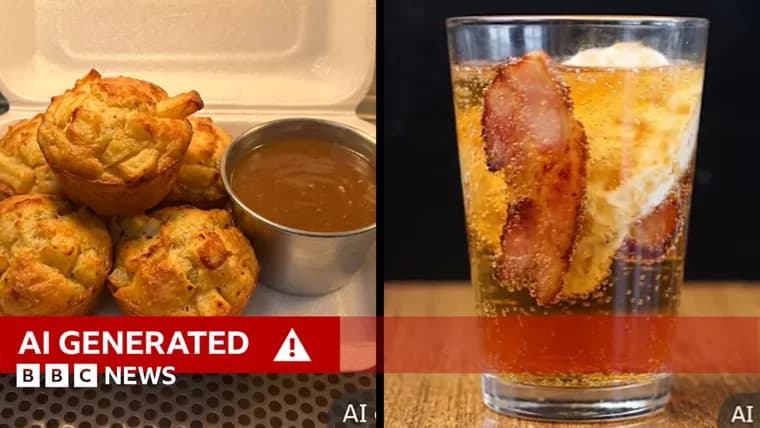
Just Eat has apologised after being ridiculed online over mistakes in AI-generated pictures it had been testing for restaurant menu items that had no photos yet. The online food delivery platform used the technology to show dishes that lacked images, but not all of the results turned out as planned.
According to the BBC, the AI invented several bizarre concoctions. One showed bacon and eggs floating in a glass of cola, a confusion between "soda" and "soda bread". Another showed chips poking out of muffins. A Belfast cafe's bacon and egg soda bread dish was represented as a glass of fizzy drink with a cooked egg and bacon floating in it. A "cheese roll", meaning bread and cheese, instead became slabs of cheese rolled into a sushi roll. Spelling mistakes on menu items sometimes added to the confusion: the Instagram account @uknewestfoods posted a picture of garlic bread in the shape of a plane, presumably because of a misspelling of the word "plain".
Members of the Just Eat UK subreddit have flocked to the site over the past few days to post the latest unintentionally hilarious spins on takeaway food items. Any picture generated with AI on the app carries a label saying so, and the BBC spotted many of the more unusual images still up on menus.
A Just Eat spokesperson said the firm was "in the process of removing" the incorrect images and would stop making more until the AI was further developed. The spokesperson told the BBC: "We work with tens of thousands of small restaurants on their food imagery, including funding professional local photographers." They added: "We've been trialling AI-enhanced images, and as with any new technology, it isn't always quite right the first time."
The BBC says the incident highlights the difficulties companies can still face when using AI to speed up or simplify work processes, especially when it is used to interpret words in a specific context.
Reaction on social media was mixed. Some found the images "hilarious". Another user said: "Well, that lot just helped my diet". One person on Instagram questioned why customers would want AI images of a restaurant's food at all, even if they were closer to the real thing: "I want to see what the dish actually looks like as it helps me decide who to order from or what to order." They added that "perfect" AI versions just lead to disappointment if that is what you expect your meal to look like.
Key facts
- Just Eat had been testing AI-generated pictures for menu items that lacked images, and apologised after online ridicule.
- Examples reported by the BBC include bacon and eggs floating in a glass of cola (a soda versus soda bread mix-up), chips poking out of muffins, and a "cheese roll" shown as cheese rolled into a sushi roll.
- A spokesperson said the firm is removing the incorrect images and will stop making more until the AI is further developed.
- AI-generated pictures on the app carry a label, and the BBC found many of the odder ones still on menus.
- The spokesperson said Just Eat works with tens of thousands of small restaurants on food imagery, including funding professional local photographers.
Why it matters
This is a small, concrete example of generative AI failing at context. The BBC points out that the trouble is greatest when AI has to interpret words in a specific context: "soda bread" read as a fizzy drink, "plain" misspelled and drawn as a plane, a "cheese roll" rendered as sushi. The images were meant to fill gaps for dishes with no photo, so the failure landed in the one place where customers expect the picture to match the food.
Who it affects
Customers who use the Just Eat app to choose a meal, and the restaurants whose menu items were illustrated. The spokesperson said Just Eat works with tens of thousands of small restaurants on food imagery. The Belfast cafe with the soda bread dish is one example the BBC cites. Companies rolling out AI to speed up routine work are the wider audience for the lesson.
How to use it
There is no tool to adopt here. The practical points for readers come from the BBC's account: any AI-generated picture on the app is labelled as such, so diners can tell it is not a photo of the actual dish. One Instagram commenter's view is that a real picture of the dish is what helps them decide what to order.
How solid is it
Solid on the main facts. The BBC reports it, quotes a Just Eat spokesperson on the apology, the removals and the pause, and says it saw many of the unusual images still on menus. The spokesperson is not named. The plane-shaped garlic bread explanation is the BBC's own guess ("presumably"). The social media reactions come from unnamed users.
Risks and caveats
The BBC gives no count of affected items or removed images, no timescale for the removals, and does not name the AI tool behind the pictures. The pause is described as lasting until the AI is further developed, with no date for resuming. The examples are the amusing ones that went viral, so they may not represent the typical quality of the images. The commenter's concern is that AI versions of dishes, even good ones, can set expectations the real meal does not meet.
“We've been trialling AI-enhanced images, and as with any new technology, it isn't always quite right the first time.”
— Just Eat spokesperson, to the BBC