Microducks robots reportedly pass 20,000 preorders after Jensen Huang demo
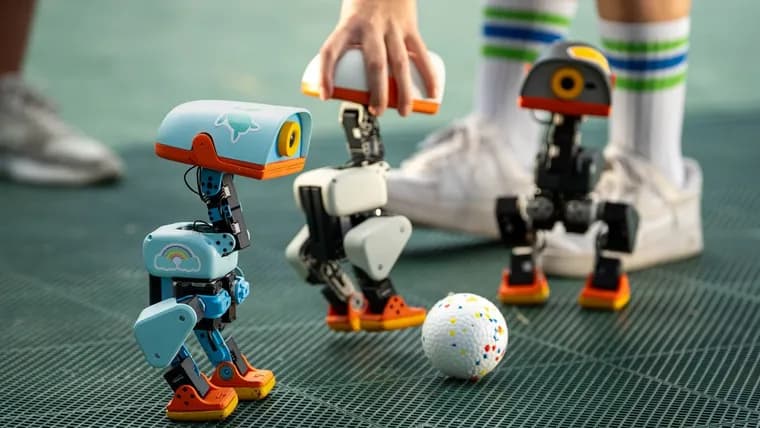
Earlier this week, a video went viral of Nvidia CEO Jensen Huang playing with a flock of waddling Microducks during his keynote at the company's GTC Berlin conference. The small robots stomped their feet, made tiny R2-D2-style noises, sat, fell down for a "nap" and somersaulted on voice command.
By the next day, preorders of the Microducks had surpassed 20,000 units, according to a tweet from Hugging Face's Clem Delangue, as relayed by TechCrunch. The Microducks are expected to be delivered in time for Christmas, so TechCrunch suggests they could become the hottest toy of the holiday season. Delangue thinks they might end up as the best-selling robot of the year, and possibly not even for kids; the promotional videos show adults playing with them too.
The Microducks are open-source devices produced by Pollen Robotics, which Hugging Face acquired in 2025. That makes them, in TechCrunch's words, an Nvidia company now, since Nvidia bought Hugging Face in September. The Microducks are Hugging Face's second robot, after Reachy Mini.
The robots were trained using Nvidia's technology stack: simulated versions of them were taught the basic tricks they ship with, such as walking, sitting and standing. Pollen says owners can train their robots with new tricks and then share them with the community.
TechCrunch closes with an editorial aside, offering the video as a palate cleanser after a week in which AI involvement was blamed for one cyberattack after another. The article says AI might seriously damage the world, but it can be fun too.
Key facts
- A GTC Berlin keynote video of Nvidia CEO Jensen Huang playing with Microducks went viral earlier this week.
- Preorders surpassed 20,000 units by the next day, per a tweet from Hugging Face's Clem Delangue relayed by TechCrunch.
- Microducks are open-source robots made by Pollen Robotics, acquired by Hugging Face in 2025; Nvidia bought Hugging Face in September.
- They are Hugging Face's second robot after Reachy Mini, and are expected to be delivered in time for Christmas.
- Their built-in tricks were taught in simulation on Nvidia's technology stack; owners can train new tricks and share them.
Why it matters
A consumer robot has gone from a keynote demo to a reported 20,000-plus preorders in about a day, which is a rare kind of traction for an open-source hardware project. It also shows the Nvidia connection in practice: the Microducks' built-in skills were trained in simulation on Nvidia's stack, and Pollen Robotics now sits inside a company Nvidia bought. Delangue thinks the robot might become the year's best seller.
Who it affects
Buyers who preordered, who are expected to receive the robots by Christmas. Hobbyists and developers, since the devices are open source and owners can teach them new tricks and share them with the community. Delangue says adults may be a target audience as well as children, and the promotional videos show adults playing with them. It also affects Hugging Face and Pollen Robotics, whose second robot after Reachy Mini is now in the spotlight.
How to use it
The Microducks ship with basic tricks such as walking, sitting and standing. According to Pollen, owners can train their robots with new tricks and share them with the community. The article gives no price per Microduck, and no exact delivery date or shipping regions; it says only that delivery is expected in time for Christmas.
How solid is it
The 20,000 figure comes from a tweet by Hugging Face's Clem Delangue; TechCrunch relays it rather than quoting it, and Delangue is an interested party as a Hugging Face leader. The article does not say whether the preorders were paid or refundable. The delivery timing is an expectation, not a commitment. The best-seller prediction is Delangue's opinion as paraphrased by TechCrunch. The viral video and the robots' behaviour in it are described by the article itself.
Risks and caveats
Preorders are not sales, and "expected" delivery before Christmas can slip. The source gives no technical specifications such as size or battery, so buyers cannot judge capability from it. The toy framing is TechCrunch's own; the article's tone is lighthearted and ends with an aside about AI being blamed for cyberattacks this week, without saying which attacks.