KDE releases Plasma 6.8 for its 30th anniversary and drops native X11 sessions
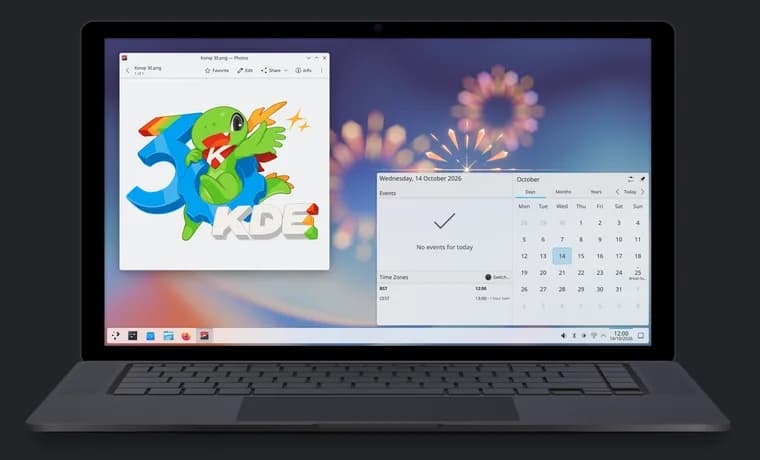
Marking its 30th anniversary on October 14, KDE released Plasma 6.8, debuted a movie, and retired Plasma's native X11 session support. The KDE announcement calls Plasma 6.8 the "30th Anniversary Edition" and describes the update as preparing Plasma for the future.
The headline change is the end of X11 in Plasma. Plasma will fully adopt Wayland and stop supporting the starting of new X11 sessions. Legacy X11 applications will still work through the XWayland compatibility layer, and KDE applications will keep supporting X11 when run under other desktop environments. Users who stay on Plasma 6.7 will keep their existing sessions for now. The article puts the X11 protocol at 42 years in service and says Plasma is the latest major desktop environment to move on from it. The move was expected, it adds, since GNOME officially dropped X11 sessions by default in 2025.
The release also carries other improvements. Plasma 6.8 adds increased support for adding window decorations, such as shadows and rounded corners, to third-party apps, and a more streamlined Union theming system. Nvidia triple buffering is now enabled by default. Kup, KDE's backup utility, is now integrated into Plasma. There is also kscreenctl, a command-line utility that lets power users adjust display configurations.
The movie is not named or described beyond the fact that it debuted.
Key facts
- KDE released Plasma 6.8, branded the "30th Anniversary Edition", on October 14, the date it marked its 30th anniversary.
- Plasma retires native X11 session support: it goes fully Wayland and no longer starts new X11 sessions.
- Legacy X11 apps still run through XWayland, and KDE apps keep supporting X11 under other desktop environments.
- Users who stay on Plasma 6.7 keep their existing sessions for now.
- Other additions: window decorations for third-party apps, a more streamlined Union theming system, Nvidia triple buffering on by default, Kup backup integration, and the kscreenctl display utility.
Why it matters
X11 has been in service for 42 years, per the article, and Plasma is now the latest major desktop environment to step away from it. The article says the move was expected, since GNOME officially dropped X11 sessions by default in 2025. With Plasma 6.8, new sessions in KDE's desktop are Wayland-only, and the release is framed by KDE as preparing Plasma for the future.
Who it affects
Anyone who runs Plasma on X11 is the most directly affected, because Plasma 6.8 no longer starts new X11 sessions. People with older X11 applications are covered by XWayland. Developers and users of KDE applications on other desktop environments are told those apps will continue to support X11. Nvidia users get triple buffering enabled by default, and power users get the kscreenctl command-line tool for display configuration.
How to use it
Users who do not want to leave X11 yet can stay on Plasma 6.7, where existing sessions are kept for now. On Plasma 6.8, legacy X11 applications keep working through XWayland. Power users can adjust display configurations with kscreenctl, and the Kup backup utility is now built into Plasma. No download or availability details for Plasma 6.8 are given.
How solid is it
The account is short and covers KDE's own announcement. The core facts, the October 14 release, the end of native X11 session support and the XWayland fallback, come straight from that announcement as the article relays it. No quote from a named KDE person is given, and the article does not describe the Union theming system, Kup integration or kscreenctl beyond a line each.
Risks and caveats
No release date or timeline is given for removing X11 from Plasma 6.7 or ending its support, so "for now" is all the article says about existing sessions there. The article reports no user reaction or criticism of dropping X11. XWayland is described as keeping legacy X11 applications working, but the article offers no detail on how well. The movie KDE debuted is not named or described.
“30th Anniversary Edition”
— KDE's name for Plasma 6.8, as given in the KDE announcement