Macmillan staff say NOA AI chatbot got a launch party, then was sunset
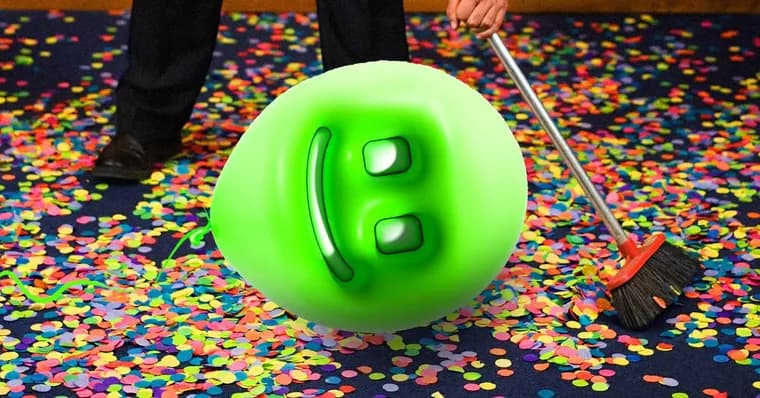
WIRED reports, citing multiple Macmillan employees who are not named because they fear professional repercussions, that staff at the publisher's Lower Manhattan headquarters arrived one morning in January 2024 to flyers welcoming a new team member called NOA. The cafeteria had purple balloons and banners, NOA's name in light-up marquee letters, and a plate of doughnuts spelling out 'NOA IS HERE', according to several workers present.
NOA stood for No Ordinary Assistant, a name many of Macmillan's human assistants found 'offensive', multiple employees told WIRED. An email to staff introduced it as an AI chatbot developed by the German software company Chaptr, which is 'backed' by Holtzbrinck, Macmillan's parent company. The email promised 'a safe environment where you can input proprietary information without the risk of sharing that data with any third party'. WIRED reads that as meaning NOA was a closed-loop enterprise tool that did not retain or share data for model training.
Staffers say training sessions warned that NOA could hallucinate and always needed human fact-checking. Even so, they were encouraged to use it for emails, copy, marketing research and idea generation. Multiple staffers say they were told to 'only' paste a 'percentage' of authors' manuscripts into it. Users could set NOA's tone to options including lighthearted, spartan, pessimistic, sarcastic and regretful. One employee recalls a Chaptr representative saying in an early in-person training that publishers were dealing with something very important, content. 'And here I thought we were publishing literature,' the employee says. Later in 2024, an email encouraged staff to have NOA write their performance-review goals: 'We built a specialized prompt to have NOA write goals for you!'
Several employees say NOA was unhelpful and unreliable. 'It was terrible, and no one used it,' one says. In October 2025 a company-wide email told staff that Chaptr would be sunsetting NOA. Since then, workers say, leadership has been trying to bring Google Gemini into the publishing process. Some staffers tried it on submission letters from literary agents, but one editor called the Gemini evaluations 'useless'.
Kelly Collins, Macmillan's vice president of communications and community, told WIRED the company uses Gemini for its 'business' but 'there has not been any directive from Macmillan leadership to use Gemini for any part of the publishing process, including to evaluate submission letters from agents'. She also said 'the points shared do not accurately reflect how NOA was rolled out and communicated', but did not say which aspects were inaccurate. She added that the company 'takes a thoughtful approach to AI, focused on employee awareness and education while always keeping people front and center'.
The piece then widens to the other Big Five houses. The WIRED reporter, who wrote first-person about earlier coverage of AI in publishing, says staff at all five claim executives are pushing AI tools, even as Hachette, Macmillan and Penguin Random House Verlagsgruppe (PRH's German-language division) sue some leading AI companies for copyright infringement. At PRH, several workers say they were encouraged to use ChatGPT Enterprise in AI learning sessions, even though the German division is suing OpenAI. In February, Hay House, a self-help publisher PRH acquired in 2023, showed some PRH employees a slide deck calling ChatGPT Enterprise a 'core productivity, creativity, and collaboration tool' after a year of use; one of its four return-on-investment pillars was 'Creativity'. All the PRH workers WIRED spoke with say they avoid ChatGPT when they can. 'It makes it harder for us to do our jobs,' one says. Other staff say managers asked them not to use AI for creative work such as publicity copy and cover design, which caused some confusion. Claire von Schilling, PRH's executive vice president and director of corporate communications and social responsibility, said PRH 'approaches AI as we would any significant new technology' and that imprints have discretion over whether and how to use AI tools.
Several bestselling Big Five authors say their relationships with publishers have suffered over the past year. Together, the authors WIRED spoke with have sold more than 30 million copies. One says marketing copy arrived with AI-hallucinated quotes from their book, and the publisher insisted it was not AI-generated: 'I was gaslit on all of it.' Another says that in recent contract talks they could not get a single Big Five publisher to promise no AI would be used on their books. Authors blame cost-cutting layoffs for pushing editors toward AI; one says editors are 'using Claude to create marketing language that barely has any relation to the book'. Their main ask is disclosure, and one wants the Big Five to agree a set of AI principles. Some are weighing publishing on their own. Mo Ryan, whose latest book came from HarperCollins, wrote on Bluesky that self-publishing looks 'ever more possible'. John Scalzi, who signed a 10-book deal with Macmillan's Tor Publishing Group in 2024, wrote that he would be 'EXTREMELY annoyed' to find his PR was AI-generated. Brandon Sanderson, who publishes some novels through Macmillan's Tor Books, raised more than $15 million in 24 hours on Kickstarter in 2022 to publish four books himself.
Key facts
- In January 2024 Macmillan staff found a launch party for NOA (No Ordinary Assistant), an AI chatbot built by Chaptr, with balloons, marquee letters and doughnuts spelling 'NOA IS HERE', according to employees.
- Employees describe NOA as unhelpful ('It was terrible, and no one used it'); in October 2025 a company-wide email said Chaptr would be sunsetting it.
- Workers say leadership then turned to Google Gemini; Macmillan's Kelly Collins says there was no leadership directive to use Gemini in publishing and that the staff account of the NOA rollout is inaccurate, without saying how.
- At Penguin Random House, workers say they were pushed toward ChatGPT Enterprise while PRH's German division sues OpenAI; all PRH workers WIRED spoke with avoid it when they can.
- Bestselling Big Five authors, who together have sold more than 30 million copies, say AI use is straining relations and ask at minimum for disclosure; some are considering self-publishing.
Why it matters
The story pairs a small, vivid rollout (a party for a chatbot that staff say nobody used) with a larger pattern WIRED says it has heard from staff at all of the Big Five: executives pushing AI tools while the same companies, or their divisions, sue AI firms for copyright infringement. Authors read that as publishers feeding 'at both sides of the trough'. It also shows how a closed enterprise assistant was introduced with data-safety assurances yet, per staff, with guidance to paste only a percentage of manuscripts into it.
Who it affects
Staff at Macmillan and Penguin Random House, who describe mixed or conflicting guidance on when AI is acceptable. Authors, including bestsellers published by Macmillan's Tor and imprints at other Big Five houses, who say marketing copy and contract terms now involve AI. Editors, whom authors describe as stretched by layoffs. Readers of the piece should note that Macmillan is usually cited as the smallest of the Big Five by books sold each year.
How to use it
This is not a product to adopt, so there is nothing to install or buy. The practical points are in the reporting itself: staff were told NOA needed human fact-checking, authors say the minimum they want is disclosure of when and how a publisher uses AI, and one author wants the Big Five to agree a shared set of AI principles. Authors in the story also point to self-publishing as a fallback, with Sanderson's 2022 Kickstarter as the example.
How solid is it
Reputable outlet, but the core account rests on anonymous people. The employees and authors are unnamed because they fear professional repercussions, and no named Macmillan employee describes the party. Macmillan's Collins says the points shared 'do not accurately reflect how NOA was rolled out and communicated' but did not say which parts were inaccurate; she does not deny the party. The source says Chaptr would be sunsetting NOA, not that Macmillan killed it, and gives no reason for the shutdown. It gives no cost or user numbers for NOA. The Gemini experiments are workers' claims, denied as a leadership directive by Macmillan.
Risks and caveats
Treat the 'unhelpful' verdict as staff opinion, not measured performance. The headline irony (party, then shutdown) is the framing of the sources, and the article does not explain why NOA was ended. The lawsuit detail is thin: the source names only OpenAI as a defendant (sued by PRH's German division) and says only 'copyright infringement' for the rest. The authors' quotes are anonymous and some are partial, so generalising to all Big Five authors goes beyond what the piece shows.
“It was terrible, and no one used it.”
— An unnamed Macmillan employee, quoted by WIRED