Manhattan DA seizes 12 celebrity deepfake websites
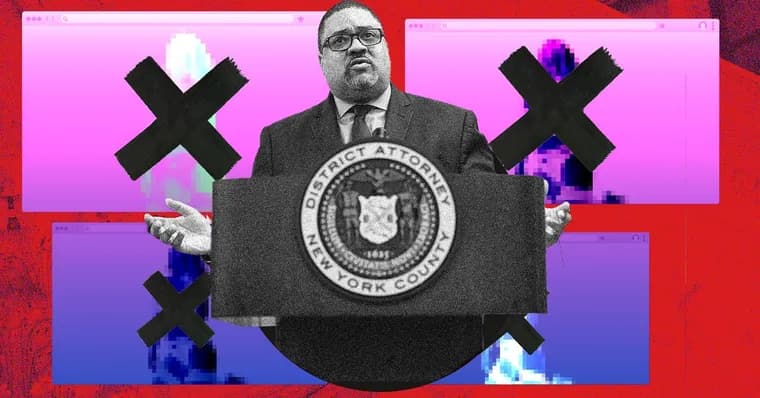
On Monday, the Manhattan District Attorney's Office announced the seizure of 12 domains it says were used to unlawfully share, publish and sell nonconsensual deepfake videos of celebrities and other public figures. District Attorney Alvin Bragg's office says around 1,200 people, overwhelmingly women, were depicted in nonconsensual sexual images and videos across the sites, including social media influencers, actors, activists, athletes, musicians and politicians. The office has not publicly named the seized sites, but WIRED says it independently observed several of the homepages replaced with "THIS DOMAIN HAS BEEN SEIZED" notices in the days before the announcement, citing a seizure warrant issued by a New York State Supreme Court and executed under the state's criminal procedure laws. Bragg called the sites' effect on victims a serious toll on emotional and mental well-being and urged potential victims to contact his office's cybercrime bureau; the office says its investigation into who ran the sites, and who uploaded the videos, is ongoing, with no arrests or charges reported yet. The seizures rely partly on the federal Take It Down Act, which lets law enforcement take down and seize sites hosting nonconsensual intimate imagery, a legal tool that has only recently become available since deepfake pornography sites first appeared at the end of 2017. Outside researchers say the sites, one of them claiming to have been online since as early as 2018 and drawing tens of thousands of views per video on archived pages, were likely viewed millions of times in total. Benjamin Shultz of the American Sunlight Project, who had been tracking deepfake abuse of political figures and encountered some of the sites in that research, says most videos were existing pornographic films digitally altered to swap in a target's face, largely reposted from the now-defunct MrDeepFakes platform. Shultz found that at least two of the seized sites had given elected officials their own profiles listing name and position alongside a grid of manipulated videos, and that his research had identified 56 European politicians mentioned or appearing on the sites, including 16 from the US and two from the UK. Leonie Oehmig, a researcher at the Institute for Strategic Dialogue who studies the deepfake creation ecosystem, called the takedowns a significant win and said the seized sites appeared inaccessible even through VPNs, which she said shows coordinated enforcement can work despite regulation being fragmented across jurisdictions. She added that stopping the broader industry requires action at multiple points beyond hosting: the creation tools themselves, how they are discovered and promoted, and the payment and affiliate systems that let operators monetize the content.
Key facts
- The Manhattan DA's Office seized 12 domains hosting nonconsensual celebrity deepfake pornography, calling it likely the largest such takedown to date.
- About 1,200 people, overwhelmingly women, were depicted, including actors, musicians, athletes, activists and politicians.
- Researcher Benjamin Shultz found 56 European politicians mentioned or appearing on the sites, including 16 US and two UK politicians, with two sites giving officials dedicated profile pages.
- The action used a New York State Supreme Court seizure warrant and the federal Take It Down Act; the DA's investigation into site operators and uploaders is ongoing with no charges reported yet.
- Some videos had tens of thousands of views on archived pages and the sites were likely viewed millions of times overall; one site claimed to have operated since 2018.
Why it matters
This is described as one of the largest coordinated actions ever taken against explicit deepfake websites, carried out under New York's criminal procedure laws. Researcher Leonie Oehmig frames it as proof that meaningful, coordinated enforcement is possible even though deepfake regulation remains fragmented across states and countries, since the seized sites appear to stay inaccessible even to users trying to reach them through VPNs.
Who it affects
The roughly 1,200 people depicted, overwhelmingly women including celebrities, athletes, musicians, activists and social media influencers, are the direct victims; the DA's office says its cybercrime bureau is trying to identify others who may have appeared on the sites and is asking them to come forward. Elected officials are also named: Shultz's research found 56 European politicians, including 16 from the US and two from the UK, mentioned or depicted, with at least two of the seized sites maintaining dedicated profile pages for officials alongside their manipulated videos.
How to use it
The Manhattan DA's Office is asking anyone who believes they were depicted on the seized sites to contact its cybercrime bureau directly. The case is also a concrete example of how the Take It Down Act, a relatively new federal law, can be paired with a state court seizure warrant to remove a deepfake site from the internet rather than just delisting individual videos, a route other prosecutors and platforms tracking this content can look to as a precedent.
How solid is it
The core facts come from the Manhattan DA's own announcement and statement by Bragg. WIRED adds independent confirmation, saying it observed several of the affected homepages replaced with seizure notices in the days before the office's public statement, citing the underlying New York State Supreme Court warrant. Two outside researchers, Leonie Oehmig of the Institute for Strategic Dialogue and Benjamin Shultz of the American Sunlight Project, who had separately studied the same ecosystem, corroborate the sites' scale and behavior, though the DA's office has not publicly named which domains were seized.
Risks and caveats
The investigation into who operated the sites and who uploaded the videos is described only as ongoing, with no arrests or criminal charges against operators reported so far, and no timeline given for when that part of the case might conclude. Oehmig cautions that removing hosting infrastructure addresses only part of the problem: the tools used to create nonconsensual deepfakes, how they are discovered and promoted, and the payment and affiliate systems that let operators profit from them remain largely untouched by this action.
“These horrific violations of privacy follow victims into their careers and personal lives and take an immense toll on emotional and mental well-being.”
— Alvin Bragg, Manhattan District Attorney