Trump declares foreign-made factory robot imports a national security threat
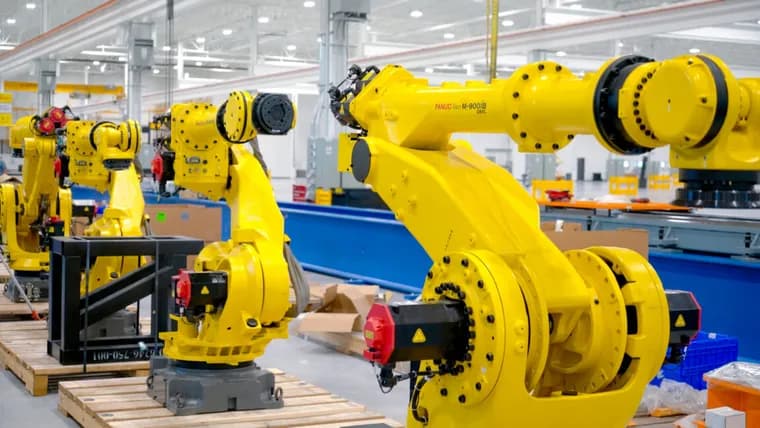
President Donald Trump has declared imports of foreign-made factory robots a national security threat. The presidential proclamation, issued on October 28, orders new US negotiations with trading partners and holds out the possibility of new tariffs on such robot imports in the future.
The proclamation describes industrial robots and machinery as crucial for producing US military weapon systems and as a "driving force" behind all critical infrastructure sectors in the US economy. It cites an investigation under US Secretary of Commerce Howard Lutnick, which found that US imports of such robots "pose[] risks to the United States industrial base and threatens the long-term competitiveness of the United States in a sector that is increasingly vital to national security." The Department of Commerce investigation also supposedly found "unique security and safety risks" that may introduce "significant cybersecurity vulnerabilities that can result in severe consequences to the United States."
The directive tells the United States and its trading partners "to adjust imports of robotics, industrial machinery, and their components" and aims to strike new agreements within 180 days of the proclamation's date. If no agreements have been reached by then, the proclamation warns that the president may take additional actions, like imposing "tariffs, duties, quotas, and fees" on such imports.
Ars Technica says the move represents heightened government scrutiny of foreign-made industrial robots and could complicate the manufacturing operations of major US corporations that rely on them. It names Detroit automakers General Motors and Ford, electric vehicle maker Tesla, and aerospace and defense companies Boeing and Lockheed Martin.
The wording echoes justifications used by Trump's Federal Communications Commission when it banned new models of foreign-made robots, such as robotic vacuums, four-legged robot dogs and humanoid robots, in July 2026. That FCC action specifically exempted industrial robot arms and other fixed or stationary robots commonly deployed in automotive factories and logistics warehouses. The new proclamation reaches the category the FCC left out.
Key facts
- Trump's proclamation, issued October 28, declares imports of foreign-made factory robots a national security threat.
- It orders new negotiations with trading partners to adjust imports of robotics, industrial machinery and their components, with a 180-day window to reach agreements.
- If no deals are reached, the proclamation warns the president may impose tariffs, duties, quotas and fees; no tariff has been set.
- It cites a Commerce Department investigation under Secretary Howard Lutnick that supposedly found security and safety risks and cybersecurity vulnerabilities.
- The July 2026 FCC ban on new foreign-made robot models exempted industrial robot arms and other fixed robots; this action targets that category.
Why it matters
Industrial robots sit in the middle of factory production, and the proclamation calls them crucial for making US military weapon systems and a "driving force" behind all critical infrastructure sectors. The July 2026 FCC ban covered consumer-style robots such as robotic vacuums, robot dogs and humanoids, and exempted industrial robot arms and other fixed or stationary robots. This proclamation turns to that exempted category, using wording that echoes the FCC's justifications.
Who it affects
Manufacturers that rely on foreign-made industrial robots. Ars Technica names General Motors, Ford, Tesla, Boeing and Lockheed Martin, and says the scrutiny could complicate their manufacturing operations. The proclamation also directs the US to negotiate with trading partners, though the source does not name which partners or countries are targeted.
How to use it
This is a policy action, not a product, so there is nothing to adopt. The practical detail is the clock: the proclamation aims for new agreements within 180 days of its October 28 date, after which the president may take additional actions. Companies that buy robots, machinery or components from abroad have that window in which the terms of any deals, or later measures, will be decided.
How solid is it
The proclamation itself is an official document and the article reports its contents directly. The risk findings come from a Commerce Department investigation that the article says "supposedly" found them, and the article quotes them only as cited in the proclamation. The source does not say the investigation's report was published or give its date.
Risks and caveats
No tariff has been imposed. Tariffs, duties, quotas and fees are only a possible next step if talks fail, and no rate or amount is given. The source gives no figures on the volume or value of robot imports and quotes no reaction from the named companies. It does not give the exact end date of the 180-day period.
“pose[] risks to the United States industrial base and threatens the long-term competitiveness of the United States in a sector that is increasingly vital to national security.”
— Trump's proclamation, citing the Commerce Department investigation's finding on robot imports