Maple raises $5.3M seed for AI apps it says it can't read
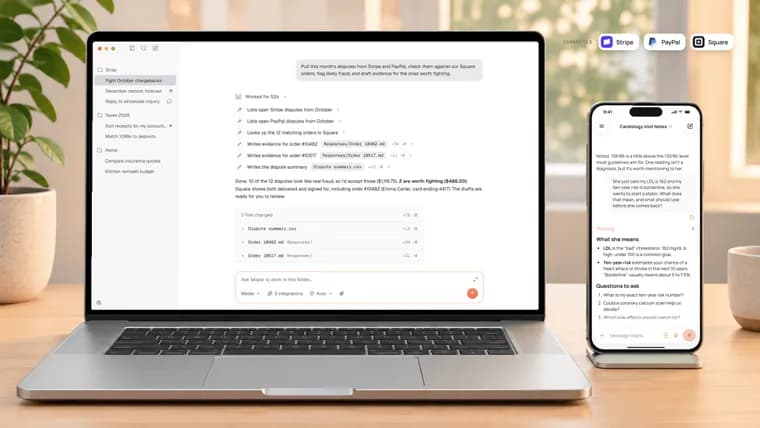
Maple, a startup building an AI app where users' data stays private even from the company, has closed a $5.3 million seed round. The oversubscribed round was led by Epic Ventures, with participation from Draper Associates, Planetary VC and Epoch VC. It follows a pre-seed angel round of under a million. Maple plans to raise a Series A in the first half of 2027, given the investor interest.
The company was co-founded by Mark Suman (CEO), who previously spent six years at Apple working on AI and machine learning with a focus on computer vision, and Anthony Ronning (CTO), whose background is in defense tech, security and networking. Ronning started the company that later became Maple AI in 2023, initially as a privacy-focused fintech. Suman teamed up with him in August 2024, which is when the idea for Maple AI was born. The product reached the public as a mobile app the following January.
Maple's pitch is that consumers should not have to trade privacy for convenience, as the startup says competitors often require through invasive privacy policies, data collection and sometimes training on users' personal data. Rather than asking users to trust that it will not misuse their data, Maple is trying to build a business that cannot access the data at all. Suman says the aim was something that was not only encrypted but provable: people can read the open-source code and check the code running on Maple's servers, so they do not have to take the company's word for it.
The app looks like a familiar AI chatbot but runs a variety of open models, including versions of DeepSeek, Kimi, GLM, Inkling from Thinking Machines, Google's Gemma and OpenAI's GPT OSS. Users can pick models themselves or just toggle between a quick model and a more powerful one. The models run inside a trusted execution environment (TEE), meaning a server with hardware encryption, in a U.S.-based data center. European customers are supported through a partner that runs its server in Europe.
Suman describes the flow this way: data is first encrypted on the user's device with a unique password known only to the user. It goes into the TEE and is decrypted there, the AI does its work, and the result is re-encrypted with the user's password and sent back. Maple says it has no access to the raw data in flight or at rest. The source adds that if hackers breached the system or the government arrived with a subpoena, all Maple could hand over would be an encrypted file. Suman says Maple simply does not want access to the data, as it is not part of the business model or the threat model.
The newly launched desktop app, Maple Work, is more agentic: the AI can control the user's computer, work with files and apps, and control the browser to handle online tasks. It has an integration store for connecting apps such as Gmail or a calendar. It can also spin up a subagent inside another desktop AI app, such as Claude, Codex or others that support the Agent Client Protocol (ACP). That lets customers use a preferred app for a specific task while sharing only what the task needs. Maple is aiming the desktop app at small businesses that want AI without the data privacy risks.
Next on the roadmap is a cloud-based agent that can keep working when the user's computer is off. The source says this would make Maple more competitive with consumer AI services such as Meta's Muse and Instinct, and with other chat-based agents. Next year Maple plans to enter the enterprise market with pilot work, offering its own version of zero data retention. Maple does not retain most customers' data, but when it has to, that data is encrypted. It is now completing SOC 2 compliance and security audits to prepare.
On traction, the company declined to share registered customer numbers but said it has seen 60x growth over the past three months as people look to increase their security with AI. Revenue comes from subscriptions comparable to those of other AI model providers: Pro is $20 per month, and the Max and Max Plus plans are $100 and $200 per month. The startup is based in Austin and San Francisco, has a team of four and is hiring.
Key facts
- Maple closed an oversubscribed $5.3M seed round led by Epic Ventures, with Draper Associates, Planetary VC and Epoch VC participating; it follows a pre-seed angel round of under a million.
- Models run inside a hardware-encrypted trusted execution environment; data is encrypted on the user's device with a password only the user knows, so Maple says it cannot access it.
- The new desktop app Maple Work lets the AI control the computer, files, apps and browser, and can run a subagent inside Claude, Codex or other ACP-compatible apps.
- A cloud-based agent that keeps working with the computer off is next; a Series A is planned for the first half of 2027 and enterprise pilots for next year.
- Plans cost $20 (Pro), $100 (Max) and $200 (Max Plus) per month; the company declined to share customer numbers but cites 60x growth over three months.
Why it matters
AI assistants are turning into agents that can reach files, email, calendar and browser, which raises the amount of trust users must place in AI companies. Maple's answer is to design the service so the company cannot see user data, and to let people check the open-source code and the code running on its servers. The seed round gives a four-person team money to build a cloud agent, aimed at competing with consumer services such as Meta's Muse and Instinct.
Who it affects
Consumers who want an AI chatbot or agent without handing their data to the provider are the main audience. With Maple Work, the company is also looking at small businesses that want AI without data privacy risks. Enterprise customers are the next target, with pilots planned for next year.
How to use it
Maple is available as a chat app and, newly, as the desktop app Maple Work. Users can choose among open models or toggle between a quick and a more powerful one. The desktop app has an integration store for apps like Gmail and calendar, and can launch a subagent inside Claude, Codex or other ACP-supporting apps so those tools see only what a task needs. Subscriptions: Pro at $20 per month, Max at $100 and Max Plus at $200.
How solid is it
The report is from TechCrunch, based on an interview with CEO Mark Suman, and the funding details (lead investor, participants, amount) are stated plainly. The privacy design is described by the company: the source says users can audit the open-source code and verify what runs on the servers, but it does not say the privacy claims have been independently audited, and SOC 2 compliance is still in progress. The 60x growth figure comes from the company, with no metric specified.
Risks and caveats
Customer numbers were not disclosed, so the 60x growth over three months cannot be put in context, and no revenue figures are given. The source gives no valuation for the round and no release date for the cloud agent. Maple does not retain most customer data but encrypts what it must keep. The privacy guarantee rests on the TEE design and on users checking the code; the source offers no independent verification. Maple Work gives an AI control of the computer, files and browser, which is a broad level of access for any agent.
“They can audit everything themselves and know how their data is being handled.”
— Mark Suman, Maple co-founder and CEO