Nvidia's Jensen Huang admits 'serious personal mistakes' in first all-hands since return
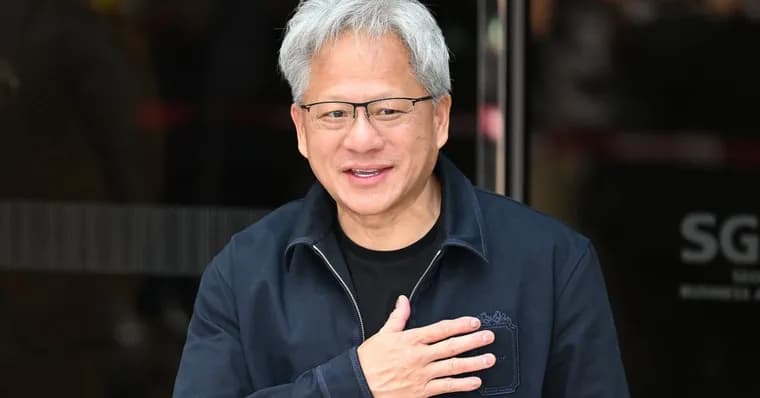
Nvidia CEO Jensen Huang told employees on Tuesday that the company's code of conduct allows room for a 'second chance', that succession planning is a 'flawed' process, and that he would work to rein in his 'insanely intense' management style. The remarks, reviewed by WIRED, came in his first all-hands since returning as CEO. He spoke for about an hour at Nvidia's Silicon Valley headquarters, drew applause at times as he talked about the company's success and future, and took no questions.
The background: Nvidia's board accepted Huang's resignation earlier this month, citing concerns about his personal behavior and lack of candor, after news reports about extramarital affairs, including one with a woman accused of having ties to Chinese intelligence services. The same board reinstated him on Monday, 11 days later. WIRED reports that the board acted after receiving fresh assurances from Huang and learning from the Trump administration that he was not under federal criminal scrutiny and that his return would not be a risk to national security.
Huang opened by saying this would be the hardest company meeting he had ever done and the second hardest meeting of his life; the hardest, he said, was with his wife. He acknowledged that he violated the company's policies and made 'very serious personal mistakes' that damaged his relationships with his wife and two children and prompted him to resign. 'I hurt my family, I hurt my wife,' he said. He told staff he goes to therapy 'every day for an hour and a half' and that it has been 'helping me a lot'. He said he had never knowingly made a decision contrary to the company's interests, but conceded that 'in this one area' he lacked 'the courage' to disclose information he knew would hurt his family. WIRED says he was seemingly referring to the extramarital affairs.
On his return, Huang said the board and he spent the whole weekend together and that the board 'came to the judgment' to invite him back and give him a second chance. He said the board made that call, not 'the highest levels of our government'. He stressed that the code of conduct, much of which he said he wrote himself, still governs how employees treat each other. Violations would not be tolerated, he said, but that 'does not mean, the moment you violate a code of conduct, we walk you out the door'; facts, circumstances and assessments would factor in. He pushed back on the idea that he got preferential treatment: 'There are rumors on the internet that apparently I'm a tech bro, and therefore I'm back.' He rejected the suggestion that he was above the law or the code.
Huang then addressed his self-described 'deeply intense, insanely intense' management style. He maintained that the intensity elevates those around him, but conceded he sometimes takes it too far: 'It disempowers them, and that's not right.' He said he needed to find a way to keep his dedication without hurting the people who work there, and that he needed to 'hold myself to a higher standard at this time'. He said he would undergo a 360-degree performance review, soliciting feedback as often as monthly from people who work with him. He would be the first and only person at Nvidia to do so, and he did not want to make it a companywide practice.
On politics, Huang acknowledged that President Trump is a vocal supporter of Nvidia but insisted politics played no role in how the company operates. 'It is absolutely true that President Trump really, really loves our company. He is my president. And I'll do everything I can to help this president,' he said. He said he would take the same approach with future US presidents and called Nvidia 'the most apolitical company'. He also sought to reassure women at Nvidia, describing himself as 'one of our greatest advocates for creating an environment for women' and pointing to flexible work policies. 'If I did anything that put that in jeopardy, I cannot tell you how sad I am, and I'll do everything I can to fix it,' he said.
On succession, which drew Wall Street criticism of Huang and the board after his resignation because no obvious internal successor was in line, he said: 'I don't believe in succession planning; I think it's flawed.' He specified that the concept may make sense but the implementation often causes issues. He described each of his 60 reports as the CEO of their own unit, able to step up when he eventually leaves, which he said gives the board a large pool to choose from. He argued his brief absence showed Nvidia can operate without him: 'I promise you, whether I'm here or not, this company is wired up to execute, execute, and execute.'
Huang and Nvidia still face other legal and regulatory challenges. The board is investigating whether he was the target of foreign intelligence. US lawmakers expect him to testify before Congress next week. Lawsuits and other probes are ongoing into Nvidia's disclosures about Huang's behavior and its compliance with US export controls on chips. WIRED reports that while some employees celebrated his return, others remained concerned about his behavior and the board's decision. Nvidia did not immediately respond to a request for comment.
Key facts
- In his first all-hands since returning as Nvidia CEO, Jensen Huang spoke for about an hour, acknowledged violating company policies and 'very serious personal mistakes', and took no questions.
- The board accepted his resignation earlier this month over concerns about his personal behavior and lack of candor, then reinstated him on Monday, 11 days later.
- Huang said he would undergo a 360-degree performance review with feedback as often as monthly, and would be the first and only person at Nvidia to do so.
- He called succession planning flawed and described his 60 direct reports as CEOs of their own units who could step up when he leaves.
- Open issues remain: a board investigation into whether he was a foreign intelligence target, expected congressional testimony next week, and ongoing lawsuits and probes.
Why it matters
Nvidia's CEO was out of the job and back in within 11 days, and this all-hands was his first account to staff of why. He framed the second chance as the board's decision, not the government's, and answered two open questions: how he will change his management style and who could succeed him. His answer on succession is that he does not believe in succession planning, after Wall Street criticized the board for having no obvious internal successor.
Who it affects
Nvidia employees, some of whom celebrated his return while others remained concerned about his behavior and the board's decision. It also touches Nvidia's board, which now faces its own questions after accepting his resignation and then reinstating him. Lawmakers expect him to testify before Congress next week, and the lawsuits and probes into Nvidia's disclosures and its compliance with US export controls on chips are still ongoing.
How to use it
This is a corporate governance story, not a product or tool, so there is nothing to adopt. For readers following it, the items the source points to are the congressional testimony expected next week, the board's investigation into whether Huang was the target of foreign intelligence, and the ongoing lawsuits and probes. Huang's own commitments to watch are the 360-degree review, with feedback sought as often as monthly, and his promise to temper his management style.
How solid is it
The account rests on WIRED's review of Huang's remarks at the meeting; the article does not say who provided them. The quotes are attributed directly to Huang. The link between his comment about lacking 'the courage' to disclose information and the extramarital affairs is WIRED's reading ('seemingly referring'), not Huang's statement. The Trump administration's assessment that he was not under federal criminal scrutiny is reported by WIRED as something the board learned; Huang said the board, not the government, made the call. Nvidia did not immediately respond to a request for comment.
Risks and caveats
The all-hands was one-sided: Huang took no questions, so no employee pushback from the room is reported. The woman accused of ties to Chinese intelligence is not named, and no evidence for the alleged ties is given. The board's investigation into foreign intelligence targeting has no stated timescale or findings. Huang's commitments, including the review and the softer management style, are his own promises and depend on follow-through. His statement that violations of the code are not tolerated came with the caveat that facts, circumstances and assessments would factor in.
“I need to hold myself to a higher standard at this time”
— Jensen Huang, Nvidia CEO, at the company all-hands, as reported by WIRED