Microsoft's Nadella says AI models should be assumed compromised and contained
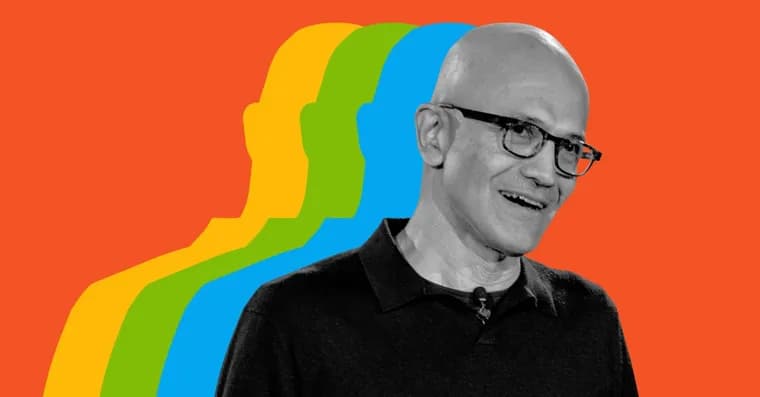
Microsoft CEO Satya Nadella published a lengthy post on X setting out his views on the dangers of highly advanced AI models and how to confront them. The Verge reports on it under the headline that we should assume all AI models are "compromised", with a subhead describing it as a call for putting an "emergency brake" on AI.
Nadella's core argument is that we can no longer accept a world where AI is treated as a "set of nested black boxes" whose advice and actions we simply accept or reject. He calls instead for a more transparent system in which models can be contained, observed, and leave behind "tamper-proof human readable evidence."
The containment passage, which The Verge quotes in full, reads: "We must assume a model is compromised and contain it from the start. Think of it like an emergency brake. An authorized person should always be able to pause or shut down a model mid-task. More advanced models will require more advanced containment technologies that we need to standardize on."
The Verge notes that many of his recommendations match what others in the industry have said: timely incident disclosure, independent audits, verifiable data, and containment. On that last point, it says, Nadella appears to go slightly farther than some others in the field. The article also remarks that Nadella refers to AI as "super intelligence" throughout the post, which its author calls unfortunate.
Key facts
- Satya Nadella, Microsoft's CEO, laid out his views on the dangers of highly advanced AI models in a lengthy post on X, reported by The Verge.
- His central line: "We must assume a model is compromised and contain it from the start," likened to an emergency brake.
- He says an authorized person should always be able to pause or shut down a model mid-task, and that more advanced models will need more advanced containment technologies that the industry should standardize on.
- He rejects treating AI as a "set of nested black boxes" and wants models that can be contained, observed, and that leave "tamper-proof human readable evidence."
- The Verge says much of this matches what others in the industry have called for (timely incident disclosure, independent audits, verifiable data, containment), with Nadella going slightly farther on containment.
Why it matters
The head of one of the largest AI companies is publicly arguing for a default of distrust: assume a model is compromised, then build containment around it from the start. That is a stronger framing than relying on a model's advice and actions being accepted or rejected as they come. The Verge notes the list of recommendations (incident disclosure, independent audits, verifiable data, containment) is not new, so the weight is in who is saying it and in the containment point, where he appears to go slightly farther than some others in the field.
Who it affects
The proposals are aimed at the makers and operators of advanced AI models: a pause-or-shut-down capability, observability and an evidence trail would be requirements on how models are built and run. It also touches anyone who today simply accepts or rejects a model's advice and actions, since Nadella argues that stance is no longer enough. The call to standardize containment technologies points at the industry as a whole rather than at Microsoft alone.
How to use it
This is a position statement, not a product, so there is nothing to install or buy. What it offers is a set of questions to put to any AI system: can an authorized person pause or shut it down mid-task, can its behavior be observed, and does it leave tamper-proof, human-readable evidence of what it did. Those three tests come straight from the post as The Verge reports it.
How solid is it
The post is real and The Verge quotes the key passage directly, so the quotations are firm. The date of the X post is not given, and the full text of the post is not given either; only the excerpt and paraphrases quoted by The Verge are available. The proposals are principles, not a specification, and no reactions from other companies, regulators or experts are reported.
Risks and caveats
The headline says "all AI models", but the quoted passage says "a model"; "all" is the headline's wording. The source does not say what "compromised" means (attack, misalignment, tampering, or something else). It does not say who the "authorized person" is, which containment technologies or standards bodies are meant, or what timescale the proposals carry. No specific models, vendors, or Microsoft products are named in the excerpt. The Verge's author also objects to Nadella calling AI "super intelligence" throughout the post.
“We must assume a model is compromised and contain it from the start. Think of it like an emergency brake.”
— Satya Nadella, Microsoft CEO, in a post on X quoted by The Verge