NASA asks companies for ideas to reboost or deorbit Hubble
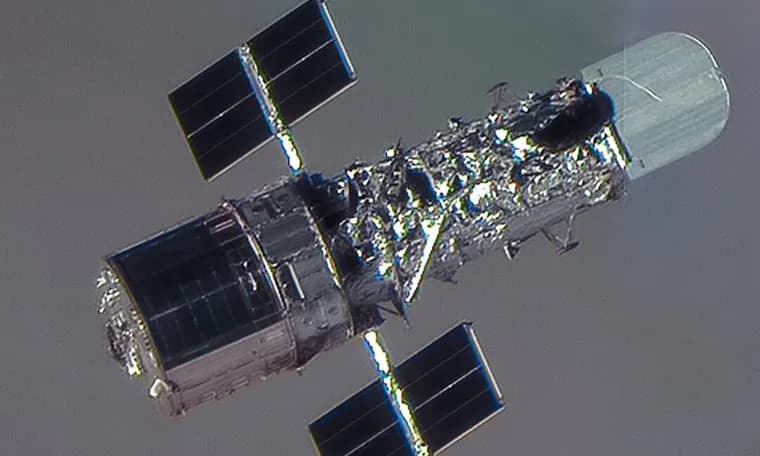
The Hubble Space Telescope is still prized by astronomers after 36 years in orbit, but it is slowly sinking. Left alone, it will fall back into the atmosphere in the early-to-mid-2030s. Orbital dynamicists currently predict reentry in 2033 or 2034 without intervention, though such forecasts can change with solar activity.
NASA last raised Hubble's orbit in 2002, when the Space Shuttle Columbia visited on a servicing mission. The final shuttle servicing flight, in 2009, did not reboost the telescope, and the shuttle fleet retired two years later. Hubble lacks onboard propulsion, so it has lost altitude steadily since, with no way to slow the decline.
On Thursday, NASA released a Request For Information (RFI) asking commercial companies for ideas to reboost or service Hubble, or to dispose of it in a controlled way. The agency wants to hear about companies' current and near-term capabilities for capturing Hubble and boosting it to an altitude of at least 373 miles (600 km), enhancing the telescope's performance, or guiding it to a controlled reentry. Responses are due November 30.
The RFI sets two conditions. In NASA's words: "The requirement includes that the boost and/or servicing mission must not harm the HST and that this mission is expected to occur by 2032." The contractor would be responsible for providing the launch vehicle, servicing spacecraft, mission operations, and "crew if applicable."
NASA is not committing to buy a rescue mission. Officials want to know who might be interested, how much a mission would cost, and which companies would have a realistic shot at reaching Hubble before it falls out of orbit and burns up.
The orbital numbers show the scale of the task. Hubble took 24 years to glide from its 2002 altitude of 362 miles (583 km) down to its current orbit of about 292 miles (470 km). A reboost to the 373-mile (600 km) requirement would likely keep it in orbit for at least 25 more years.
Key facts
- NASA released an RFI on Thursday asking commercial companies for ideas to reboost, service or perform a controlled disposal of Hubble; responses are due November 30.
- The reboost target is an altitude of at least 373 miles (600 km), up from Hubble's current orbit of about 292 miles (470 km).
- The mission must not harm Hubble and is expected to occur by 2032; the contractor would supply the launch vehicle, servicing spacecraft, mission operations and "crew if applicable."
- Without intervention, orbital dynamicists predict reentry in 2033 or 2034, though solar activity can shift the forecast.
- NASA is not committing to buy a rescue mission; it wants to learn who is interested, what it would cost and who could realistically reach Hubble in time.
Why it matters
Hubble has been in orbit for 36 years and has no onboard propulsion, so nothing stops its slow descent. NASA last raised its orbit in 2002, and the 2009 shuttle servicing flight did not reboost it. With the shuttles retired two years later, there has been no way to lift it since. This RFI is NASA's step toward finding out whether a commercial mission could do what the shuttle once did. The payoff is large: a lift to 373 miles (600 km) would likely keep Hubble in orbit for at least 25 more years, against reentry in the early-to-mid-2030s if nothing is done.
Who it affects
Commercial companies with capabilities for capturing and boosting a spacecraft, or for guiding it to a controlled reentry, are the direct audience of the RFI. The source names no specific companies as candidates or respondents. The telescope itself, which astronomers still value, is the subject of any mission, and the RFI also covers enhancing its performance.
How to use it
This is a call for information, not a contract. Companies that can offer a capture and reboost, a servicing mission or a controlled deorbit have until November 30 to respond. NASA says a contractor would be responsible for the launch vehicle, servicing spacecraft, mission operations, and crew if applicable. Any mission must not harm Hubble and is expected to occur by 2032.
How solid is it
The RFI is an official NASA document, quoted directly in the report. The dates and altitudes are stated plainly: responses due November 30, a target of at least 373 miles (600 km), a mission by 2032. The reentry estimate of 2033 or 2034 comes from orbital dynamicists and is described as a current prediction. The source gives no cost estimate or budget for a rescue mission, and no technical method of capture or reboost is described.
Risks and caveats
NASA is not committing to buy a Hubble rescue mission, so the RFI may lead nowhere. The agency itself is asking how much a mission would cost and which companies could realistically reach Hubble before it falls out of orbit. The timeline is tight: the mission is expected by 2032, while reentry could come in 2033 or 2034, and the forecast can change with solar activity. The RFI also requires that the mission must not harm Hubble. The source does not say whether the mission would be crewed; the RFI only mentions "crew if applicable."
“The requirement includes that the boost and/or servicing mission must not harm the HST and that this mission is expected to occur by 2032”
— NASA, in the RFI