NSA's classified network NSANet goes down; DNI blames patch
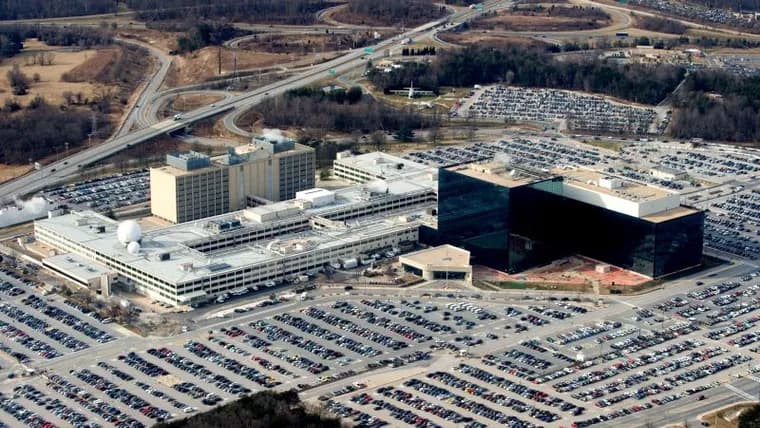
The highly classified network the National Security Agency uses for internal communications is down, according to six people familiar with the matter who spoke to CNN. The network is called NSANet, and it lets NSA employees communicate classified information internally.
On Tuesday night the NSA closed its campus to most employees, reverting to essential personnel only while it works to restore the network. CNN attributes this to a voicemail inbox used by NSA employees and a source familiar with the matter. The move came just hours after the NSA had told employees they could return to work as normal, and it is not clear what prompted the reversal. The agency had staggered employee arrivals earlier in the day as it worked on the problem.
The staffing signals ran through the agency's alert system, which has three main levels and governs whether employees report to the Fort Meade, Maryland, headquarters. A voicemail recording on Tuesday morning described a "code yellow," the second-highest level, telling non-emergency personnel to arrive in a staggered manner and emergency personnel to arrive as usual. The New York Times first reported that detail. Sometime Tuesday evening the inbox reverted to "code green," telling employees to report as scheduled. It was not immediately clear whether the outage had been resolved. Later that night the inbox moved to "code orange," closing the campus for most employees until further notice.
The official explanations differ in detail. In a statement on Tuesday afternoon the NSA said it "experienced temporary degradation during scheduled routine maintenance," that some internal systems were affected, but that mission-critical capabilities remain fully operational and its ability to defend national security continues. It added that its infrastructure has multiple layers of redundancy. Director of National Intelligence Jay Clayton went further, saying later Tuesday afternoon on Fox Business that the outage resulted from the agency applying a software patch for major vulnerabilities discovered last month. In his words, the patching "has caused some of these systems to not come back up when you patch them as expected," and that is what happened at the NSA that day.
CNN says the vulnerabilities Clayton referred to are in PHP, a programming language that powers about 70% of the world's websites. AI tools helped researchers exploit them, setting off a scramble by government agencies and corporations around the world in recent weeks. The NSA itself urged organizations to apply software patches. The flaws could let hackers break into websites and read memory that may hold sensitive information such as passwords.
On cause, sources told CNN there is no evidence of a cyberattack at this point, and Clayton said there is no sign that any of the recent tech outages, including the NSA one, were the result of a cyberattack. A source told CNN that restoration of the network was ongoing but not yet complete.
On operational impact, a current and a former US official said an NSANet outage would not hurt the agency's ability to pass urgent intelligence to President Donald Trump, who is travelling in Asia on Air Force One. They described multiple redundancies and backup networks for secure communication with the president, who is in the Philippines and due in China the next day for talks with Xi Jinping and Vladimir Putin. A former senior NSA official told CNN that NSANet is "more of a network of networks, and it's unlikely that a full outage exists given the many redundancies in place." The official said it could affect analysis and reporting, but that highest-priority requirements would be handled: "So it is alarming, but likely not crippling." A source from one of the countries and a former US intelligence official said the Five Eyes intelligence-sharing system (US, UK, New Zealand, Australia and Canada) has not been affected.
CNN places the outage amid other recent tech failures. All flights nationwide were grounded for hours on Friday, with thousands delayed or cancelled, and the FAA traced the problem to a single router in Arkansas. A massive outage last week affecting Microsoft products left people worldwide unable to access Outlook email and Team meetings. On Monday thousands of Chase Bank customers reported trouble using their online accounts. CNN says there is no indication that the NSA, FAA or Microsoft outages were caused by a cyberattack. It also notes this is not the first major NSA network disruption: in 2000, a tech failure downed computers for nearly three days and interrupted intelligence processing at Fort Meade, an agency spokesperson said at the time.
Key facts
- NSANet, the NSA's highly classified internal communications network, is down, according to six people familiar with the matter who spoke to CNN.
- The NSA closed its Fort Meade campus to most employees on Tuesday night (essential personnel only), hours after telling staff to return to work as normal.
- The NSA blames "scheduled routine maintenance"; DNI Jay Clayton says a software patch for PHP-related vulnerabilities found last month stopped some systems coming back up.
- Sources and Clayton say there is no evidence of a cyberattack; officials say the outage does not stop urgent intelligence reaching President Trump, and Five Eyes sharing is unaffected.
- It follows a nationwide flight grounding traced to a single router in Arkansas, a Microsoft outage and Chase Bank login problems; a 2000 NSA outage lasted nearly three days.
Why it matters
NSANet carries classified communications inside America's most powerful intelligence agency, and CNN reports it is down with the campus closed to most staff. The story also ties the outage to a wider software scramble: the PHP flaws that Clayton cites were exploited by researchers with the help of AI tools, and agencies and corporations worldwide have been rushing to patch them. CNN frames the NSA, FAA and Microsoft outages as stark examples of how tech failures can roil markets and potentially threaten national security.
Who it affects
NSA employees are the most directly hit: staggered arrivals, then a return to normal, then a campus closed to most people until further notice. Analysis and reporting could be affected, according to a former senior NSA official. Officials say the president's communications while travelling in Asia and Five Eyes intelligence sharing are not affected. Organisations running PHP are affected indirectly, since the NSA itself urged them to apply software patches.
How to use it
This is a developing news story, not a tool. The practical point for administrators is the one in the report: the NSA urged organisations to apply patches for the PHP vulnerabilities, and Clayton's account is that patching did not go smoothly for some NSA systems, which did not come back up as expected.
How solid is it
The core report rests on six unnamed people familiar with the matter, plus a voicemail inbox recording and a source for the campus closure. The NSA's statement and Clayton's comments on Fox Business are on the record. The two official accounts differ: the NSA says routine maintenance and does not mention PHP or a patch, while Clayton describes a software patch for vulnerabilities found last month. The source does not say whether the PHP patch was applied to NSANet specifically; that is Clayton's account of the outage in general terms. CNN updated the story with additional information.
Risks and caveats
No timescale for restoring NSANet is given, and the source does not say the outage was resolved; it says that was not immediately clear. The cause of the move from "code green" to "code orange" is not explained. The absence of evidence of a cyberattack is stated by sources "at this point", which is not a final finding. The source does not name the PHP vulnerabilities or the AI tools involved, and gives no cause for the Microsoft or Chase outages. A former senior NSA official calls the situation "alarming, but likely not crippling."
“So it is alarming, but likely not crippling.”
— A former senior NSA official, speaking to CNN