Nvidia brings back CEO Jensen Huang; experts warn of precedent
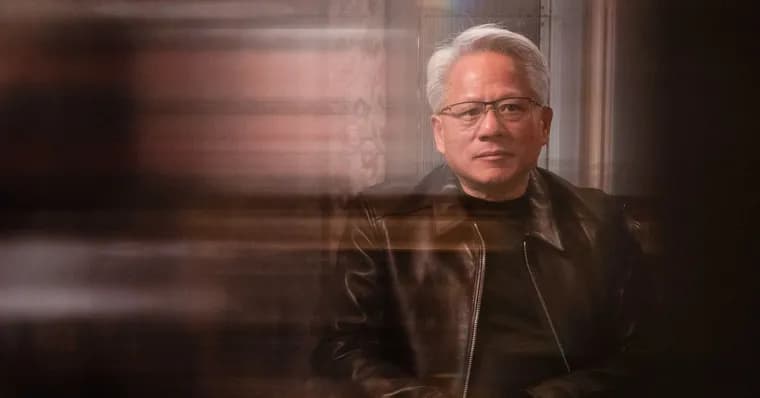
Nvidia's board brought Jensen Huang back as CEO on Monday, 11 days after he resigned amid revelations of extramarital affairs. One of them was with Alice Huang, a woman US intelligence suspects has ties to China's Ministry of State Security (MSS). The board said input from "senior levels of the United States government" left it confident that his return poses no national security risk. Intelligence and export-control experts told WIRED the decision signals that the chipmaker may have grown too important to the stock market for Washington to hold it accountable for national security lapses. They also say it undercuts the warnings the US routinely issues to American companies and foreign governments about Beijing's pursuit of US technology.
President Donald Trump told The Wall Street Journal he lobbied the board directly and through intermediaries, and that Nvidia's falling share price helped his case. The board acted before its own investigation of Huang had concluded, and while the Justice Department is pursuing a criminal probe of Megaspeed, a Singapore company Alice Huang once ran, over the alleged diversion of Nvidia chips to China. According to director of national intelligence Jay Clayton, Alice Huang is also under investigation. The New York Times reported Sunday that advisers briefed Trump at least twice on her links to Chinese intelligence before the affair became public, and that both times he played down their concerns. Asked on Monday by the Journal about Republican lawmakers who say Huang's return endangers national security, Trump pointed to Nvidia's rebounding stock. He told CNBC that keeping the US ahead of China made the return imperative: "If we didn't do this, I could see China coming in and saying to Jensen, 'Hey, how would you like to come to China?'"
The board's assurances appear to have come mostly from the Justice Department. Per the Journal, attorney general Todd Blanche allegedly told Trump and vice president JD Vance on Saturday that Huang was neither a target nor a subject of any department investigation, and that the department had no evidence he had broken the law or posed a national security risk. Vance then reportedly sought assurances for the board that the administration did not consider Huang a threat and that he would not face criminal charges. Trump told the Times he also consulted Clayton before pushing for the return: "I can't do this and then all of a sudden have somebody get indicted." Nvidia did not immediately respond to WIRED's request for comment.
The experts say they worry more about the precedent than about Huang himself. Some think the scrutiny now on him makes further compromise unlikely. Nicholas Eftimiades, a former CIA and Defense Intelligence Agency officer who teaches homeland security at Penn State Harrisburg, says Huang poses no security risk and, now that the relationship is public, has little chance of unwittingly passing along more information. Tahlia Peterson of the Royal United Services Institute agrees that scrutiny likely limits further exposure, but says "we are still in the dark as to whether any sensitive information may already have been compromised." Beijing may already have gained insight into Nvidia's chip designs and its private conversations with the White House and Congress, or obtained chips through Megaspeed, they say, though no one has publicly established what, if anything, it got. Sunny Cheung of the Jamestown Foundation says the MSS would not necessarily need chip blueprints: insight into Huang's talks with the president, senior officials and other tech executives, and his views on China and Taiwan and on export controls, "could already be extremely valuable to Beijing." Jessica Brandt of the Council on Foreign Relations adds that Nvidia's proprietary designs could help China's own chip efforts, and that insight into its talks with the White House and Congress could help Beijing anticipate US export policy.
Several experts want to know who gave the board its assurances and on what basis, and whether the government ran a counterintelligence damage assessment or simply made a political judgment. Emily Kilcrease of the Center for a New American Security says the administration "has repeatedly failed to enforce export controls over the past year." The Commerce Department added Megaspeed to its trade blacklist on Monday and the administration has recently moved to tighten rules on China's AI industry, but Kilcrease says it acted only under pressure. Edward Fishman of the Council on Foreign Relations compares the situation to sanctions: it took years of aggressive enforcement to make banks take compliance seriously, and nothing comparable has happened in tech, which he says helps explain why US export controls remain weak and leaky.
The record on Megaspeed is better documented than the links to Huang. Trade records the Times reviewed show a Malaysian subsidiary bought at least $4.8 billion worth of equipment containing Nvidia chips between June 2024 and February 2026, and its subsidiaries have served Chinese clients including Alibaba. Per the Times, US intelligence indicates Alice Huang was in contact with an MSS officer from spring 2025 until this fall, and her business partner Kang Wei also worked with the agency. Her network has been linked to efforts to supply Nvidia chips to China's state-owned military contractors. The Journal reported that the intelligence is inconclusive on whether she was actively tasked to collect information on Huang. The Times has also reported that Huang successfully lobbied the Trump administration to roll back restrictions on Nvidia's chip sales to China and negotiated a deal giving the US government a 25 percent cut of sales of certain chips approved for export there. In April, minister of state security Chen Yixin made overcoming the "blockades" limiting China's access to technologies like AI a sixth core mission for the MSS; Matt Pottinger, deputy national security adviser in Trump's first term, told the Times that Alice Huang's network of chip-buying companies "lines up precisely" with it.
On the company side, Nvidia's board says its investigation will continue with Huang's cooperation, and Nvidia is searching for a chief compliance officer. A committee of independent directors is examining whether Huang shared corporate or national security information with Alice Huang, and a new committee of independent directors will oversee trade compliance and national security risks. Huang's defenders note he never received a defensive briefing, a warning the government sometimes gives Americans whom foreign intelligence services target. Lawmakers appear to have seen little evidence: at a briefing this month by CIA director John Ratcliffe and Clayton, scheduled to cover Iran, they pressed for answers about Huang, and the replies left some puzzled, per the Times. A follow-up briefing for senior national security staff was postponed.
Key facts
- Nvidia's board reinstated Jensen Huang as CEO on Monday, 11 days after he resigned amid revelations of extramarital affairs, one with Alice Huang, whom US intelligence suspects has ties to China's MSS.
- The board acted before its own investigation had concluded, citing input from "senior levels of the United States government"; Trump told the Journal he lobbied the board and that the falling share price helped his case.
- The Justice Department is pursuing a criminal probe of Megaspeed, a Singapore company Alice Huang once ran; a Malaysian subsidiary bought at least $4.8 billion of equipment containing Nvidia chips between June 2024 and February 2026, per Times-reviewed trade records.
- Experts told WIRED they worry most about the precedent: that Nvidia may be too important to the stock market to be held accountable, and that US warnings about China lose credibility.
- Whether Beijing obtained any information or exerted influence through Huang remains unproven, and the board's own investigation continues.
Why it matters
The experts' point is less about one executive than about a precedent. If intelligence concerns appear to yield to market pressure, they say, US warnings about China start to sound negotiable, to Beijing's benefit. Jessica Brandt argues this erodes the credibility of US warnings about China's technological ambitions, both with American companies and with foreign governments. Edward Fishman says some tech companies have become so big and so important to the stock market that Washington is reluctant to hold them accountable for national security lapses. Sarah Bauerle Danzman adds that the cost extends to the allies Washington depends on to police its controls.
Who it affects
Nvidia, its board and its leadership are the direct subjects: the board is now running an investigation while Huang is back in the job, and has set up a new independent committee for trade compliance and national security risks. The story also touches US national security and export-control officials, lawmakers who say Huang's return endangers national security and who appear to have seen little of the evidence, and allies that help enforce US controls. The Justice Department is pursuing a criminal probe of Megaspeed, and Alice Huang is also under investigation, according to director of national intelligence Jay Clayton.
How to use it
This is an analysis piece, not a product or tool, so there is nothing to apply directly. For readers following the story, the open questions the experts raise are the things to watch: who gave the board its assurances and on what evidence; whether a counterintelligence damage assessment was done; what the board's own investigation, with Huang's cooperation, finds; whether Nvidia appoints a chief compliance officer; whether Commerce enforces the new controls; and what lawmakers learn once the postponed national security briefing takes place.
How solid is it
The article rests on expert comment and on reporting by The Wall Street Journal, The New York Times and CNBC; WIRED does not independently document the underlying intelligence. Several key claims are explicitly hedged in the source: Blanche's briefing is described as "allegedly", Vance's request as "reportedly". The Journal says the intelligence is inconclusive on whether Alice Huang was tasked to collect information on Huang. Nvidia and Megaspeed had not responded to WIRED's requests for comment. The Megaspeed purchase figures rest on trade records the Times reviewed.
Risks and caveats
Nothing publicly shows that Huang passed on trade secrets or that Beijing gained information or influence through him; Cheung calls this "unproven". Experts disagree on the risk going forward: Eftimiades says Huang himself poses no security risk, while Peterson says it is still unclear whether sensitive information was already compromised. Peterson also notes there are legitimate arguments about the cost of losing Nvidia's leadership at a critical moment in the global AI race, but says those considerations should not determine the conclusions of national security investigations. No charges against Huang are reported.
“This erodes the credibility of US government warnings about China’s technological ambitions and how far it will go to achieve them”
— Jessica Brandt, senior fellow for technology and national security at the Council on Foreign Relations, to WIRED