Ollobot builds OlloNi SS1 as a proactive AI companion robot
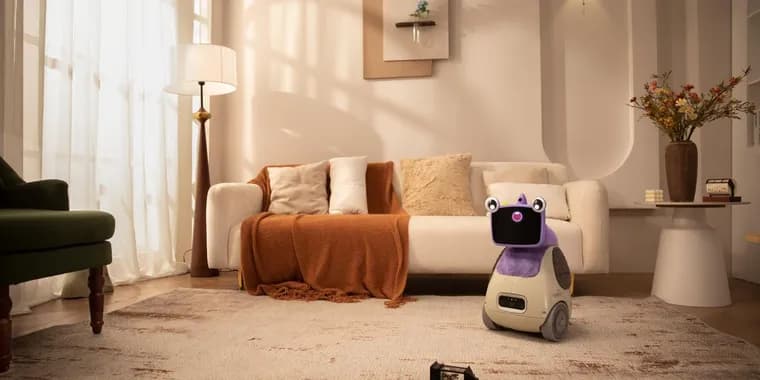
IEEE Spectrum published a piece carrying the disclosure "This article is brought to you by Ollobot," which means the following is sponsored content written to promote Ollobot's product rather than independent reporting. The article's own framing: companion robots from around 2017 onward had personality and voice commands but limited range, and once the novelty wore off many were left unused; some even stopped working when their makers shut down servers. Ollobot's pitch, which it calls "gentle intelligence," is that the next generation should be present rather than merely capable.
The piece opens with two unnamed statistics: an unnamed study is cited as finding that nearly one in three elderly adults lives alone without daily companions, and unnamed research is cited as finding that children whose parents migrated for work are 2.5 times more likely to experience loneliness than children whose parents stay with them. It then cites a market figure, without naming the research firm: the global AI companion market is put at $36.8 billion in 2025, projected to grow to $48 billion in 2026 and to $318 billion by 2033, a 31 percent compound annual growth rate over that stretch.
The article describes three shifts it says define the current generation of companion robots: from reactive (responding only when spoken to) to proactive (monitoring a room via camera, microphone and other sensors to initiate contact and read emotional cues); from function-oriented to emotion-oriented design; and from standalone hardware to connected software ecosystems. Ollobot's OlloNi SS1 is presented as this in physical form, aimed at three households: elderly people living alone, for whom it combines fall detection with proactive check-ins; children whose parents work far away, for whom it offers a life-recording system as a passive, less clinical alternative to a monitoring camera plus remote-connection features for parents; and single urban professionals, for whom it builds a preference model over time and provides ambient presence.
On hardware, the article states the SS1 carries a multi-chip AI 4K vision module for facial recognition and motion tracking, with a physical privacy cover over the camera. It can move across wood, tile and low-pile carpet floors and climb slopes up to 3.5 degrees, following household members between rooms rather than staying fixed in place. A 6-microphone array gives an effective voice-capture range of up to 5 meters for wake-word detection. Most AI processing runs on the device itself through what Ollobot calls a "heart module," with 16 GB of memory and 64 GB of local storage, which the article says lets the robot recognize faces and retain household memories with lower latency. Battery life is put at up to 12 hours of standby or around 5 hours of active interaction per charge. The robot runs Android OS and receives over-the-air updates.
The SS1's front end includes a "2+1" display setup: two circular side screens act as expressive "emotional eyes" while a separate main display carries information and structured interaction, a split the article says lets emotional and functional communication work independently. An automated life-recording system, built on facial recognition and behavioral-event detection, captures moments such as laughter or group interaction, and an integrated AI vlog engine edits them into short videos with automatic sequencing and a soundtrack. The article states visual data is processed primarily on-device, that household memories are stored locally within Ollobot's own ecosystem rather than shared with third-party smart-home platforms, that access to recordings requires the companion app, that remote access is encrypted, and that users control their own recording preferences on top of the physical camera cover.
The article gives no price or release date for the SS1, pointing readers only to "Learn more at ollobot.com." It names no independent reviewer, customer, or third party for any performance claim; every figure about the robot's behavior, hardware and effectiveness originates from Ollobot's own copy. No author is credited for the piece.
Key facts
- Ollobot's OlloNi SS1 is pitched as a proactive companion robot that runs most of its AI on-device, through a "heart module" with 16 GB of memory and 64 GB of storage, to build a lasting picture of one household rather than reacting to individual commands.
- The article cites unnamed studies claiming nearly one in three elderly adults lives alone and that children of migrant-worker parents are 2.5 times more likely to experience loneliness than children whose parents stay with them; neither study is named.
- It also cites an unattributed market figure: the global AI companion market at $36.8 billion in 2025, projected to reach $318 billion by 2033 at a 31 percent compound annual growth rate.
- SS1 hardware includes a 6-microphone array with a 5-meter voice-capture range, slope climbing up to 3.5 degrees, 12 hours of standby or about 5 hours of active battery life, a physical camera privacy cover, and a "2+1" display with two circular screens acting as expressive eyes.
- The piece is sponsored content, disclosed as "brought to you by Ollobot"; it gives no price, release date, independent review, or named source for any of its statistics about the robot or the market.
Why it matters
The article frames a real shift in companion robotics: after an earlier generation of voice-command novelty devices that ended up unused on shelves once their charm wore off, makers are now building robots meant to notice and initiate rather than wait to be addressed. Ollobot calls this design goal "gentle intelligence," built around persistent, on-device presence instead of raw capability. Whether that shift changes outcomes for lonely people is untested in the piece itself; the article's own case is stated as a design philosophy and a set of hardware specs, not as measured results.
Who it affects
The article targets three household types by name: elderly adults living alone, for whom it pairs fall detection with proactive interaction; children whose parents work away from home, for whom the SS1 offers a life-recording system and remote-connection features aimed at parents; and single professionals living alone in cities, for whom it builds a routine-based preference model over time.
How to use it
No price or release date appears anywhere in the article; it points interested readers only to "Learn more at ollobot.com." What is described is a home device: it moves itself across wood, tile and low-pile carpet floors, follows people between rooms, greets arrivals, and connects to family members remotely through a companion app rather than scheduled calls. Its automated life-recording system and AI vlog engine turn captured household moments into short edited videos on their own.
How solid is it
This is a sponsored article, not independent journalism: the piece carries the disclosure that Ollobot paid for it, and every claim about the SS1's behavior, hardware, and effectiveness comes from Ollobot's own copy. The two loneliness statistics in the opening (the one-in-three figure and the 2.5-times figure) are attributed only to "one study" and "research," with no study named, no author, no sample size, and no publication. The market-size and growth figures likewise carry no named research firm. No independent reviewer, customer, or third party appears anywhere in the piece, and no comparison to competing companion robots is offered.
Risks and caveats
A device built to sit in a living room with cameras, microphones, and facial recognition running continuously raises the privacy questions any always-on home sensor does; the article's answers are a physical lens cover, on-device processing, app-gated access, and encrypted remote connections, all of which are Ollobot's own design choices rather than independently verified protections. Household data and memories stay inside Ollobot's proprietary ecosystem rather than an open smart-home platform, which is a lock-in as much as a privacy feature. The article itself notes that an earlier wave of companion robots ended up unused once the novelty wore off, and some stopped working entirely when their makers shut down servers; nothing in the piece addresses what happens to the SS1 or its stored household memories if Ollobot does the same.
“What Ollobot describes as "gentle intelligence" is a useful way to think about where the serious work in this category is going.”
— IEEE Spectrum article sponsored by Ollobot