OpenAI's ChatGPT Work targets non-engineers, but usage stays thin
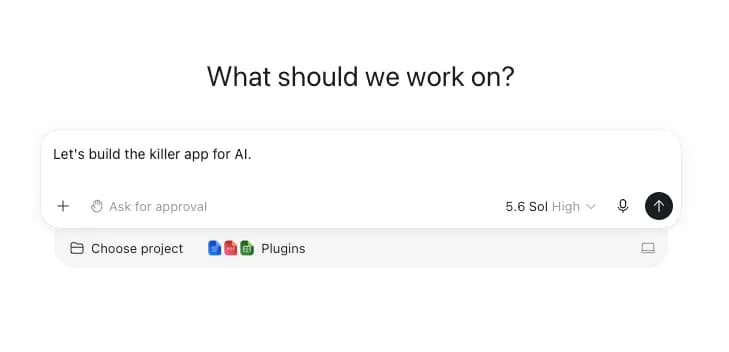
OpenAI's biggest bet is ChatGPT Work, a $20-a-month product launched last month that tries to bring the same kind of AI agent that already helps software engineers to everyone else: accountants, investors, doctors, and any other white-collar worker whose day revolves around a computer. Work is built on top of OpenAI's Codex coding tool, modified so that people who don't write software can still hand an agent a multistep task and let it run on its own rather than just answering questions one at a time. TechCrunch spent time with the OpenAI engineers behind the product, Andrew Ambrosino (lead engineer for OpenAI's desktop app), Thibault Sottiaux (who leads OpenAI's core product work, including Work), Akshay Nathan (who leads the product engineering team) and Joe Gershenson (engineering lead for OpenAI's harness), and tested the app directly.
That ambition means giving an AI agent real access to a person's digital life. Ambrosino's own desktop app can already reach his inbox, his Slack account, his phone, and apps like Notion and Figma. He acknowledges the risk directly: asked whether the agent might pull from a private DM while writing a document and not realize it isn't supposed to share that information, he said yes, adding that he is willing to take that personal risk for the job and has not been burned by it yet.
The commercial logic is straightforward. Agents that run for longer stretches burn through more tokens, which makes them more valuable to OpenAI per user, and reaching professions beyond coding matters for the whole industry: coding has been the one clearly lucrative use of AI agents so far, but it is a small slice of the knowledge work that AI companies need to monetize to justify what they have spent on training and compute. Vertical competitors such as Harvey, for law, and Clay, for sales, are already chasing the same customers with a model-agnostic approach, plugging in whichever underlying AI performs best. Industry analysts see this as one of the central challenges facing OpenAI and its rivals. Christian Catalini put it bluntly on a16z's "It's time to build" blog: "If the labs cannot rapidly get ahold of the key complementary assets needed to scale AI in the market, value will accrue elsewhere."
The gap between OpenAI's own staff and its paying customers shows why closing that reach matters. An OpenAI-backed study found that in June, 98% of OpenAI employees were using Codex, compared with just 17% of the company's organizational subscribers and less than 1% of individual subscribers. OpenAI would not say how many people use Work specifically versus Codex specifically; the two together, what the piece calls "the joint app," have just 20 million users, against the more than a billion people the company says are prompting ChatGPT online. OpenAI's own non-engineering staff, including its communications and finance teams, began using Codex at a time when it was, in Ambrosino's words, "actively hostile" to them: asking them about code and showing them an empty diff. OpenAI then reworked the tool to be more general purpose between February and now.
Every model needs what engineers call a harness, the software layer that decides what information a model sees, which tools it can use, and how it presents its answers. A command-line interface was enough of a harness to turn LLMs into coding agents for developers, who already knew how to use a CLI; reaching everyone else takes something closer to a magic box. OpenAI wants functionality found in tools like OpenClaw, which coders use to put LLMs to work, to feel as simple as prompting. Ambrosino compares the underlying design philosophy to skeuomorphism, the old practice of making digital tools resemble the physical objects they replaced, like a calculator app styled after a pocket calculator: unglamorous, he says, but genuinely useful for easing people into a new kind of tool. Work still carries a few more buttons, for selecting projects and plug-ins, than a bare prompt box, and Ambrosino argues that visible structure still matters this early, even if a future version needs less of it.
In practice, OpenAI pitches Work for routine, data-heavy coordination work: employees setting up weekly metrics reports, or turning spreadsheets into planning tools. The reporter describes venture capitalists using agents to assemble communications and analysis into investment memos, and operations teams standing up their own dashboards and visualizations; one OpenAI engineer said he asked the tool to read a Slack conversation about an engineering problem and turn the result into charts. Sam Altman reportedly uses it to plan his own vacations. Testing the product directly, the reporter had it pull a child's oddly formatted preschool calendar out of email and load it into Google Calendar, which worked well. Without granting access to personal email, source interviews, story drafts, or a bank account, the reporter still had the tool build an auto-updating financial dashboard for public companies, assemble a queryable database of space launches that had previously meant writing Python scripts by hand, and send a weekly email summarizing new AI research posted at academic clearinghouses.
Getting there was not smooth. Setting up permissions, such as read-only access to a cloud drive, repeatedly failed with error messages until a dialog box on the mobile app explained that only full access would work. Many settings exist only in the web app, so the reporter often worked in both the web and mobile versions at once. A linked Google Calendar lets the tool create events but not new calendars. And the common advice among early adopters, echoed by Gershenson, is to always run the tool at its highest effort setting: anything less, and it behaves like the worst intern you have ever worked with. Gershenson admitted effort settings are not yet intuitive for new users and said only that OpenAI is looking to improve them. A harder problem sits underneath: most white-collar output, a presentation, a business strategy, a sales pitch, is not as easy to grade as code, which either works or does not. Asked which specific workflows the product targets, OpenAI's engineers deferred to the company's research team; OpenAI later told TechCrunch it relies on its GDPval benchmark, built from 44 occupations and hundreds of knowledge-work tests, supplemented by user feedback and, less officially, by what OpenAI's own employees do with the tool.
Running underneath all of this is OpenAI's rivalry with Anthropic. Asked directly what sets Codex and Work apart from Claude Cowork or other mass-market agent harnesses, Gershenson said he genuinely does not look at what competitors build, comparing the stance to the "I don't think about you at all" meme from Mad Men. The reporter said he does not believe that answer, citing how similar the two products' interfaces are, the ordinary need for competitive intelligence in any business, and the fact that the first thing Work asked him to do on setup was import his Claude Cowork data. The history supports the skepticism: OpenAI originally built Codex as a web app on the bet that the model alone was smart enough to handle a task with minimal user input, what Ambrosino now calls being "a bit more AGI-pilled." Claude Code, built afterward, instead worked through a back-and-forth conversation, surveying options, waiting for the user to choose, and checking in regularly. Anthropic's approach proved more effective even though it demanded more work from users, and OpenAI eventually added the same kind of back-and-forth interaction, which became today's Codex with its desktop and mobile apps. By download statistics, cited as a proxy for interest, Claude Code stayed ahead of Codex until April of this year, when Codex took a slight lead; enterprise-use surveys cited in the piece point the same way. OpenAI's engineers argue the real differentiator now is model quality rather than harness design. Not everyone agrees interface design is settled: Wharton professor Ethan Mollick still sees Claude as more user-friendly, writing that ChatGPT tends to just do things for the user by itself, while Claude runs comparisons, shows its work, and repeatedly asks for input. Sottiaux disagrees, arguing that the conversational, hands-off style is what the market is ready for, and points to it as the reason for Work's adoption so far.
Whether OpenAI's own harness is even the best way to use its own models is an open question. Independent comparisons by Composio and Databricks found that different combinations of model and harness perform differently on coding benchmarks; Databricks found that Pi, an open source harness from the software company Earendil, outperformed Codex while both ran the identical GPT 5.5 model. Pi has been used to build projects including OpenClaw and Cloudflare OS. Pi's creator, Mario Zechner, argues that his deliberately minimal harness shows an AGI-pilled approach can still work, at least for coding, because Pi can modify itself and build its own interfaces rather than relying on features built in ahead of time. He is sympathetic to the harder problem OpenAI faces outside coding: agent harnesses are shaped by their training data, he said, and that data is overwhelmingly about coding tasks. A single management decision that plays out over months cannot be captured in a simple back-and-forth trace between a user and an agent, so it is effectively invisible to a model that only learns from what gets digitized. Zechner also reads the large labs' push toward proprietary harnesses as an attempt to lock users in: without owning the entire stack, he argues, a lab is just a model provider left competing directly with Chinese models.
Cost is another open problem. Using the product casually on the $20-a-month plan, the reporter burned through more than 80 million tokens in four days, which the model itself estimated cost $65, since the app has no usage dashboard at all: a subsidy of more than three times the subscription price for four days of casual use alone. Sottiaux pointed to a recent 80% price cut for users of OpenAI's Luna model as evidence the company is working on efficiency, and said that within six months, users should be able to do the same work for less money. The piece raises one more open question: whether these products lock in customers through data retention, or simply through how much effort it takes to configure access to all their permissions and plug-ins in the first place. Visiting OpenAI's headquarters in July, the reporter described a calm but tense atmosphere, with engineers checking laptops mid-conversation and rushing between meetings. Nathan, the head of the product engineering team, summed up where the company stands: chasing "the promise of the magic box," while acknowledging there is still too much complexity to make that promise real, and voicing optimism that the answer will come from the model itself, solved "in a truly AI-native way."
Key facts
- ChatGPT Work, launched last month as a modified version of OpenAI's Codex coding tool, costs $20 a month and aims to bring agentic AI to non-engineers such as accountants, investors and doctors.
- An OpenAI-backed study found that in June, 98% of OpenAI employees were using Codex, compared with 17% of the company's organizational subscribers and less than 1% of individual subscribers.
- OpenAI would not break out user numbers for Work versus Codex, saying only that the combined app has 20 million users, against the more than a billion people the company says prompt ChatGPT online.
- By download statistics cited in the piece, Claude Code was more in demand than Codex until April this year, when Codex took a slight lead; OpenAI's engineers declined to say what differentiates Work from Anthropic's Claude Cowork.
- Testing the app on the $20-a-month plan, the reporter used more than 80 million tokens in four days at an estimated cost of $65 by the model's own analysis, since the app has no usage dashboard: more than three times the subscription price for four days of casual use.
Why it matters
OpenAI's biggest active bet is proving that agentic AI, the kind that already changed how software engineers work, can extend to everyone else whose job is dominated by a computer: accountants, investors, doctors, VCs, operations staff. The economics push hard in that direction. Agents that run for longer stretches burn more tokens, which is more lucrative for OpenAI per user, and coding alone is too small a slice of white-collar work to justify what AI labs have spent on training and compute. Vertical, model-agnostic competitors such as Harvey (law) and Clay (sales) are already chasing the same customers, and Christian Catalini warned on a16z's blog that labs which cannot quickly acquire the complementary assets needed to scale AI in the market will see the value accrue elsewhere. Underneath all of it sits a direct rivalry with Anthropic: Work's conversational, button-light design grew out of OpenAI watching Claude Code's more deliberate, back-and-forth approach outperform its own original, more autonomous bet on Codex as a web app.
Who it affects
The immediate audience is white-collar workers who are not engineers: OpenAI names accountants, investors and doctors, and the reporter describes VCs building investment memos, operations teams standing up dashboards, and OpenAI's own communications and finance staff. It also affects OpenAI's competitive set: Anthropic, whose Claude Code and Claude Cowork keep coming up as the implicit benchmark; vertical AI companies like Harvey and Clay; and open source harness builders such as Mario Zechner, whose Pi has been used to build OpenClaw and Cloudflare OS. Anyone currently paying for ChatGPT, Codex or a rival agent product is the market being tested, though OpenAI's own adoption numbers suggest most of them are not yet using the agent features at all.
How to use it
ChatGPT Work costs $20 a month, on OpenAI's lowest ChatGPT tier, and launched last month as a modified version of Codex aimed at non-engineers. OpenAI positions it for routine, data-heavy coordination: weekly metrics reports, spreadsheets turned into planning tools, investment memos, ad hoc dashboards, and calendar cleanup (the reporter had it successfully pull a child's preschool calendar out of email and into Google Calendar). In practice, permissions are the main friction: trying to grant only read access to a cloud drive repeatedly failed until a mobile app dialog explained that full access was required, many settings exist only in the web app rather than mobile, and a linked Google Calendar can create events but not new calendars. The near-universal advice from early users, including OpenAI's own harness lead, is to always run the tool at its highest effort setting, since anything lower behaves like an unreliable intern.
How solid is it
The adoption numbers come from a single OpenAI-backed study: 98% of OpenAI employees used Codex in June, versus 17% of organizational subscribers and under 1% of individual subscribers, and OpenAI would not break out how many of the 20 million combined Work-and-Codex users are on Work specifically. OpenAI says it targets workflows using its GDPval benchmark, built from 44 occupations and hundreds of knowledge-work tests, plus user feedback, though its own engineers declined to name concrete target workflows when asked directly and deferred to the research team. Independent benchmarking cited in the piece complicates OpenAI's implicit claim that its harness is the best way to use its own models: Databricks found that Pi, an open source harness, outperformed Codex while running the identical GPT 5.5 model. Download statistics cited as a proxy for interest show Claude Code led Codex until April of this year, with Codex only recently taking a slight lead, and even OpenAI's own engineers argue the current differentiator is model quality, not harness design, an implicit concession that harness superiority is not settled.
Risks and caveats
The product runs on deep access: Ambrosino's own agent can already reach his inbox, Slack, phone, and apps like Notion and Figma, and he acknowledges it could pull from a private DM without knowing it should not share that information; he says he accepts that personal risk for the job. The reporter, testing the same product, declined to grant access to personal email, source interviews, story drafts, or a bank account. Cost tracking is opaque: there is no usage dashboard in the app at all, so the reporter's figure of $65 for 80 million tokens over four days comes only from the model's own self-reported analysis, and that four days of casual use alone amounted to a subsidy of more than three times the monthly subscription price. OpenAI points to efficiency gains, including an 80% price cut for users of its Luna model, as the fix, but gives no baseline price and no firm timeline beyond Sottiaux's promise that costs should fall within six months. Most white-collar output, unlike code, is not easy to evaluate as simply right or wrong, which OpenAI's own engineers cite as one of the hardest parts of the product. And the piece raises a lock-in risk that has nothing to do with capability: data retention and the sheer effort of configuring permissions and plug-ins could keep users on a platform regardless of how good the underlying agent is.
“Everything is coding agent shaped... the reason is that they only have training data for coding agent tasks.”
— Mario Zechner, creator of the open source harness Pi