Wells Fargo and other US banks crack down on third-party AI agents
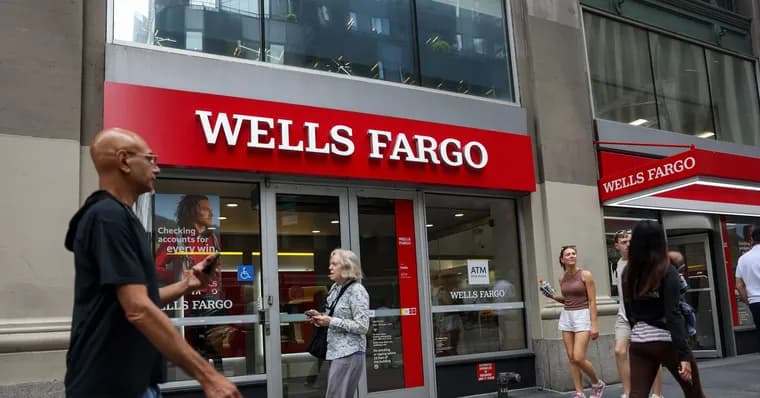
Wells Fargo is set to enact an updated agreement with millions of customers, specifically about AI agents, starting on Tuesday. The warning in its new terms is blunt: "Your use of any AI Agent is AT YOUR OWN RISK." Wired describes AI agents as tools that automate online tasks and click on the user's behalf. They have stumbled through 2026, but a growing group of power users has adopted them. Some enjoyed the help; others embarrassed themselves publicly when an agent made a major mistake, such as posting bank details for everyone at work to see. Some users pair account credentials with agents and grant sweeping permissions without much thought.
Wells Fargo is not alone. In late October, JPMorgan Chase changed its terms to ban third-party agents that log in with a customer's credentials. The same day, Bank of America warned its customers not to share login info with agents. Citibank and PNC have also changed their terms to include warnings about agents. Wired notes that the share of online transactions completed by these autonomous tools remains minuscule, yet US banks are already fed up with third-party agents.
Banks are not the only ones pushing back. Amazon blocked Meta's Muse, described as one of the most widely used AI agents, from making purchases on its platform. United recently announced that personal bots would be blocked from buying flights on a customer's behalf.
The experts Wired spoke to explain the logic. Kacy Kim, an associate professor of marketing at Bryant University who studies consumer behavior and emerging tech, says: "Consumers authorize goals, not every click." She expects some consumers to feel it is unfair to be held accountable for their agent's mistakes, but does not expect the banks' moves to scare off early adopters already using the tools in everyday life. Sucharita Kodali, a Forrester analyst who focuses on ecommerce and consumer behavior, says most people do not even know what agents are, much less use them. She sees banks as fundamentally risk-averse, so acting early makes sense even if most agentic problems stay edge cases. In her words: "The banks see risks with everything," from the security of transactions to automated withdrawals that could hurt account holders.
Luca Cian, a professor at the University of Virginia who studies consumer psychology and AI, says people are very comfortable with AI buying toilet paper, meaning boring household buys. Shoppers are less willing to automate big-ticket purchases that need care and discretion. He offers a hypothetical: an agent accidentally buys 10 roasted chickens from the supermarket. The retailer would argue it filled a valid order. The AI builder may say it only supplied software and included disclaimers. Now the bank is making clear it does not want to be held responsible either.
Some card providers are looking at limited protection. American Express announced that some agentic mistakes, like ordering too many of a certain item, may be eligible for reimbursement in the future through the card provider if the customer cannot get their money back from the retailer.
At the same time, the banks are building their own agents. Cian puts it this way: "They're locking the door to outside agents and building their own." Users have interacted with Wells Fargo's tool that answers questions using generative AI over a billion times. Bank of America revamped its EricaAssist agent this year to help employees. Citigroup launched an internal development platform centered on agents.
Kodali is also doubtful about the premise of agentic shopping. Buying on Amazon or Walmart is not difficult, she says, and "in most of those transactions, you don't need an agent." The Wired author adds that agentic shopping often seems to be a solution in search of a problem, or an attempt by AI builders to eventually earn affiliate revenue. Whatever happens to agents, the piece concludes, banks have settled the matter: it is your bot, and your problem.
Key facts
- Wells Fargo's updated agreement with millions of customers starts on Tuesday and says use of any AI agent is "AT YOUR OWN RISK."
- In late October JPMorgan Chase changed its terms to ban third-party agents that log in with a customer's credentials; Bank of America warned customers the same day not to share login info with agents; Citibank and PNC added warnings.
- Amazon blocked Meta's Muse from making purchases on its platform, and United said personal bots would be blocked from buying flights.
- Banks are also building their own agents: Wells Fargo's generative-AI question tool has been used over a billion times, Bank of America revamped EricaAssist for employees, and Citigroup launched an internal agent development platform.
- American Express said some agentic mistakes, like ordering too many of an item, may be eligible for reimbursement in the future if the retailer will not refund.
Why it matters
Banks are drawing a line on who is responsible when an AI agent acts on a customer's account. Wells Fargo's terms put the risk on the customer, and JPMorgan Chase goes further by banning third-party agents that use a customer's login. Retailers and airlines are moving the same way: Amazon blocked Meta's Muse from buying on its platform and United is blocking bots from buying flights. Cian's reading is that banks are locking out outside agents while building their own.
Who it affects
Customers of Wells Fargo, JPMorgan Chase, Bank of America, Citibank and PNC who use or plan to use third-party agents, especially power users who hand over credentials. Wired says the share of online transactions made by agents is minuscule, and Kodali says most people do not know what agents are, so the near-term effect falls on early adopters. Builders of agent tools are also affected, as are shoppers who rely on agents for travel and retail purchases.
How to use it
Read your bank's current terms before connecting an agent. JPMorgan Chase bans third-party agents that log in with your credentials, and Bank of America warns customers not to share login info with agents. Cian says people are most comfortable automating boring purchases like household supplies and less comfortable with big-ticket buys. Some card providers may offer limited protection: American Express said some agentic mistakes may be eligible for reimbursement in the future if you cannot get your money back from the retailer.
How solid is it
This is Wired reporting on specific, named policy changes by Wells Fargo, JPMorgan Chase, Bank of America, Citibank and PNC. Only Wells Fargo's "AT YOUR OWN RISK" line is quoted from the terms; the other banks' changes are described by the author. The commentary comes from three named academics and analysts, and the view that agentic shopping is a solution in search of a problem is the author's own opinion.
Risks and caveats
The article does not say whether Wells Fargo's terms ban agents outright; it quotes only that use is at the customer's own risk. The start of the Wells Fargo terms is given only as Tuesday. American Express's possible reimbursement is described as something that "may" happen "in the future", with no timescale or conditions. The 10 roasted chickens case is Cian's hypothetical, not a real incident. Kim expects some consumers to find it unfair to be held accountable for an agent's mistakes.
“Your use of any AI Agent is AT YOUR OWN RISK”
— Wells Fargo's new terms