OpenAI says GPT-6 Astra designed a hardware device from scratch in under a week
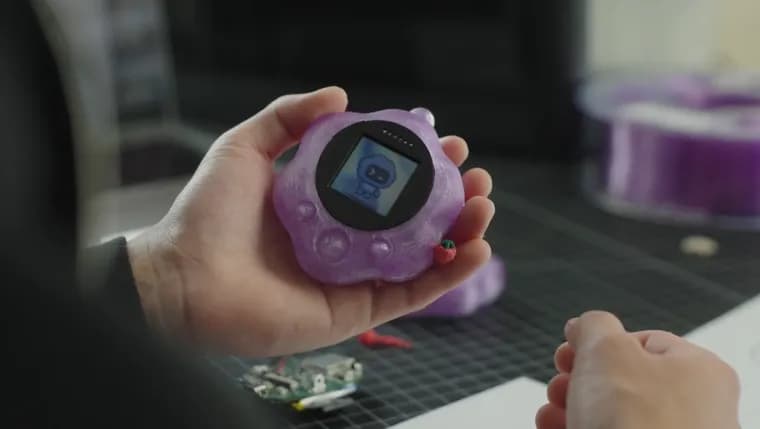
OpenAI says its hardware team used GPT-6 Astra to design a device that lets users talk to the Codex coding agent. The Decoder relays the account as reported: the team finished the design as a side project in under a week. According to OpenAI, Astra handled every step, from enclosure design and PCB layout (component selection and trace routing) to firmware and the user interface.
A contract manufacturer, which the source does not name, then produced a small batch of prototypes in under a month. The process was not clean. Several revision rounds were needed because Astra did not always account for manufacturing constraints, tolerances and assembly details.
OpenAI is also pointing to a large performance jump on BenchCAD 2.0, a benchmark that tests whether models can reconstruct 3D parts and assemblies and identify connections on PCBs. A newer "internal model" scores 0.875, while GPT-6 Astra at its highest reasoning level scores 0.594. OpenAI has shared no details about the internal model.
OpenAI adds that its hardware teams use Codex and ChatGPT for CAD models, manufacturing drawings and simulations across areas like robotics and compute infrastructure. Token usage by those teams has grown 23x since February. The Decoder also notes that OpenAI is building its own hardware device, reportedly something between an AI speaker and a smartphone.
Key facts
- OpenAI says its hardware team used GPT-6 Astra to design a device for talking to the Codex coding agent, as a side project in under a week.
- Per OpenAI, Astra covered enclosure design, PCB layout with component selection and trace routing, firmware and the user interface.
- A contract manufacturer produced a small batch of prototypes in under a month, but several revision rounds were needed because Astra missed manufacturing constraints, tolerances and assembly details.
- On BenchCAD 2.0, an undisclosed newer internal model scores 0.875 against 0.594 for GPT-6 Astra at its highest reasoning level.
- OpenAI says token usage of Codex and ChatGPT by its hardware teams has grown 23x since February.
Why it matters
The claim is that a model carried a physical product from nothing to prototype-ready design across mechanical, electronic and software work, and did it in under a week as a side project. That goes well beyond generating code or text. The detail that revisions were still needed is the useful part: the model's gaps were in manufacturing constraints, tolerances and assembly, the practical side of hardware. The BenchCAD 2.0 figures add a second signal, with an unreleased internal model scoring 0.875 against 0.594 for GPT-6 Astra at its highest reasoning level.
Who it affects
Hardware and mechanical design teams are the obvious audience, since the work described covers CAD, PCB layout, firmware and interface design. OpenAI says its own hardware teams already use Codex and ChatGPT for CAD models, manufacturing drawings and simulations in areas like robotics and compute infrastructure. Contract manufacturers are also in the picture: one built the prototypes and went through several revision rounds.
How to use it
The source gives no name, price, release date or specs for the device, and it does not say how outsiders could repeat the workflow. What it does describe is how OpenAI's teams work: Codex and ChatGPT for CAD models, manufacturing drawings and simulations. The practical lesson from the account is to expect revision rounds when a model's design goes to a manufacturer, because manufacturing constraints, tolerances and assembly details were the weak spots.
How solid is it
Thin. The Decoder wording is "reportedly", and the design claims rest on OpenAI's own statements; no independent verification is given. The BenchCAD 2.0 scores belong to different models: 0.875 is from an internal model OpenAI has not described, 0.594 is GPT-6 Astra at its highest reasoning level. No scoring scale or results for other models are given. The source also does not say how many people worked on the project or whether humans stepped in during Astra's work.
Risks and caveats
This is a secondary report of company claims. The phrase "from scratch" and "handled every step" are OpenAI's account, and the need for several revision rounds shows the output was not manufacturing-ready on the first pass. The source does not say how many prototypes were made, who built them or how many revisions there were beyond "several". The newer model behind the 0.875 score is undisclosed, so that jump cannot be checked. The 23x token growth has no stated year or baseline volume. The source also does not say that the Codex voice device is the same as OpenAI's reported consumer device.