Outgoing Master of the Rolls Geoffrey Vos says courts should weigh AI for simple civil cases
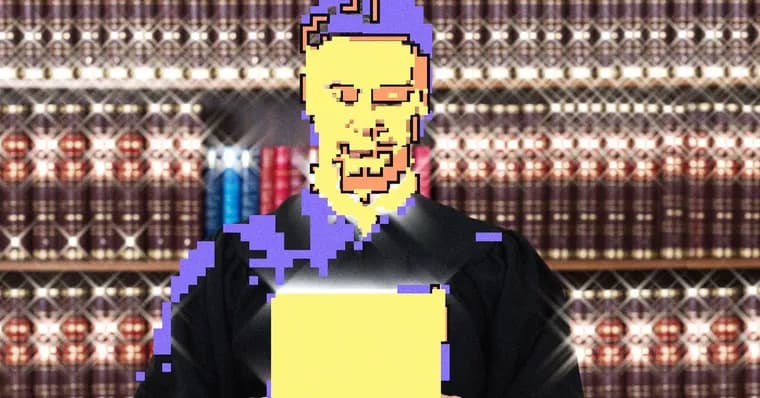
In a few days, judge Geoffrey Vos will retire as Master of the Rolls, which WIRED describes as the most senior position in England's civil justice system. As one of his final acts, he is trying to start a debate about whether, and how, judges should use artificial intelligence. WIRED met him at his office at the Royal Courts of Justice in London in October; the published conversation is edited for length and clarity.
Current guidance advises judges in England to confine their use of AI to administrative tasks. Vos tells WIRED he uses Microsoft Copilot all the time to locate far-flung documents and summarize large bodies of text. He does not use it for writing judgments, but for finding things, navigating large quantities of material and checking. He has 11 meetings a day, and says Copilot finds a relevant document created years ago in seconds. He is more cautious about using it to read papers for his own cases, because he handles the most important cases in the system.
Recently Vos visited a court in Shenzhen, China, where civil disputes are already being decided by judges with heavy assistance from AI. Impressed, he believes courts across the globe should consider following. He remains convinced AI will someday help resolve civil disputes faster and far more cheaply. Complicated commercial disputes and sensitive family cases might need a human judge, he says, but personal injury claims, low-value professional negligence cases and the like could easily be adjudicated by AI. "What most people desperately want in civil disputes is resolution," he says. "The question is, where is the line to be drawn?" He says judges are not yet in a position to answer that; it is a question for society, politicians and legislation. He expects custody and family cases, and complex commercial cases, to keep expecting human judgment, though he thinks AI will be used to collate information and whittle away at how commercial cases are decided.
The article lists the pitfalls. Multiple lawyers have been caught citing case law hallucinated by AI. In a first for the UK, somebody recently lost their license to practice in part because they misused the technology. And litigants using chatbots as legal counsel are flooding the courts with an unprecedented number of claims, some of them bogus. Vos says the number of county court cases started is rising 10 percent every year and looks set to increase, because people put legal problems into Gemini, ChatGPT or Claude and ask for a particulars of claim or claim form. Asked what share of those claims are sound, he says: "We don't have the data." He rejects the idea that an AI-written claim is automatically frivolous, calls the surge "a good problem" because it shows wider access to justice, and notes that justice used to be available mainly to rich people.
On deepfakes, Vos argues that judging has always meant deciding who is lying, as with forged wills, and that fake images or recordings are an extension of the false information put before courts. Those who submit them commit perjury and can go to prison. He urges caution about predicting disaster and says he is very optimistic.
On consent, he says algorithmic decision-making can only be asked of people if they consent to the process in a particular case, or if society decides through legislation. He worries an adverse machine-driven decision may be harder to accept than one delivered in a human way. On explainability, he says it is about outcomes rather than reasoning: you cannot see how the AI produced its reasoning, but you can judge whether the reasoning it produced is plausible. He does not think human judges will ever be done away with, since it is in the human psyche to want to be judged by fellow humans, though in some situations people may prefer a quick outcome even if it is not a human one. He wants a very open, international discussion on how disputes should be resolved. The article adds that, given his retirement, the debate is largely philosophical for Vos, but for everyone else in the profession the rules are changing fast.
Key facts
- Geoffrey Vos, retiring in a few days as Master of the Rolls, told WIRED that courts should consider using AI more widely, including for simpler civil disputes.
- He was impressed by a Shenzhen court where civil disputes are decided by judges with heavy AI assistance; current English guidance limits judges' AI use to administrative tasks.
- He thinks personal injury claims and low-value professional negligence cases could easily be adjudicated by AI, while complex commercial and sensitive family cases might need a human judge.
- Vos says county court cases are rising 10 percent a year as people draft claims with chatbots, and that there is no data on how many of those claims are sound.
- He says where to draw the line is for society, politicians and legislation, and that algorithmic decisions need consent in a given case or a legislative decision.
Why it matters
The head of civil justice in England is publicly arguing for a debate on AI deciding some civil cases, at a time when English guidance confines judges to administrative AI use. His case rests on a court in Shenzhen already deciding civil disputes with heavy AI help, and on his belief that AI can make resolution quicker and much cheaper. He frames the aim as what most people want in civil disputes: resolution.
Who it affects
Judges and lawyers, whose rules on AI the article says are changing fast. Litigants, who are using chatbots to draft claims and filing more of them. People with personal injury or low-value professional negligence claims, the kinds of case Vos thinks could be adjudicated by AI. Families and commercial parties in complex disputes are the ones he expects to keep human judges.
How to use it
This is an interview rather than a tool or a rule, so there is nothing to adopt. Vos describes his own practice: Microsoft Copilot to find old documents, locate far-flung material and summarize large bodies of text, and checking things, but not writing judgments. He is more cautious about using it to read papers for his cases. He says lawyers should adopt change cautiously, with their eyes open, and that judges must explain how they adopt technology and build a broad consensus that it is appropriate.
How solid is it
It is one senior judge's opinion, given in a conversation that WIRED edited for length and clarity. The article gives no details of the Shenzhen court's system, its AI tool or its results. Vos's 10 percent yearly rise in county court cases is his own estimate, and he adds that it may increase. He does not set a timescale for AI adjudication of simpler civil cases, and the article says that with his retirement the debate is largely philosophical for him personally.
Risks and caveats
The article points to lawyers caught citing hallucinated case law, a first UK loss of a license to practice partly over AI misuse, and a flood of claims, some bogus, from litigants using chatbots. Vos says there is no data on how many AI-generated claims are sound. He notes that people may find an adverse machine-driven decision harder to accept, that AI cannot show how it produced its reasoning, and that algorithmic decisions would need consent or legislation. He downplays the deepfake risk, urging caution about predicting disaster.
“What most people desperately want in civil disputes is resolution”
— Geoffrey Vos, Master of the Rolls, to WIRED