Pentagon seeks $30.3M for AI-powered lie detector called Polygraph+
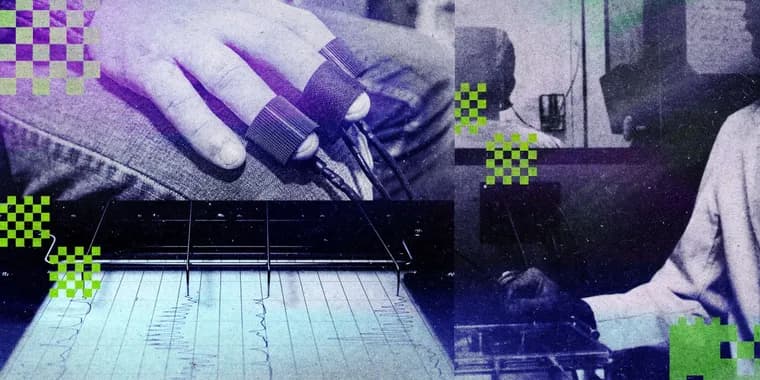
The US Department of Defense has requested $30.3 million over five years for a program called Polygraph+ (also referred to as Polygraph Next), according to a budget document first reported by Inside Defense. The program will be run by the Defense Counterintelligence and Security Agency, which already conducts background checks for the federal government, and is meant to 'modernize federal polygraph and credibility assessment technologies' for vetting prospective employees and detecting insider threats. It combines two elements: AI and machine-learning scoring algorithms, and 'standoff sensing,' a technique for taking physiological readings without attaching a device to a subject. The budget document has not yet been approved by Congress, and it is not yet clear which specific technologies will be used; the DCSA did not respond to a request for comment.
The request lands amid heightened tension inside the Pentagon. Under Defense Secretary Pete Hegseth, the department has increasingly used polygraph tests to hunt for sources of leaks to the press. In September, the New York Times reported that around 50 officers on the Joint Staff were given polygraph tests after news coverage exposed the depletion of US weapons stockpiles during the war with Iran.
While no vendors are named for Polygraph+ itself, an earlier and separate effort offers clues about the kind of technology involved. In 2023 the Pentagon's Defense Innovation Unit ran an open submission process for deception-detection products and picked two companies to build prototypes: Presage Technologies, which says it can measure heart rate and breathing rate from standard cameras, and Altec Research, a medical sensor company moving into non-contact sensing. A screenshot of Altec's prototype released by the DIU showed it tracking head movement, facial skin temperature and pore activity. Neither company, nor the DIU, commented for the article.
The underlying polygraph technology has barely changed since it was invented in the 1920s: examiners measure blood pressure, pulse, breathing and sweat, comparing responses to baseline questions like 'Is the sky blue?' against target questions like 'Have you ever committed a crime?' The federal government runs tens of thousands of such tests a year on employees, yet the results are rarely admissible in court. In 1983 Congress's Office of Technology Assessment found only very limited evidence supporting the polygraph's use for screening employees, and in 2003 the US National Research Council called the evidence for its efficacy 'weak at best.' Research cited in the article suggests unaided humans can spot a lie just over half the time, while the American Polygraph Association claims the polygraph itself is between 80% and 94% accurate. The 2003 NRC report noted that even a test with that accuracy range, applied across a workforce as large as the DOD's 2.8 million employees, could still generate large numbers of false accusations. Interpretation is also subjective: different examiners can reach very different conclusions on the same subject, minority groups are more often judged deceptive, and trained subjects can beat the test with countermeasures such as stepping on a pin hidden in a shoe to fake a physiological response to baseline questions.
Experts interviewed for the piece are skeptical that AI fixes any of this. Kyri Kotsoglou, a legal scholar at Northumbria University who studies polygraphs in the justice system, calls the whole approach 'a misguided effort to reduce the complex to something that is tangible,' and says combining AI with the polygraph produces 'the worst of both worlds' because it stacks new uncertainty on top of an already invalid method: even if AI finds new patterns in physiological data, there is no reliable way to link those patterns to lying, since there is no real ground truth to train against. Sophie van der Zee, an associate professor who studies deception at Erasmus University in Rotterdam, argues that genuine deception detection would need to combine three signals at once, physiological stress, cognitive load and the conscious effort to conceal lying, whereas current polygraph technology only captures one. She notes that past multi-signal systems, including Manchester Metropolitan University's Silent Talker (later folded into the EU's iBorderCtrl pilot) and the US border-crossing project AVATAR, which combined eye tracking, voice analysis and body-movement detection, have all quietly faded away without yielding reliable results outside the lab. Van der Zee also points out that a polygraph's biggest practical effect is deterrence, since subjects often confess before the test even starts, 'but that only works if people think a polygraph works.' Marion Oswald, a professor of law who has written with Kotsoglou on polygraphs in the justice system, warns that 'even if you have all the records in the world from polygraph tests, you don't know whether those polygraph tests are right or not,' and argues the push looks like 'a response to the concern of the current administration to leaks and perceived lack of loyalty,' with lie detection being 'used as a threat, to intimidate and force people to confess to things, as opposed to anything that's actually getting valid information.'
Key facts
- The Pentagon has requested $30.3 million over five years for Polygraph+, run by the Defense Counterintelligence and Security Agency, to vet employees and detect insider threats using AI scoring and 'standoff sensing' that reads physiological signals without attaching a device.
- The request follows the Pentagon's increased use of polygraph tests under Defense Secretary Pete Hegseth to hunt leakers; in September around 50 Joint Staff officers were polygraphed after reporting on depleted US weapons stockpiles during the war with Iran.
- The American Polygraph Association claims 80-94% accuracy for the traditional polygraph, but the 2003 National Research Council review called the evidence 'weak at best,' and applied across the DOD's 2.8 million employees an imperfect test could falsely accuse large numbers of people.
- Experts Kyri Kotsoglou and Marion Oswald say adding AI does not fix the polygraph's lack of scientific grounding, calling it 'the worst of both worlds' since there is no reliable ground truth linking physiological patterns to lying.
- Earlier multi-sensor deception-detection systems, including a 2023 Defense Innovation Unit prototype effort with Presage Technologies and Altec Research, plus older projects like Silent Talker, iBorderCtrl and AVATAR, failed to produce reliable results outside the lab.
Why it matters
The Pentagon is proposing to bolt AI and machine learning onto a century-old lie-detection technology whose scientific validity has been challenged for decades, at a moment when the department is already leaning on polygraph tests to root out leakers. It is a case study in how AI gets applied to institutional problems, distrust of insiders, that technology alone cannot solve.
Who it affects
The DOD's 2.8 million employees and prospective hires who would be vetted or screened under Polygraph+, run by the Defense Counterintelligence and Security Agency; more broadly, anyone tracking whether AI-enhanced 'credibility assessment' tools spread into hiring, security clearance, or workplace surveillance elsewhere.
How to use it
There is no product to use yet: the budget document requesting the $30.3 million has not been approved by Congress, and the DCSA has not specified which technologies will be built into Polygraph+.
How solid is it
The reporting rests on a Pentagon budget document first surfaced by Inside Defense, cross-checked with independent deception researchers and legal scholars; the program's technical details remain undisclosed and unconfirmed by the DCSA, and Congress has not yet approved the funding.
Risks and caveats
Multiple researchers argue that stacking AI on top of the polygraph adds a layer of algorithmic uncertainty to a method whose accuracy is already contested, with no real ground truth to validate deception scores against. Past multi-sensor lie-detection efforts, from Silent Talker and iBorderCtrl to the AVATAR border project, failed to produce reliable results and were quietly discontinued, and critics warn Polygraph+ risks being used less as a scientific tool than as a psychological threat to pressure confessions.
“It's a misguided effort to reduce the complex to something that is tangible”
— Kyri Kotsoglou, legal scholar at Northumbria University