Perseverance rover set to break Mars distance record, driving itself
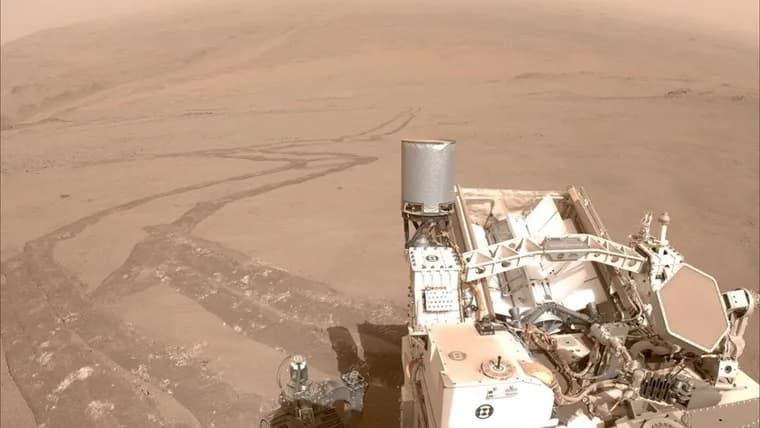
NASA's Perseverance rover, which landed on Mars in February 2021, is expected sometime next week to break the record for the longest distance driven by any vehicle on another world. It will pass 45.16 km (28.06 miles) traveled across the Martian surface, surpassing the previous record held by the Opportunity rover, which stopped communicating with NASA in 2018.
According to Steven Lee, project manager for Perseverance at NASA's Jet Propulsion Laboratory, speaking in an interview, the real enabling technology behind the pace is the rover's autonomous navigation system. Much like self-driving cars on Earth, Perseverance carries onboard cameras that image the surrounding terrain, and an onboard computer processes those images algorithmically to calculate the safest route past obstacles such as large boulders and sandy slopes. Terrestrial self-driving cars have advantages Perseverance lacks, like clearly defined maps, street signs and lane markings, though the rover also does not have to contend with other traffic or bad drivers.
The comparison with Curiosity, a rover largely identical to Perseverance that launched nine years earlier, makes the gap explicit. Curiosity carries similar imaging and navigation algorithms, but its onboard computer is a generation older, with some of its chipset dating back to the 1990s, Lee said. As a result, only about 10 percent of Curiosity's driving is autonomous, since its processing capability is too slow to handle more. Over a decade and a half on Mars, Curiosity has driven 38.6 km. Perseverance, by contrast, is set to reach its own record-setting distance in only about a third of the time.
Key facts
- Perseverance is expected to break, sometime next week, the record for the most distance driven by any vehicle on another world, passing 45.16 km (28.06 miles).
- The previous record was held by the Opportunity rover, which stopped communicating with NASA in 2018.
- NASA credits the milestone to Perseverance's autonomous navigation system, which processes onboard camera images to plot the safest route without the benefit of maps or road markings.
- Curiosity, which launched nine years before Perseverance, has driven only 38.6 km over a decade and a half because only about 10 percent of its driving is autonomous, limited by an onboard computer with some chips dating to the 1990s.
- Perseverance is reaching the new record in roughly a third of the time it took to accumulate the previous one.
Why it matters
The record itself is a milestone, but the more significant point is what makes it possible. Perseverance's autonomous navigation system lets it choose its own route across Martian terrain from camera images, without a person on Earth plotting every meter in advance. That autonomy is what let it cover its record distance in roughly a third of the time the previous record took to build up, and it points at how much a faster onboard computer alone can multiply a rover's productive range within the same mission span.
Who it affects
NASA and the Jet Propulsion Laboratory, which build and operate both the Perseverance and Curiosity rovers, and by extension future Mars and planetary missions that will build on this navigation approach. It also bears on how mission planners weigh onboard computing budgets, since Curiosity's older hardware, some of it dating to the 1990s, is shown directly capping how much of its driving can be automated.
How to use it
There is nothing to buy or install here: this is a NASA engineering result, not a product or service. The practical takeaway for anyone tracking planetary science or robotics is that onboard autonomous navigation, more than raw hardware speed on its own, is now the main driver of how much ground a Mars rover can cover in a given time.
How solid is it
The account comes directly from Steven Lee, the Perseverance project manager at JPL, and the key figures, the 45.16 km distance, Curiosity's 38.6 km total, and the roughly 10 percent autonomy share, are specific and drawn from NASA's own mission data rather than estimates. The source does not give an exact date within the coming week for when the record will actually be broken, nor a precise duration for how long it took Opportunity to set the previous record.
Risks and caveats
The comparison between Perseverance and Curiosity is not a controlled experiment: the two rovers differ in more than just their onboard computers, and the source does not quantify how much of the pace difference owes to autonomy specifically versus other factors. The claim that Perseverance is reaching the record in a third of the time rests on a relative figure without a stated baseline duration for Opportunity's own record run, so it is best read as an order-of-magnitude comparison rather than an exact ratio.
“The real enabling technology has been its auto navigation system,”
— Steven Lee, project manager for the Perseverance rover at NASA's Jet Propulsion Laboratory