PIMCO CEO warns of an AI downturn while AI bond demand stays strong
A Verge columnist opens by saying colleagues and others keep asking when the AI bubble will burst. The answer is that the columnist does not know: anyone who did would make a levered bet on the market, retire to a beach and perhaps run a cat sanctuary. What the columnist can offer is a reading of a Bloomberg story from that morning, "Wall Street CEOs, Big Money Managers Divided Over AI Risks", a roundup of remarks at the 2026 Global Financial Leaders' Investment Summit in Hong Kong.
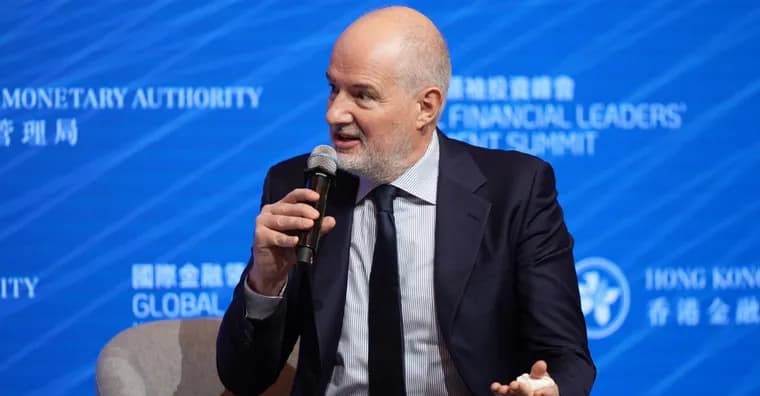
The item that caught the columnist's attention: the CEO of Pacific Investment Management Co. (PIMCO), the bond firm, told listeners that there is going to be a downturn in the AI market "and then things are going to break." The CEO is Emmanuel Roman. He singled out US rate hikes, war or a eurozone crisis as potential triggers, and he has estimated that the AI buildout could create $2 trillion in financing needs over the next five years. The column sets that beside the size of the entire US bond market, about $12 trillion.
Meanwhile the bond market keeps taking AI paper. The columnist writes that the very expensive buildout has swamped debt markets and made it harder to raise cash, but more debt is coming and people still want it. Bloomberg reported that Meta drew $58 billion in orders for a bond offering expected to be $15 billion to $20 billion. Oracle said on Monday it would need another $20 billion in bonds on top of its existing commitments. Alphabet is selling €6 billion (about $6.7 billion) of bonds. Microsoft recently sold $25 billion of bonds, its first bond sale in a decade. Wall Street banks were also rushing to finance $63 billion in debt from Anthropic, which the columnist notes is not a hyperscaler.
The columnist keeps returning to PIMCO because it has been central to the AI trade. It was among the financiers behind the first CoreWeave chip-based financing in 2023. Last year it made a quick $2 billion in paper gains on $29 billion of Meta bonds meant to support the buildout. Last month it bought $4 billion of SpaceX bonds. So when its CEO publicly sounds the alarm, the columnist calls it a big deal, especially since the company has just sold a bunch of its AI debt.
PIMCO is not alone. Apollo Global Management, which had lately been talking with SpaceX about a $40 billion chip deal, is also warning of AI risk. Apollo president Jim Zelter told analysts that he expects society will use "dramatically more computing power in the future" and that AI is improving quickly, but significant uncertainty remains: "What we don't know is how pricing and economics will evolve."
The columnist's own read is deliberately mixed. The volume of interest in Meta's bonds suggests we are not at the top of the market. But there have been reports from China that its AI bubble burst some time ago. That is what "I don't know" means here. The columnist does think something major, such as the triggers Roman named, could flip the market. Conditions are not go-go-go now. It is possible Anthropic's IPO goes blockbuster, like someone arriving at a party running low on beer with a 24-pack. But with more people urging caution, and after what the columnist calls the disaster at Situational Awareness, the best part of the party might be over.
Key facts
- PIMCO CEO Emmanuel Roman told the 2026 Global Financial Leaders' Investment Summit in Hong Kong that an AI downturn is coming "and then things are going to break", per Bloomberg; he named US rate hikes, war or a eurozone crisis as potential triggers.
- Roman has estimated the AI buildout could create $2 trillion in financing needs over five years; the column notes the entire US bond market is about $12 trillion.
- Demand for AI-linked debt is still strong: Meta drew $58 billion in orders for an offering expected at $15 billion to $20 billion, Oracle needs another $20 billion, Alphabet is selling €6 billion and Microsoft recently sold $25 billion.
- Apollo president Jim Zelter also flagged uncertainty over how AI pricing and economics will evolve, even though he expects far more computing use.
- The columnist does not predict timing: Meta's order book suggests the market is not at its top, but the best part of the party might be over.
Why it matters
Two large financial firms are voicing caution about AI at the same time as the biggest tech companies are raising large amounts of debt for the buildout. The column's point is that these signals pull in opposite directions. PIMCO has been deeply involved in financing AI (CoreWeave in 2023, Meta bonds, SpaceX bonds), so a public warning from its CEO carries more weight than generic bubble talk. The $2 trillion financing estimate, set against a US bond market of about $12 trillion, shows the scale of what the buildout could ask of lenders.
Who it affects
Bond issuers building AI capacity, named in the column as Meta, Oracle, Alphabet, Microsoft and Anthropic, and the investors and banks that finance them, including PIMCO and Apollo. It also touches anyone weighing exposure to AI companies, including an Anthropic IPO, which the columnist says could possibly go blockbuster.
How to use it
Read it as a map of the signals to watch rather than a forecast. On the cautious side: Roman's warning, Zelter's uncertainty about pricing and economics, and PIMCO selling some of its AI debt. On the other side: oversubscribed bond offerings, such as Meta's $58 billion in orders. Roman's named triggers, US rate hikes, war or a eurozone crisis, are the events the column says could flip the market.
How solid is it
This is an opinion column, not reporting. The numbers on Meta, Oracle, Alphabet and the market size come from a Bloomberg roundup of the Hong Kong summit, relayed by the columnist, and Roman's remarks are secondhand through that story and the columnist, while Zelter's are relayed by the columnist. The columnist says outright that the answer to the bubble question is "I don't know". The reports from China about an earlier AI bubble burst are described only as reports.
Risks and caveats
The column gives no date or timescale for any downturn, and does not say what PIMCO sold, how much, or to whom. The $40 billion SpaceX chip deal is described only as something Apollo had lately been talking about. The reference to the "disaster at Situational Awareness" is not explained. The Meta inference (strong demand means no market top yet) is the columnist's own reading and sits alongside the opposite warnings from PIMCO and Apollo.
“and then things are going to break.”
— Emmanuel Roman, CEO of PIMCO, on an expected AI downturn, as reported by Bloomberg and relayed by The Verge